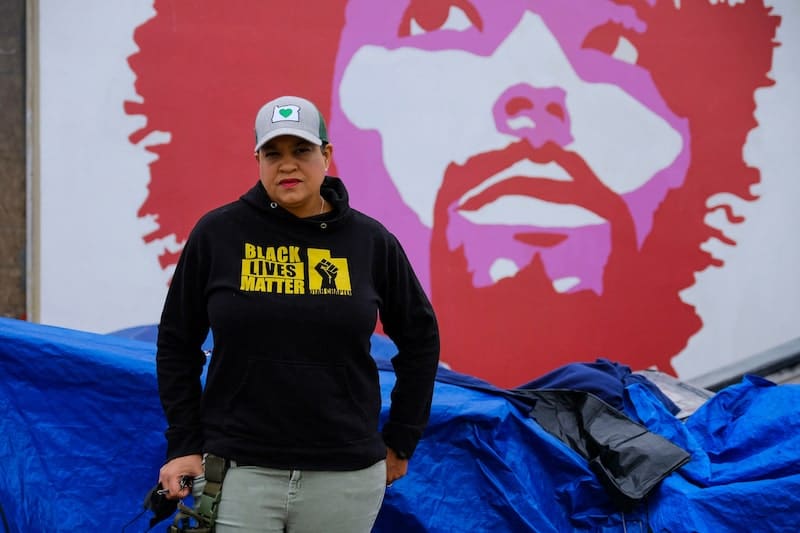
Lex Scott, the founder of Black Lives Matter Utah, is sick of protesting. She would prefer that we didn’t need a Black Lives Matter movement at all but she isn’t going to quit until she sees real change. “We shouldn’t even have to have a Black Lives Matter movement in the first place, the only way we can get it to end is to pass real police reform in the nation,” said Scott.
After watching a video of Eric Garner being choked to death by a New York City Police Department officer in 2014, Scott was compelled to start a civil rights group in Utah, the United Front Civil Rights Organization, and later a Black Lives Matter chapter. She explains that Black Lives Matter is a movement rather than an organization and each chapter has different objectives. The loose organization of Black Lives Matter is confusing to some and she gets questioned often if Utah is an official chapter to which she explains, “Would you go up to Martin Luther King and say, ‘Are you an official chapter of the civil rights movement?’”
The Utah chapter of Black Lives Matter is a full-service civil rights organization. They monitor civil rights complaints, perform cop watches, and regularly meet with elected officials to discuss police reform. They also hold a summer camp for Black children, provide education sessions to school groups, and have gutted an old school bus and turned it into a mobile Black History Museum which will bring the stories of Black Utahns and Americans to schools, businesses, and special events beginning in February 2021. They see protest as a last resort.
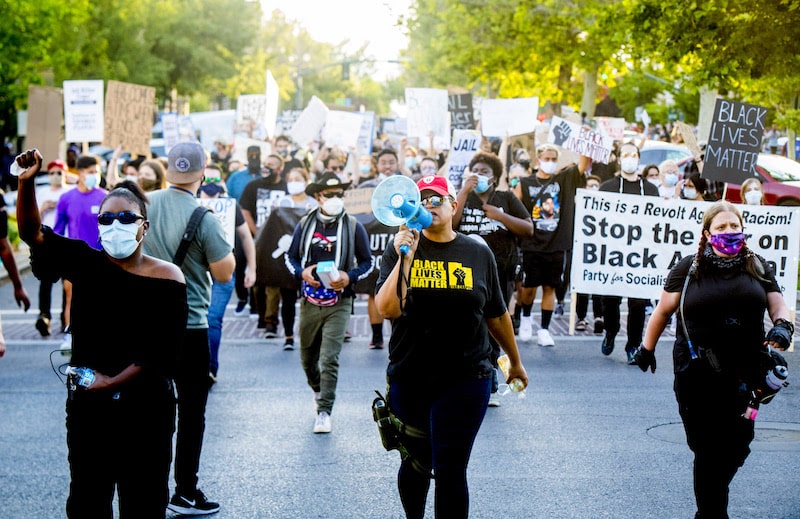
Since the Black Lives Matter movement was thrust into the spotlight this past summer, Scott says she has elected representatives calling her every day. She meets several times a month with a government task force on racial equity and criminal justice police form initiatives. She’s thrilled that republican politicians including Mike Lee and Mitt Romney are willing to reach across the table and work with the Utah chapter of Black Lives Matter on police reform. She says that she is never going to agree with these politicians on everything but notes that, “Mike Lee and Mitt Romney are always wanting to move forward and make sure Utah is the frontrunner on reforms in every industry and that includes policing.”
Utah state lawmakers filed several police reform bills ahead of the 2021 legislative session. Scott is hopeful but cautious and wishes these bills could have been debated last summer while energy and emotions were high.
Her number one goal is to repeal Utah’s House Bill 415, which was sponsored by Paul Ray and passed in 2019, which makes it illegal for people to create independent oversight boards for police. “We have the theory that if police are not allowed to investigate themselves and find themselves innocent,” Scott explains, “they would be less likely to commit crimes and to murder people.” They also want to pass body camera footage legislation which would require that officer-involved shooting footage be released in a certain amount of time and other bills that would require diversity training in police departments, uniform data collection, especially with use-of-force cases, and stronger excessive force policies.
“We’re not putting all of our eggs in the Utah basket,” said Scott. She’s desperately hoping that the Senate and the House will pass the national Justice in Policing Act, a comprehensive reform bill that would change the way policing works in the United States. If that happens, it won’t matter if Utah passes sweeping police reform since we would have nationwide reform. If it doesn’t happen, “I have no problem protesting Biden exactly how I protested Trump if he doesn’t give us police reform,” noted Scott.
Utah’s 2021 legislative session made a few meaningful steps in response to last year’s protests against police brutality but not the radical reform that was hoped for by Black Lives Matter Utah. The legislature approved bills to increase de-escalation training, require data collection of use-of-force incidents, and ban the shooting of people who are suicidal and don’t pose a threat to others.
The group plans to run a ballot initiative this year to allow the community to weigh in on two specific bills that were tabled after their first hearing: one that would allow cities to implement independent civilian police oversight boards and one that would establish a standard for the release of body camera footage. If the group gains enough signatures, Utahns will be able to vote on these matters themselves come fall.
Subscribe to Utah Stories weekly newsletter and get our stories directly to your inbox