Utah Stories

The Impact The Open Border Policy Has on Utah

There are currently over 3,000 children detained at the border, this is just a fraction of the unaccompanied minors who have entered the US.

|


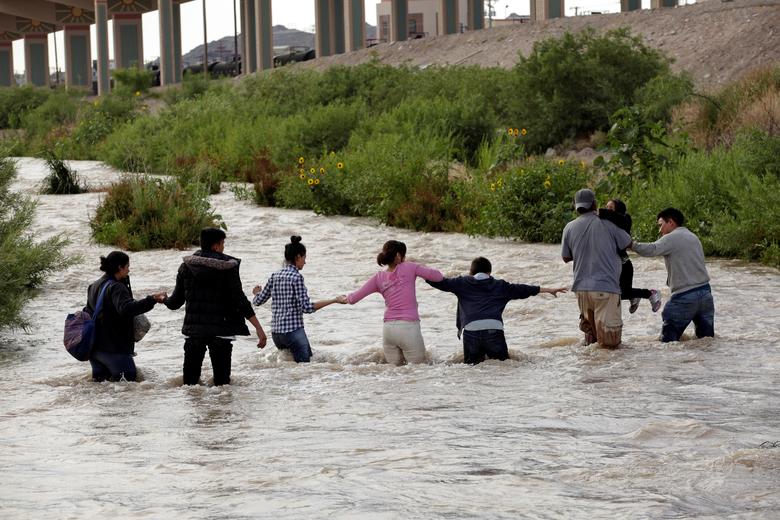
Migrants from Central America form a human chain to cross the Rio Grande to enter illegally into the United States to turn themselves in to request for asylum in El Paso, Texas, as seen from Ciudad Juarez, Mexico June 11. REUTERS/Jose Luis Gonzalez

There are currently over 3,000 children detained at the border. This is just a fraction of the 11,000 unaccompanied minors who have entered the country in 2021.

The number of migrants crossing the border is now at a 20-year high. “On Monday, March 12, the border patrol took in 280 minors in the Rio Grande Valley sector. America needs to know how these children are coming across the border and who is helping these children cross the border. “ said Texas Governor Gregg Abbott in a recent press conference.

Moving Minors From “Cages” to the Dallas Convention Center

The press conference was being held because 3,000 minors were being moved from their temporary housing facilities, which are essentially shipping containers with bars over windows. The mainstream media has been calling these facilities “cages” since the beginning of the Trump administration. The Biden Administration is now asking Texas to help move these children into the Kay Bailey Hutchison convention center in Dallas. Most of the children are teenagers. Abbot has consistently criticized the Biden Administration for lacking any coherent policy when it comes to the migrant crisis especially in handling the exploited minors. 

What impact will these additional sex trafficking operations have on Utah?

Utah is currently fourth in the nation per capita when it comes to illegal sex trafficking operations. Minors get caught up in sex trafficking rings from countries like Honduras and Guatemala that have been devastated by Covid-19. Families and minors are sold into the idea of getting smuggled into the United States to get jobs as nannies or in other service industries in the United States. They are then controlled and sold into sex trafficking rings by cartel organizations who threaten the minors if they tell authorities about what is happening they will kill their families. Most of the minors detained at the border remain silent.

Texas Governor Greg Abbot said:

“Are the children being used to carry contraband? Are they a part of cartel activity? Americans need to know who the human traffickers are who are preying on these minors.”

Abbott says that border patrol agents are completely overwhelmed by the crisis and now Texas needs to step up to alleviate the major problem of intelligence. Abbot added:

“Are border patrol agents getting the information from these thousands of children? According to Governor Abbott, we simply do not know because the Biden Presidency is not saying.”

“Texas is stepping up and doing what the federal government should be doing.” Texas Department of Public Safety has deployed one thousand agents to support operation lone star to crack down on human trafficking. The governor’s sex trafficking team is working on apprehending unaccompanied minors who are crossing the border. Their goal is to gain more information about who is directing the human trafficking operations.

But currently, Texas authorities don’t have the jurisdiction to interview the children, so Governor Abbott is seeking permission from the Biden Administration to do the work that the federal government is not doing.

“Whether it is to secure the border or fighting human trafficking, the state of Texas will always step up and fill the gaps that are left by Washington,” says Abbott.

The Texas Department of Public Safety has agents who are addressing the humanitarian crisis. The word “crisis” is still a term that the Biden Administration refuses to use. Instead, White House Press Secretary Jen Psaki prefers to call the situation “a challenge”. Texas is calling on their work to step up both their intelligence and humanitarian aid “Operation Lone Star”. One thousand people will be dedicated to the effort.

Operation Lone Star: Texas Wants to Step For Washington

Texas Department of Public Safety Steve McCraw says, “The cartels are leveraging the gaps that have been created by the change of policy by the Biden Administration.” The Biden administration immediately ended construction on the border wall. The Biden Administration also made a policy to allow all illegal immigrants to enter the country and be processed for asylum. Still, the Biden Administration is blaming the Trump administration for the problems.

McCraw says, “If you have a drug problem in the U.S. it’s coming through the border: cocaine, meth, fentanyl are all being smuggled by these children. Young women are promised to gain a service industry job: a nanny. What people will do to mankind is sickening. They can compel them into prostitution, some of the most brutal things done to children are happening in the U.S. The sex trafficking industry is certainly benefiting from this crisis. The young children are the victims. It’s everybody’s job to deal with human trafficking. Consistent with Operation Lone Star: we are looking for every opportunity to investigate sex trafficking.”

Subscribe to Utah Stories weekly newsletter and get our stories directly to your inbox

* indicates required


, ,


Join our newsletter.
Stay informed.


  • Utah Fits All Scholarship Applications Open Through April 30 for K–12 Students

    Utah families have more learning paths than ever and, increasingly, more ways to make those paths affordable. This spring, the Utah Fits All Scholarship opened  for new family applications on April 1, and the application window stays open for one month. The program is a public K–12 scholarship that provides $4,000 to $8,000 per student,…


  • Left in a Box as a Baby: Trauma, Alcoholism, and Addiction

    A man abandoned as a baby builds a structured life in law enforcement, but unresolved trauma and alcoholism slowly begin to unravel it. His story raises a harder question about how change actually happens.


  • The $7 Million Recruit: How NIL Changed College Athletics Forever

    In 2012, Jabari Parker, a top high school prospect and member of the Church of Jesus Christ of Latter-day Saints, was facing his biggest decision to that point in his life: where to play college basketball. 

    Fans of BYU athletics hoped and perhaps prayed that Parker would pick the school owned by the church he was raised in. BYU was listed as one of his final choices. But he ultimately chose to spend his college years at Duke before attempting a career in the NBA. BYU fans were disappointed, but no one was truly surprised. Duke over BYU was the best choice for a young prospect in 2012. 

    A.J. Dybantsa.

    What changed between 2012 and 2024 when A.J. Dybantsa, the number one high school prospect, chose BYU over every other school? The answer is roughly $7 million dollars. That is what Dybantsa is reportedly making to play basketball at BYU. 

    The deal was supported by Utah Jazz owner Ryan Smith, who met multiple times with the Dybantsa family in multiple attempts to bring the young player to Provo. 

    According to Smith, he had no financial role in bringing Dybantsa to BYU, but the influence of Utah’s most famous billionaire acting as a “booster” or unofficial recruiter certainly swayed the decision.

    Prior to 2021, boosters acting as recruiters was taboo to the NCAA governing body. It was called improper recruiting. But in 2021, California began the modern era of NIL, or the ability of a college athlete to benefit from their name, image, or likeness, when they passed the “Fair Pay to Play Act.” 

    This new law gave college athletes in California the ability to benefit from their NIL, something that was banned in the rest of the country to that point. The NCAA saw that this law would create an unfair advantage for California schools that could now give young athletes the chance to make money off their talent and image while still in college. 

    The NCAA knew they needed to do something quickly, so they rushed through a policy that opened up NIL to all college athletes in the country, and it has been expanding and evolving over the last four years. 

    Grant Duff, who has coached at the University of Utah, Weber State University, and is now the defensive coordinator for Idaho State University, says, “The best part of NIL is that athletes have an opportunity to make good money. The downside comes with the free-for-all that money causes.”

    Dybantsa confers with BYU Head coach, Kevin Young.

    One of the biggest current examples of what a school can do when the boosters are willing to pay for success is Texas Tech University. From 2020-2024, Texas Tech had 34 wins, which works out to 6.8 wins per year with a low of 4 wins and high of 8. Then Texas Tech’s boosters got involved, led by Cody Campbell, an oil industry businessman and Chairman of the Texas Tech board. The football program was given 28 million dollars for NIL with a simple message attached to the large pile of money: Win. And win now. And win they did. 

    By signing NIL deals with athletes in the transfer portal, Texas Tech went from a middle-of-the-pack school in their conference to one of the top 12 teams in the country. They didn’t just win games in 2025, they made many of their opponents look like they didn’t belong on the same field, including the University of Utah and BYU twice. That is what money can buy.

    Continue reading and support independent Utah journalism with a purchase of Utah Stories (Digital + Print) or 3 month free trial (Digital).


  • Cottonwood Heights Corruption Allegations: A Case That Never Reached a Courtroom

    A year ago, we here at Utah Stories recorded a podcast episode that we never published. We were revisiting corruption allegations from ten years ago. We decided not to publish the video, so it sat there on YouTube for nearly 12 months.

    Then somehow the video was published. How? We are not sure, but once it got out there, the comments came pouring in.

    Dozens of viewers, then hundreds, supported the video with their comments on our examination of allegations of police misconduct in Cottonwood Heights. The video recounts how the Police Department was reported by business owners as focusing enforcement on customers of the former Canyon Inn bar. These allegations did not result in a publicly documented, full investigation by Utah’s Justice Department nor the FBI (at least to our knowledge). So why rehash the past?

    We believe the story of The Canyon Inn (and other area business owners) vs. CHPD and Cottonwood Heights Mayor Kelvin Cullimore raises questions about what can happen when allegations surface and do not move forward through a formal legal process with state or federal oversight.

    In 2012, Cottonwood Heights business owners at the mouth of the canyons began publicly objecting to police activity whereby up to seven cruisers were pulling over 711 and Canyon Inn bar customers on their busiest evenings.

    According to those accounts, drivers leaving the bar were frequently pulled over by police and were given DUI tickets, sometimes even after passing a sobriety examination. The volume and concentration of those stops led residents and business owners to complain about the “heavy-handed treatment” of CHPD toward motorists, especially in and around the Canyon Inn and neighboring 711, and eventually the Porcupine Pub.

    Customers responded in predictable ways. Some chose not to return and avoid the area. Others went to different establishments. Over time, the owner of the Canyon Inn, Jim Stojack, stated that his revenue declined by 70% and that he believed police activity near his business was the main contributing factor.

    Utah Stories reported on these concerns by conducting interviews; gathering video documentation provided by those involved; and making public records requests. Through our GRAMA requests, we reviewed DUI citations issued by the Cottonwood Heights Police Department and examined how those cases were resolved in Holladay Justice Court. During that period, we observed a higher number based on our review of DUI cases dismissed in court due to lack of evidence compared to other jurisdictions. One DUI attorney, Tyler Ayers, went on record saying that CHPD was issuing a high volume of DUI citations that were later dismissed.

    That observation raised questions about how cases were being documented and prosecuted. It did not, on its own, establish intent or misconduct, but it became part of a broader set of concerns raised by multiple sources.

    Continue reading and support independent Utah journalism with a purchase of Utah Stories (Digital + Print) or 3 month free trial (Digital).