Community Relations

Sugar House to Become More Congested in 2021: Two New Sugar House Apartment Complexes Bring 400 Additional Apartments

Despite COVID, two Sugar House residential development projects are nearing completion, bringing 400 new apartments to the neighborhood in the new year. 

|


Two Sugar House Apartment Complexes Rise High
Two Sugar House Apartment Complexes Rise High. Photos by Braden Latimer

Despite COVID, two Sugar House residential development projects are nearing completion, bringing 400 new apartments to the neighborhood in the new year. 

Dixon Place, developed by Lowe Property Group, is a 59-unit, mixed-use building located at the corner of Elm and McClelland streets in Sugar House. The one- and two-bedroom apartments will range from $1,500 to $2,000 a month, and LPG expects to complete the project near the end of the first quarter of 2021. 

The six-story brick building has an industrial feel that Alex Lowe, principal at LPG, says fits in well with the surrounding neighborhood. The building boasts a lobby space with a living plant wall, a conference room, gym for residents, and 79 parking stalls — one level above ground and the other below. A ground floor office will be the new headquarters for LPG. 

And despite some delays with materials due to Covid-caused supply chain issues, the pandemic has not impacted construction at Dixon. 

“We are starting to get people reaching out. We will probably start taking applications at the first of the year,” says Lowe. “Dixon has a smaller, more boutique feel, and we think it will fit in nicely for what’s intended for Sugar House.” 

As Dixon Place comes to a close, LPG just broke ground this fall on another mixed-use residential project, Sugar Alley, which is slated to bring another 193-units of luxury apartments and 17,000 square feet of ground-floor retail space to Highland Drive. 

“There will be a number of amenities, like a public atrium, swimming pool, and roof-top deck,” says Lowe of the two-year project. 

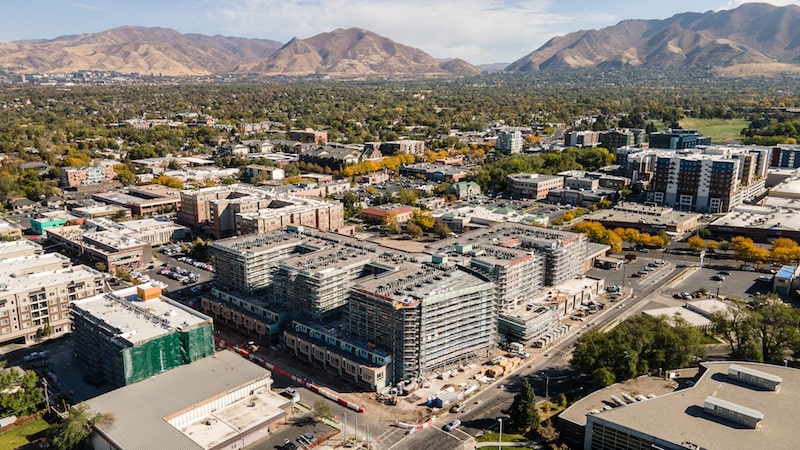
The new year will also bring with it the completion of the towering Sugarmont Apartments, developed by Boulder Ventures, and its 341 units located along Sugarmont Drive and McClelland Street. A mix of studios, one- and two-bedroom units, and three-bedroom townhomes are nearly five years in the making since demolition took place in the fall of 2016.

While the project appeared to be stagnant for periods of 2019 and 2020, Boulder Ventures could not be reached for comment on the project and any delays. The project is anticipated to be completed by the summer of 2021, and rental applications are already being accepted online. 

It’s all about unique amenities at Sugarmont, which offers residents pet-washing stations, a rooftop lounge with a wet bar, bike and ski workshops with tools, a maker and art studio with work tables, a billiards and shuffleboard space, bike storage, a spin and yoga studio, an outdoor kitchen and grills, and a gym, to name a few. 

Sugarmont is phase two of Boulder Venture’s 2100 Sugar House Mixed Use Development, which remodeled a former 1905 brick furniture showroom and warehouse building to become the home of anchor retailer, Neapolitan Pizzeria, in 2013. Street-level retail is the base for two levels of professional offices.

Subscribe to Utah Stories weekly newsletter and get our stories straight to your inbox:

* indicates required


, ,

Join our newsletter.
Stay informed.


  • Has Utah’s Soft-on-Crime Justice Reform Made Communities Safer?

    Has this “soft-on-crime” approach resulted in safer streets?

    SALT LAKE CITY — A decade has passed since former Utah Governor Gary Herbert signed a massive justice reform bill into law in hopes that the state could reduce its prison population and manage low-level offenders through rehabilitation programs instead of incarceration. Has this reinvestment resulted in lower crime and recidivism rates?

    According to the Utah Department of Corrections, that landmark Justice Reinvestment Initiative aimed to “continue holding offenders accountable and securing our communities, but in a way that considers individual risks and treatment needs.”

    Are communities really safer when mental health and substance use needs are addressed through programs administered outside prison walls? The idea was to treat criminals differently based on their mental health needs and backgrounds. But at least one retired Adult Probation and Parole Officer, believes this “soft-on-crime” approach hasn’t resulted in safer streets.

    LOOKING BACK

    State Senator Todd Weiler, in that legislative role since 2012, helped drive the passage of the Justice Reinvestment Initiative (JRI), a massive bill that enjoyed broad-based approval among state officials and the Legislature as a whole.

    In November 2014, Weiler attended the national summit on the issue in San Diego, an event hosted by Pew Charitable Trusts. 

    “I was very involved in it. We had a lot of high hopes,” Weiler, a Woods Cross Republican, said in a recent interview. “That was about the time we were finalizing plans for the new prison. And we actually said that because of JRI we don’t need as many beds because we’ll be incarcerating fewer people. So that new prison was designed with this idea.”

    A key part of JRI dealt with adjusting sentencing for crimes related to addiction, dividing offenders into two basic groups: dangerous criminals who are a threat to society (that group goes to prison), and low-level offenders who get help kicking addictions through state-sponsored programs or private-sector rehabilitation.

    “The ultimate goal was if we have an otherwise good person who got caught up in an addiction, and as a result committed crimes, they need to be punished for their crimes,” Weiler said. “It’s not that we’re going to overlook what they did, but we wanted to focus primarily on helping them overcome their addiction and [that means] getting them back to their job and their family.” 

    Before JRI, low-level drug offenders with felonies would spend years in prison, which wreaked havoc with their lives and future prospects. Addressing the root cause of their theft and property crimes through supervision and treatment made sense. 

    “We’re all imperfect people,” Weiler said. “So we want people working their jobs, paying their bills and raising their kids rather than sitting in jail and watching TV or playing cards.”

    To access this post, you must purchase Utah Stories (Digital + Print) or 3 month free trial (Digital).


  • Salt Lake City Newcomers Club: Finding Friendship and Belonging Since 1948

    Moving away from your hometown can come with many blessings. But for some, it also comes with just as many bouts of loneliness. That ache of not knowing where to meet people, or grieving the friends you left behind, comes in waves. Workplaces and churches can sometimes provide ready-made communities, but what happens when they don’t? Where do you go to find true belonging?


  • A Ski Village or a Tipping Point? Nordic Valley Expansion Divides Ogden Valley

    The project, known as Nordic Village, is expected to roll out over the next decade and represents one of the largest tourism developments in the valley’s history.


  • Fiddler’s Is Back in Sugar House: Revival of a Neighborhood Favorite

    Walking into Fiddler’s today, longtime patrons will recognize the feeling of the old neighborhood, even though nearly everything else has changed.

    The menu, for one, is tight, intentional, and scratch-made. “We created a simpler menu where we utilize most of our ingredients between different dishes,” Jordanna explains. “You can’t waste anything.”

    Everything is made thoughtfully and often gluten-free by default.