Politics

Utah Bars and Restaurants Suffer under New State COVID Mandates

On November 9th, Utah Governor Gary Herbert imposed the mandate that everyone wears masks inside of businesses (including restaurants and retail); he further mandated that all alcohol sales cease after 10 PM.

|


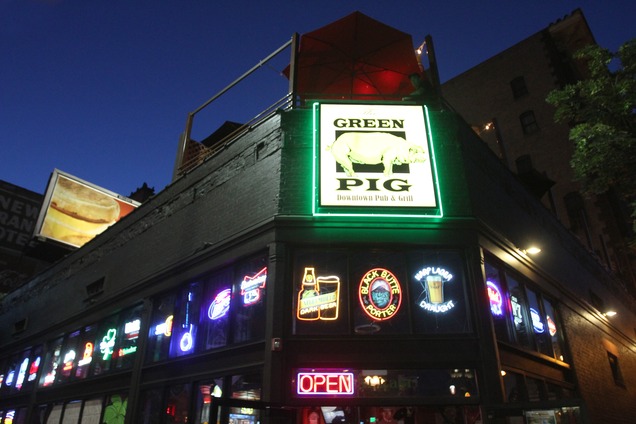
Green Pig Pub SLC

Bridget Gordon has been in the Utah bar business for many years. She was a manager at the Port O’ Call before launching her own bar. The Port O’ Call was by far Utah’s most famous bar, but was forced to close down due to the Government Services Administration (GSA) choosing the Port O’ Call lot and building to build a Federal Courthouse. 

Gordon launched the Green Pig Pub in 2009, knowing well that Utah lawmakers and decision makers have an enormous amount of power over the fate of her business, so she has always been extremely careful following the rules.

On November 9th, Utah Governor Gary Herbert imposed the mandate that everyone wears masks inside of businesses (including restaurants and retail); he further mandated that all alcohol sales cease after 10 PM.

“We make most of our money after 10 PM, this mandate has made it impossible for me to not lose money,” said Gordon, who has been a leader in the Utah Bar business. Besides the Green Pig Pub, Gordon is a partner in two other bars in Ogden. 

Green Pig’s rooftop patio right in the heart of downtown Salt Lake City has made the Pub famous, but the State’s measures of once again forcing business closures is having a devastating impact on even the most successful bars downtown.

Gordon said that she knows of other bars that cater to the dance club crowd that were failing to follow the state guidelines for social distancing and limiting occupancy. 
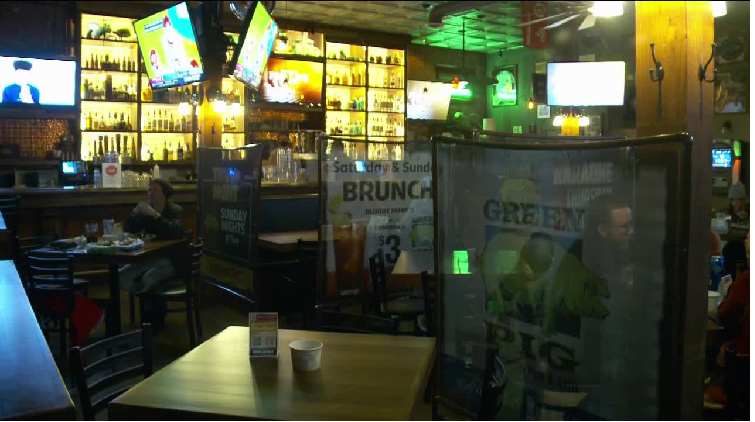
Green Pig Pub following social distance rules
Green Pig Pub following social distancing rules

On a Friday evening in mid-October, the White Horse Spirits and Kitchen was carefully following all of the safety protocols: limiting occupancy and mandating all social distancing rules. But as we walked around the crowded Main Street, Twist Bar was packed full of young people inside and outside, following no rules or guidelines. After 11 PM, we witnessed the Green Pig Pub following all of the guidelines and limiting capacity.

Why didn’t the State just punish only the dance clubs and bars that were violating the protocols and allow the rest of the bars to remain open?
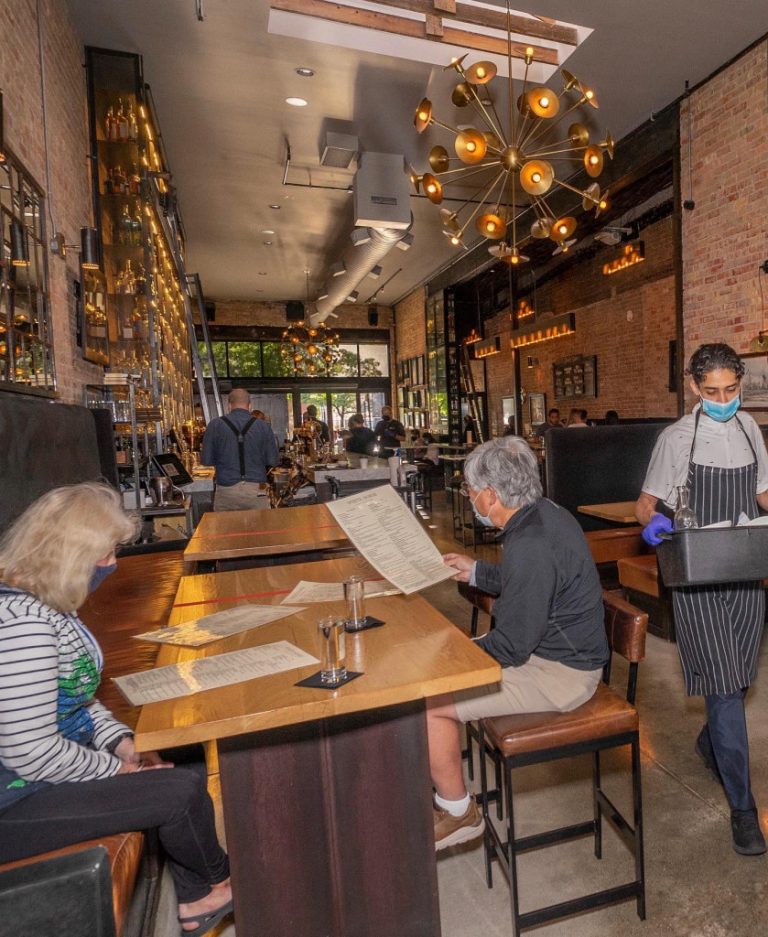
White Horse Spirits and Kitchen following social distance rules
White Horse Spirits and Kitchen following social distancing rules

Jeff Oaks, Salt Lake County Health Department’s Food Protection Bureau Manager, told KSL News, that alcohol consumption lowers inhibition and people forget to wear masks or maintain physical distance. “The thinking was,” he told SLARA members, “if we limit alcohol, we can increase adherence.”

Gordon is not optimistic that the rule will be gone when it is set to expire on November 23rd. “I’m almost certain they are going to keep all of the restrictions in place,” she told Utah Stories. If the measure is still in place she is uncertain if they can remain open while Utah remains in “red” and she knows that likely other bars will be closing down, at least until things improve.

Nationwide far more bars and restaurants are being forced to close and lay-off more of their staff. With the US currently reporting more than 172,000 cases of Coronavirus per day, the state mandates are producing a repeat of what happened in the last Spring.

MORE BY RICHARD P. MARKOSIAN

BACK TO OTHER STORIES

local restaurants
Local Restaurant Owners Chime in on How COVID Has Impacted Their Businesses


, , ,


Join our newsletter.
Stay informed.


  • Dyslexia and ADHD in Kids: Why Some Students Struggle to Read in School

    That’s what led to my conversation with Donell Pons, a Utah-based dyslexia expert who has spent more than two decades working with students who struggle to read. What struck me right away is how often we get the problem wrong from the start.


  • Utah Homelessness Crisis: Tyler Clancy Challenges ‘Housing First’ Failures

    “It’s not normal to see someone sleeping on the sidewalk in a sleeping bag with a needle sticking out of their arm.”

    That sentence should not be controversial. In a sane society, it would barely need saying. But in Utah — where politicians, nonprofits, consultants, and bureaucrats have spent more than a decade congratulating themselves for “addressing homelessness” while the streets of Salt Lake have become more dangerous, more drug-soaked, and more morally disorienting — it lands like an indictment. And it came not from a crank, a talk-radio host, or a downtown business owner at the end of his rope, but from Tyler Clancy, Utah’s newly appointed homeless coordinator.

    That matters because if Clancy is serious — and after sitting down with him, he appears to be — then he represents something Utah’s homelessness system has not had in a very long time: someone willing to say the obvious out loud. The old script is dead. Everybody knows it, but almost nobody in power has wanted to admit it. 

    For years, Utah’s homelessness policy has been built on a polite fiction — that if we build enough units, distribute enough funding, and avoid being too “judgmental,” the crisis will gradually resolve itself. That story was easier to maintain when Utah was receiving national praise for “solving chronic homelessness.” It is much harder to sustain now, when the conditions on the ground tell a very different story.

    Magnolia Apartments opened to help alleviate homelessness, but the results were not all positive.

    Part of that failure became painfully clear over the last four years. By most accounts, former homelessness coordinator Wayne Niederhauser was a decent man and a very nice guy. But one person close to him described his tenure as that of “a tiger without stripes”— someone with the title, but not the appetite to challenge the sprawling network of nonprofits and service providers receiving millions in taxpayer dollars. That lack of accountability has had real consequences. Multiple former and current residents have told Utah Stories that of the roughly 60 original tenants who moved into Magnolia when it opened, about 20 have since died — most, they say, from accidental drug overdoses. 

    If those accounts are even close to accurate, they should have triggered a public reckoning. Instead, the system kept moving, protected by good intentions, insulated from scrutiny, and largely unbothered by outcomes that would be considered a scandal in almost any other context.

    That is the machine Clancy is stepping into, and unless he is willing to confront it directly — not just coordinate around it — his role risks becoming one more layer of management over the same failures. The reality he inherits is not complicated in the way policymakers like to suggest. It is visible, immediate, and increasingly impossible to explain away. 

    Open drug use, fentanyl addiction, untreated mental illness, rising disorder, and a growing sense among both the public and the homeless themselves all indicate that the system is not working. Complexity exists, but it has also become a convenient shield for cowardice. It is the language people use when they want to avoid saying what is plainly in front of them: Utah has spent years managing visible human collapse while calling it compassion.

    The Lie Utah Told Itself

    For years, Utah’s approach to homelessness rested on a narrative few in power were willing to question. It sounded compassionate. It polled well. And it avoided uncomfortable truths.

    Continue reading with a Utah Stories subscription. Start your 3-month free trial.

    Continue reading and support independent Utah journalism with a purchase of Utah Stories (Digital + Print) or 3 month free trial (Digital).


  • Left in a Box as a Baby: Trauma, Alcoholism, and Addiction

    A man abandoned as a baby builds a structured life in law enforcement, but unresolved trauma and alcoholism slowly begin to unravel it. His story raises a harder question about how change actually happens.


  • Cottonwood Heights Corruption Allegations: A Case That Never Reached a Courtroom

    A year ago, we here at Utah Stories recorded a podcast episode that we never published. We were revisiting corruption allegations from ten years ago. We decided not to publish the video, so it sat there on YouTube for nearly 12 months.

    Then somehow the video was published. How? We are not sure, but once it got out there, the comments came pouring in.

    Dozens of viewers, then hundreds, supported the video with their comments on our examination of allegations of police misconduct in Cottonwood Heights. The video recounts how the Police Department was reported by business owners as focusing enforcement on customers of the former Canyon Inn bar. These allegations did not result in a publicly documented, full investigation by Utah’s Justice Department nor the FBI (at least to our knowledge). So why rehash the past?

    We believe the story of The Canyon Inn (and other area business owners) vs. CHPD and Cottonwood Heights Mayor Kelvin Cullimore raises questions about what can happen when allegations surface and do not move forward through a formal legal process with state or federal oversight.

    In 2012, Cottonwood Heights business owners at the mouth of the canyons began publicly objecting to police activity whereby up to seven cruisers were pulling over 711 and Canyon Inn bar customers on their busiest evenings.

    According to those accounts, drivers leaving the bar were frequently pulled over by police and were given DUI tickets, sometimes even after passing a sobriety examination. The volume and concentration of those stops led residents and business owners to complain about the “heavy-handed treatment” of CHPD toward motorists, especially in and around the Canyon Inn and neighboring 711, and eventually the Porcupine Pub.

    Customers responded in predictable ways. Some chose not to return and avoid the area. Others went to different establishments. Over time, the owner of the Canyon Inn, Jim Stojack, stated that his revenue declined by 70% and that he believed police activity near his business was the main contributing factor.

    Utah Stories reported on these concerns by conducting interviews; gathering video documentation provided by those involved; and making public records requests. Through our GRAMA requests, we reviewed DUI citations issued by the Cottonwood Heights Police Department and examined how those cases were resolved in Holladay Justice Court. During that period, we observed a higher number based on our review of DUI cases dismissed in court due to lack of evidence compared to other jurisdictions. One DUI attorney, Tyler Ayers, went on record saying that CHPD was issuing a high volume of DUI citations that were later dismissed.

    That observation raised questions about how cases were being documented and prosecuted. It did not, on its own, establish intent or misconduct, but it became part of a broader set of concerns raised by multiple sources.

    Continue reading and support independent Utah journalism with a purchase of Utah Stories (Digital + Print) or 3 month free trial (Digital).