Inspiration

Embracing Life: From Teenage Drug Addiction to Happily Ever After

Br’ette, destined to be a more rebellious teenager than most, was literally on the brink of death from her drug addictions a decade earlier. Today she works full-time, is raising two healthy children, and is very happily married

|


teenage drug addiction
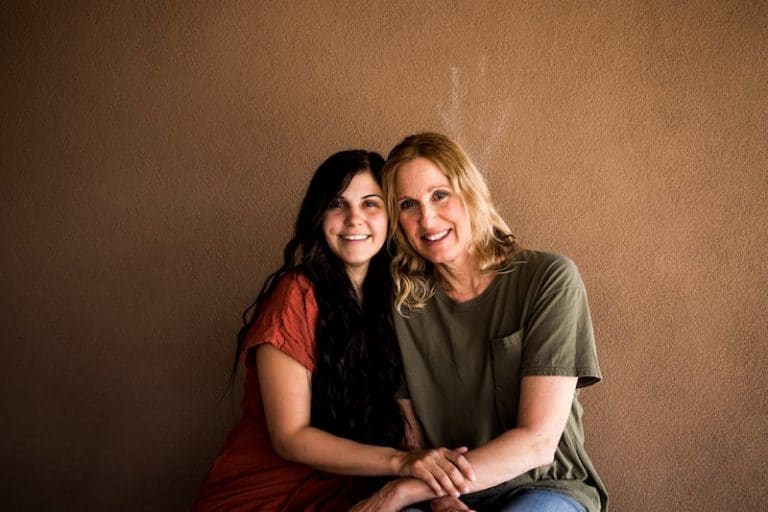
Br’ette V. with Big Sister Gail Veley

Among a bustling and energetic crowd, Br’ette V. and her husband Trevor recently occupied two auditorium seats at Dixie High School in Hurricane. They waited to see their young son Chantz and his class perform at a Christmas dance recital. As the children performed, the two watched with complete adoration. First grader Chantz stood on a milk crate and swayed to a Disney song. While Chantz may not have been a “natural,” he worked hard to find his rhythm.The rhythm of Br’ette’s life was very different 10 years ago. Br’ette, 27, never saw herself then where she is now. Her life today is fulfilled by family, including her loving husband, son Chantz, and six-month-old daughter Shyla Mae. Yet Br’ette, destined to be a more rebellious teenager than most, was literally on the brink of death from her drug addiction a decade earlier.

Although raised in a loving home by her steadfast mother, Kathy, Br’ette was drawn into drugs by other teens around her at school. Yet it wasn’t this one event in particular that predestined her to go down this path. Perhaps it was an accumulation of events, among them her parent’s divorce when she was six, or the influences of relatives using drugs and alcohol. Perhaps it was a lack of interest in school and the unwelcomed repetition of sixth grade.

Back when Br’ette was 12, Kathy, a single mother, recognized that Br’ette needed additional mentoring. She called upon Big Brothers and Big Sisters (BBBS) to provide her with a Big Sister. A woman named Gail stepped in to help. As a 39-year-old reformed rebellious teenager herself, Gail may not have had the same drug addictions as a teenager, but she understood rebellion, the thrill of sneaking a cigarette, and what it was like to be hungover. She sensed the need to help steer Br’ette toward better choices.

Yet, it wasn’t enough intervention to prevent the inevitable. Within a few years, Br’ette ended up focusing on drugs over everything else. As a student who had briefly earned straight A’s after spending time with Gail, she was once again facing failure. She went to drug rehabilitation near Salt Lake City and became clean for a while. However, as soon as she was back home, an old boyfriend and avid drug user began occupying her time. 

In that same time period she met Trevor, with whom she had an instant spark and a romantic interest. But he didn’t want a girl hooked on drugs. They stopped seeing each other, yet Trevor still cared deeply. 

Shortly afterward, “I was at home sitting on my bed, tweaking out at like two in the morning,” Br’ette recalled. “I was drawing pictures and seeing shadow people. I’ve heard that if you see shadow people you are near death. Then I looked over and saw Trevor standing in the doorway. I didn’t even think he was real.”

Acting on impulse, Trevor had climbed in his car that predawn morning as though being prompted by a guardian angel. The next thing he knew, he was driving to her house. Standing in the door of her room, he promised to stay with her that weekend if she would get clean. Knowing her life needed desperately to be turned around, she agreed. 

Two long, grueling days later, she was through the worst of it, lucid and clear-headed. She and Trevor became engaged six months later. His devotion, along with her mother’s belief in her, enabled her to leave a darkened world behind her and thrive. Today she works full-time, is raising two healthy children, and is very happily married to Trevor. Together, they plan to buy a 40-foot sailboat and experience a completely different life outside of what they have known.

“It was a change of perspective that helped me,” Br’ette said. “It’s a matter of will power. Are you willing to be stronger than your desire to use? I’m in a much better place now and don’t need to.”

RELATED STORIES:
Substance Abuse Spike And Drug Recovery During COVID-19
Utah’s Suburban Drug Use
How Utah’s Wild Places Provide a Unique and Effective Adventure-Therapy for Troubled Youth
The Other Side Academy: A Home for Recovering Addicts and Criminals in Salt Lake City

, ,

Join our newsletter.
Stay informed.


  • Salt Lake City Newcomers Club: Finding Friendship and Belonging Since 1948

    Moving away from your hometown can come with many blessings. But for some, it also comes with just as many bouts of loneliness. That ache of not knowing where to meet people, or grieving the friends you left behind, comes in waves. Workplaces and churches can sometimes provide ready-made communities, but what happens when they don’t? Where do you go to find true belonging?


  • Highway 6 and the Midland Trail: Utah’s Transcontinental Highway History

    From Price Canyon to Delta’s desert stretch, Utah played a central role in building the Midland Trail, one of America’s earliest transcontinental highways and the foundation of today’s Highway 6.


  • A Stand-Up Wheelchair Gives Paralysis Patients Greater Independence

    After a cycling accident left him paralyzed, Bill Winchester had to relearn how to navigate daily life from a wheelchair. A stand-up wheelchair later gave him the ability to rise, move more independently, and regain parts of the active life he once knew.


  • Whiskey, Bullets & a Buried Town: Archaeologists Reveal Alta’s Wild Past

    Before Alta was known for powder days and lift lines, it was a silver mining town clinging to the side of a narrow canyon. In the late 1800s, men lived at 8,000 feet, went underground each day, and endured winters that regularly buried buildings in snow. This past summer, that mining town resurfaced — literally — during construction at the Alta Ski Area.

    To understand what Alta really looked like, you don’t begin with legend. You begin with its trash — and this time, that happened almost by accident.

    Alta Ski Area was installing underground water reservoirs to support snowmaking. Because the project sits on Uinta-Wasatch-Cache National Forest land, an archaeologist was required to monitor the excavation. No one expected the trench to produce much.

    But, It did.

    Artifacts began surfacing almost immediately. Enough that the Forest Service contacted the Utah State Historic Preservation Office for help. Lexi Little, who coordinates the Utah Cultural Site Stewardship Program, helped mobilize nearly 30 volunteers to assist with what quickly became a focused two-week excavation.

    Winter deadlines were approaching. The pipes for the reservoirs had to go in the ground. There wasn’t time for a slow, extended dig.

    “It was two weeks of digging in the dirt and helping figure out exactly what we were looking at,” Little said.

    Most of the people screening soil weren’t professional archaeologists. They were trained stewards from around Utah — part of a statewide volunteer network that now approaches 500 people. They poured dirt through shaker screens, scanning for fragments that could piece together a town long buried.

    “Archaeology is human trash,” Little explained. “Archaeologists are very into trash.”

    Alta had left plenty behind.

    https://youtu.be/hzIHzx3OGoo?si=dKcl2CEz-t6FZzYw

    Victorian-style ceramics appeared first — the kind typically used in hotels. Medicine bottles followed. Ink bottles. Hand-blown glass. A porcelain doll’s foot surfaced from the soil, a small detail that shifted the mental image of the town. Families were here. Children were here. This wasn’t only a camp of miners.

    The bottles helped establish time. Manufacturing details — whether glass was hand-blown or mold-made, whether a maker’s mark appeared on the base — allowed archaeologists to date many of the artifacts to the 1870s through the 1890s, when Alta was booming as a silver mining town.

    “That gives you that range of dates for when Alta was really booming,” Little said.

    One reusable soda bottle clearly stamped “Salt Lake City” connected the canyon to the valley economy below.

    Then something unusual rolled out of a dirt pile.

    A corked bottle. Intact. Liquid still inside.

    Continue reading and support independent Utah journalism with a purchase of Utah Stories (Digital + Print) or 3 month free trial (Digital).