“We’re a family here. We’re all about connection. If addiction is disconnection, recovery is reconnection.” —Dave Derocher.
I recently had the chance to meet with Dave Derocher, executive director of The Other Side Academy, a home for recovering addicts and criminals in Salt Lake City. I greeted him in their home-base building, a historic mansion located in east downtown. The warm energy is palpable, making it feel like a home.
Dave described himself as a drug addict for over 27 years, and was arrested over 25 times. He found recovery through a program in San Francisco called Delancey Street after facing a 29-year prison sentence at age 38. He went on to lead The Other Side Academy, a two-and-a-half year residential program that provides participants with everything they need for a full life—a home, all their food, a job, and a community—and it’s completely free with no waiting list.
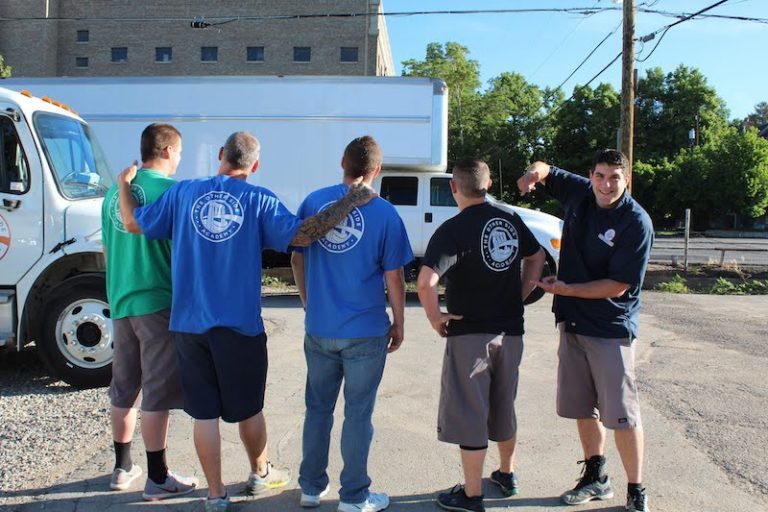
Founded in 2015, TOSA receives zero financial support from the government, insurance, or private donors. Instead, the lion’s share of the organization’s income is generated through two social enterprises, The Other Side Movers and The Other Side Thrift Boutique. As Utah’s top-rated moving company on Yelp, The Other Side Movers completes over 250 moves a month.
Dave fills me in on one of TOSA’s secret ingredients. “Our program uses three basic principles. We believe that honesty and accountability equal integrity. If you’ve got integrity, you’ve got sobriety.” As he speaks, I notice it’s real, it’s raw, and something in me leaps forward in recognition of the truthfulness of what he’s saying.
“We give our participants enough time to live in a healthy community until they’re ready to live in a healthy community,” Dave said. Program participants graduate because they’re ready, not because a day has come up like other programs where support is constrained to a time-limit. Seventy percent of TOSA participants ask to stay for a third or fourth year.
TOSA is a peer-driven community. “Most of our program participants have been to many rehab and treatment programs and know exactly what to say to a doctor or therapist. But their peers see right through it. There’s a very low tolerance for bullshit. Participants are held accountable by their peers,” Dave said.
“There’s a program within our program called Games, where we talk openly about what we observe in one another’s behavior and provide support to change it. You have to be able to hear feedback. All we’re doing is addressing behavior—we’re not attacking each other. And we’re all doing it together.”
“Games are hard, but the feedback is real and wrapped in love. Love is truth. If you love someone, you are honest with them, especially when it’s hard,” Dave said.
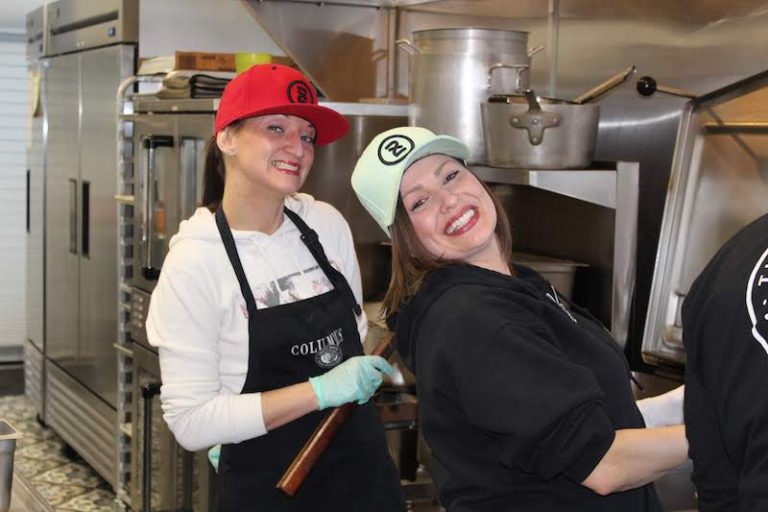
I also had the chance to meet with two former program participants, Tori and John, who’ve moved on to working as staff at TOSA. Both of Tori’s parents were addicts. Raised by her single dad, she began using hard drugs at age 12. By the time she arrived at TOSA, she had been to jail about 20 times.
As I spoke with Tori and she conveyed the challenges life has dealt her, I noticed that the woman sitting before me was calm and self-assured. She described her experience at other addiction programs as, “too short to really be supportive, and none of them felt like a home or family.”
“You’re supported here. You’re loved and cared for. We give each other hugs. We listen to each other’s stories. People feel good about themselves,” Tori said.
She went on to say, “Before I got here, I was alone and okay to be alone. But after a while here, I started to smile. I started to listen. And I realized I need everybody else. I didn’t have empathy before. I learned empathy here.”

John grew up in Provo and considers himself to be raised in a good family. He got into drugs in high school and has been to jail around 20 times. When he arrived at TOSA, he thought he just needed to get clean. He described his first meeting with Dave. “He told me, ‘Your problem is not drugs. You’re a liar, a thief, and a cheat.’”
John reported to me, “No one ever really talked to me like that before. It was interesting. Part of me was naturally defensive, but it also felt true. I knew he was so right.”
John went on to say that,“Somewhere along the line in my life, I stopped building connections to others. I did okay interacting with people but I never felt truly close to anyone. Around nine months in the program, I started feeling connected to others again. And around a year I began mentoring younger students, which felt awesome.”
“Around six to twelve months, people start to feel something magic. They begin to care about people and trust that people care about them. I’ve seen it in others and it happened for me,” John said.
“We’re working to be part of the solution here. If we can do it, anyone can,” Tori said. When I asked what she would say to other long-term addicts, she responded, “Don’t give up. There are places to go and The Other Side is one of them. Reach out and ask for help. It’s here. Everybody deserves another shot. And if you arrive here, know that it only keeps getting better.”
Tori ended our meeting with the exclamation, “I get overwhelmed with how amazing life is. We’re so happy. I tried to find reasons to be upset the other day and that didn’t work out too well.”
I conclude my visit blinking away tears and find myself sincerely thanking them, not just for meeting with me, but for the testament of hope their lives bring to others. And perhaps I was touched by what John and Tori’s lives were transformed by—truth.
There are two ways to join TOSA as a program participant. The first is to walk through the front door and ask for an interview. The second is to write a letter from the county jail prior to sentencing. If you or a loved one are interested in joining TOSA, visit TheOtherSideAcademy.com to apply.
The Other Side Thrift Boutique is located at 4290 S State Street and a new location opened since February 1, 2020 at 1286 E 3300 S.