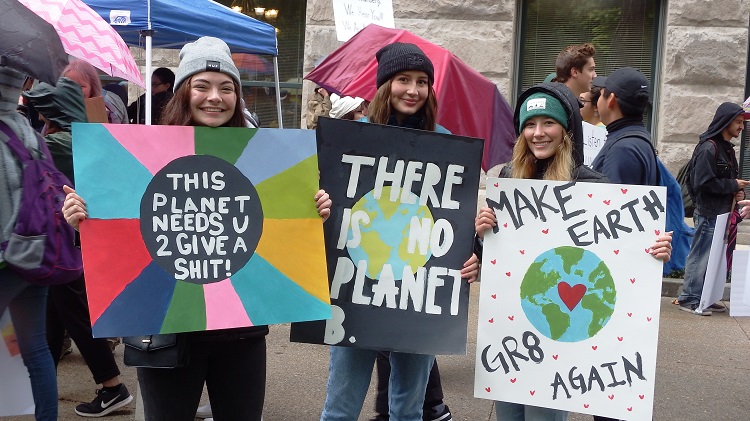
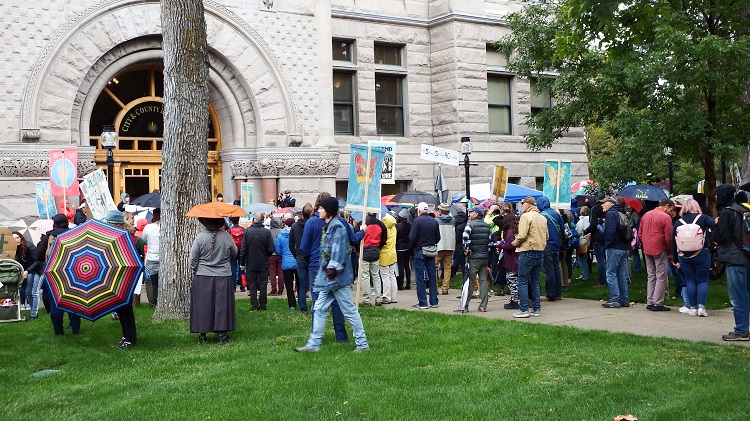
 A broad cross-section of Utahns, from schoolchildren to the elderly, braved a drizzly Friday on the north steps of the City and County Building to strike in protest of a warming planet.
Peaceful protestors, armed only with signs, banners and chants, joined in a worldwide effort to raise awareness of the growing problem of anthropomorphic (human-caused) increases in planetary temperatures that threaten our world, mostly due to the burning of fossil fuels. With signs that said “Human change, not climate change,” and chants of “No more heat, no more oil, keep that carbon in the soil,” participants were enthusiastic despite the dreary weather.
The event was inspired by the high-profile efforts of 16-year-old Greta Thunberg, who arrived in the US earlier this week. Thunberg, a Swedish high school student, has taken her climate crusade to world leaders and has inspired throngs of young people to push back against the destructive climate policies of past generations. Thunberg led the protest in New York City.
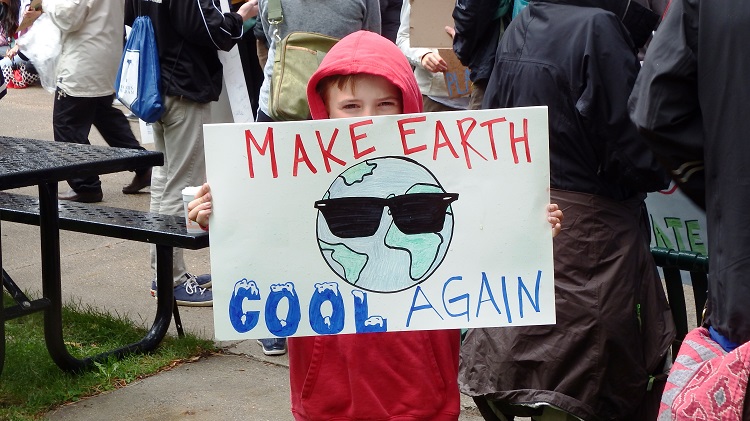
Despite nearly unanimous agreement by climate scientists that the world is warming, with potentially disastrous consequences, including up to a three-foot rise in sea levels by 2050, the Trump administration has taken a backward stance on the issue, calling climate change “a liberal hoax,” and has rescinded many of the pro-climate policies enacted by former presidents.
Isra Hirsi of the US Youth Climate Strike, which helped organize national climate strikes earlier this year, had this to say: “We all deserve the right to a future in a sustainable world. But today, that future is under threat because of climate change caused by carbon pollution. And right now, communities are being devastated by the current impacts of the climate crisis, with communities of color and low-income communities bearing the biggest burden.”
The Salt Lake event was small compared to others. According to the New York Times, “More than 100,000 protested in Melbourne, in what organizers said was the largest climate action in Australia’s history …” shutting down key public transport corridors for hours. Hundreds of thousands of mostly young people took to the streets in cities around the world, anxious about their future and angry at world leaders for failing to stop the crisis.