Utah Stories

University of Utah — Return to the U

An individual is never completely isolated, and in the end, there is no better way to create a healthy community than to help one another. This story is a tribute to everyone who, in Jamal’s words, “…..connected me with every and all the resources I needed to be able to both get back in school…

|

Jamal Carter & Return to the U

Jamal Carter & Return to the U Program
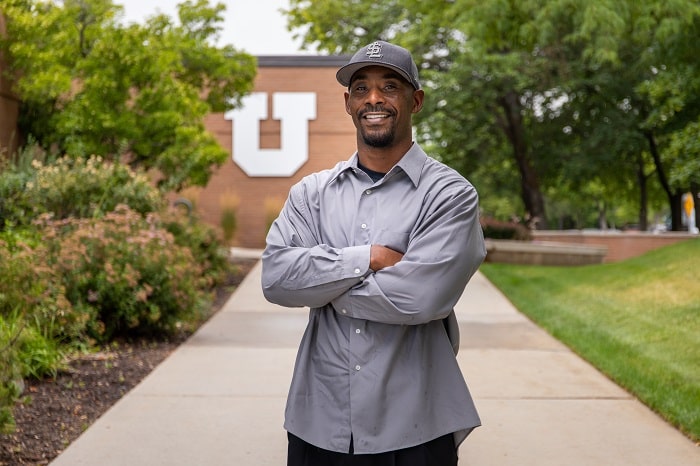
Jamal Carter. Photos by Braden Latimer.

Tiffani accepted a once in a lifetime opportunity to pursue an acting career. Lisa left the state to support her husband’s ambitions. Brandi’s scholarship ran out. Different circumstances constantly force students to quit their formal higher education.

But students also return and this is when the U of U Return to the U program helps those who know it is finally time to finish the job. We are telling this story through the eyes of a recent graduate, Jamal Carter.

Jamal’s Story

When Jamal first started at the U it was 1998. With finances straining and time going to jobs instead of classes, it was difficult to stay in school.

Due mostly to financial reasons, Jamal stepped out in 2000. He made another attempt to return in 2011, “and it was Professor Thomas Quinn who was very helpful in finally understanding Statistics. When I returned again in 2017 and needed Social Statistics, I knew who I wanted to learn from!” Even then, the choice between attending classes and earning an income made Jamal choose. He quit again and focused on his jobs.

Jamal’s work eventually took him to teach basketball at West High School and there he met U of U English Professor and Muse Project Director, Mark Matheson.

“He was and is a mentor and friend that has put me on track,” Jamal says. “He connected me with all the resources I needed to get back in school and finish what I started.”

Mark says, “I was struck by Jamal’s level of dedication instructing the players. Not only was he a mentor and coach, but I saw that Jamal was an excellent educator.” Once the two started chatting, Mark learned that Jamal needed a bachelor’s degree to advance and was only a few courses shy of graduation

But the person who stands out the most in his journey to graduation is Sociology Professor Theresa Martinez. “I can’t say enough good things about her and how helpful she was and still is. She is by far the best professor I have ever had. With her passion, expectations for excellence, knowledge of the subject as well as her push. Mrs. Martinez is a pure class act.”
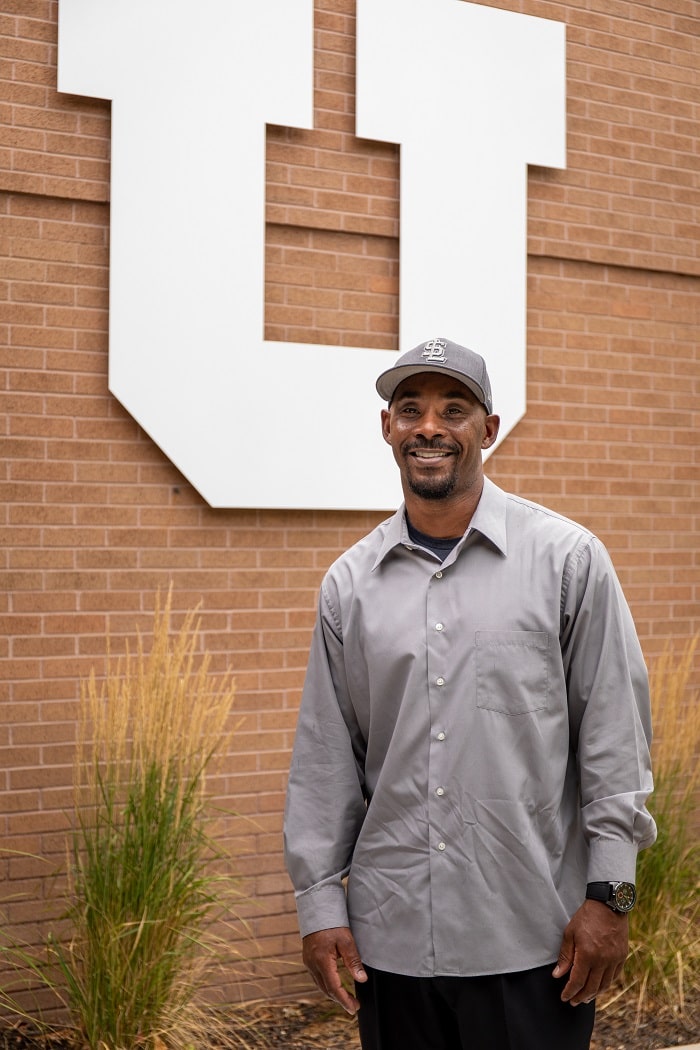
Jamal Carter--Return to the U

The Sociology Department Advisor Zach Franzoni played a key part. He helped Jamal get on track and adjusted to the new way of attending the U. “Zach was more than patient and helpful with me throughout my last semester before graduation.”

Return to the U

An individual is never completely isolated, and in the end, there is no better way to create a healthy community than to help one another. This story is a tribute to everyone who, in Jamal’s words, “…..connected me with every and all the resources I needed to be able to both get back in school and finish what I started.”

Two decades ago, the resources available at the U were different. Since then, Return to the U opened. Its support team watched many graduates come through. Striving to provide better support to working adults within our Utah community, the program has helped many returning students attain their bachelor’s degrees.

Jamal’s story is just one of hundreds. Many students cannot afford the financial or time resources to dedicate to formal education. The important thing is for that to change: for social institutions to take responsibility for helping individuals along in their formal education

Return to U is giving just such a service to our Utah community. For returning students, life away from courses never stops moving. At the point of coming back to school, Jamal worked to overcome balancing classes around working jobs. With different responsibilities vying for their attention, students can find relief in a team of supportive advisers.

Jamal kept mindful of his reason for coming back. “You have to figure out your why for coming back, what is it that makes you want to do this. Find your why and hold on to it while you go through the formal education system.”

Besides, Jamal says, “I think that the University of Utah has all the resources for any tradition or non-traditional student to be successful.”

READ MORE ABOUT EDUCATION IN UTAH HERE.

, ,

Join our newsletter.
Stay informed.


  • Highway 6 and the Midland Trail: Utah’s Transcontinental Highway History

    From Price Canyon to Delta’s desert stretch, Utah played a central role in building the Midland Trail, one of America’s earliest transcontinental highways and the foundation of today’s Highway 6.


  • Moab Rustic Inn: Walkable Lodging Near Mill Creek Trail

    Moab Rustic Inn is a locally owned motel near Mill Creek Trail, offering walkable access to downtown restaurants, shops, and Moab’s trail system.


  • Salt Lake City Staycation: The Grand America Hotel & Little America Hotel

    A Salt Lake City staycation reaches new heights at The Grand America Hotel and Little America Hotel, two downtown sister properties known for spacious rooms, refined dining, and long-standing hospitality.


  • Whiskey, Bullets & a Buried Town: Archaeologists Reveal Alta’s Wild Past

    Before Alta was known for powder days and lift lines, it was a silver mining town clinging to the side of a narrow canyon. In the late 1800s, men lived at 8,000 feet, went underground each day, and endured winters that regularly buried buildings in snow. This past summer, that mining town resurfaced — literally — during construction at the Alta Ski Area.

    To understand what Alta really looked like, you don’t begin with legend. You begin with its trash — and this time, that happened almost by accident.

    Alta Ski Area was installing underground water reservoirs to support snowmaking. Because the project sits on Uinta-Wasatch-Cache National Forest land, an archaeologist was required to monitor the excavation. No one expected the trench to produce much.

    But, It did.

    Artifacts began surfacing almost immediately. Enough that the Forest Service contacted the Utah State Historic Preservation Office for help. Lexi Little, who coordinates the Utah Cultural Site Stewardship Program, helped mobilize nearly 30 volunteers to assist with what quickly became a focused two-week excavation.

    Winter deadlines were approaching. The pipes for the reservoirs had to go in the ground. There wasn’t time for a slow, extended dig.

    “It was two weeks of digging in the dirt and helping figure out exactly what we were looking at,” Little said.

    Most of the people screening soil weren’t professional archaeologists. They were trained stewards from around Utah — part of a statewide volunteer network that now approaches 500 people. They poured dirt through shaker screens, scanning for fragments that could piece together a town long buried.

    “Archaeology is human trash,” Little explained. “Archaeologists are very into trash.”

    Alta had left plenty behind.

    https://youtu.be/hzIHzx3OGoo?si=dKcl2CEz-t6FZzYw

    Victorian-style ceramics appeared first — the kind typically used in hotels. Medicine bottles followed. Ink bottles. Hand-blown glass. A porcelain doll’s foot surfaced from the soil, a small detail that shifted the mental image of the town. Families were here. Children were here. This wasn’t only a camp of miners.

    The bottles helped establish time. Manufacturing details — whether glass was hand-blown or mold-made, whether a maker’s mark appeared on the base — allowed archaeologists to date many of the artifacts to the 1870s through the 1890s, when Alta was booming as a silver mining town.

    “That gives you that range of dates for when Alta was really booming,” Little said.

    One reusable soda bottle clearly stamped “Salt Lake City” connected the canyon to the valley economy below.

    Then something unusual rolled out of a dirt pile.

    A corked bottle. Intact. Liquid still inside.

    Continue reading and support independent Utah journalism with a purchase of Utah Stories (Digital + Print) or 3 month free trial (Digital).