Utah Stories

Inland Port boils over—former Mayor Rocky Anderson chimes in

Salt Lake City—The controversy surrounding the Inland Port proposal for Salt Lake City has reached a fever pitch. At the beginning of July, protesters became rioters when they stormed the Salt Lake City Chamber building in a violent clash with police. Utah Governor Gary Herbert called them, “Terrorists.” He calls them terrorists, which is a…

|


Salt Lake City—The controversy surrounding the Inland Port proposal for Salt Lake City has reached a fever pitch.

At the beginning of July, protesters became rioters when they stormed the Salt Lake City Chamber building in a violent clash with police. Utah Governor Gary Herbert called them, “Terrorists.”

He calls them terrorists, which is a bit extreme, but what do you call a Governor and State Legislature that wants to overstep its power and create a massive land grab, subverting the will of both the people of Salt Lake City and our duly elected political leaders? Perhaps a tyranny?

It appears overreach by state leaders over the will of Utah residents is the new status quo.

The Utah Stories Show

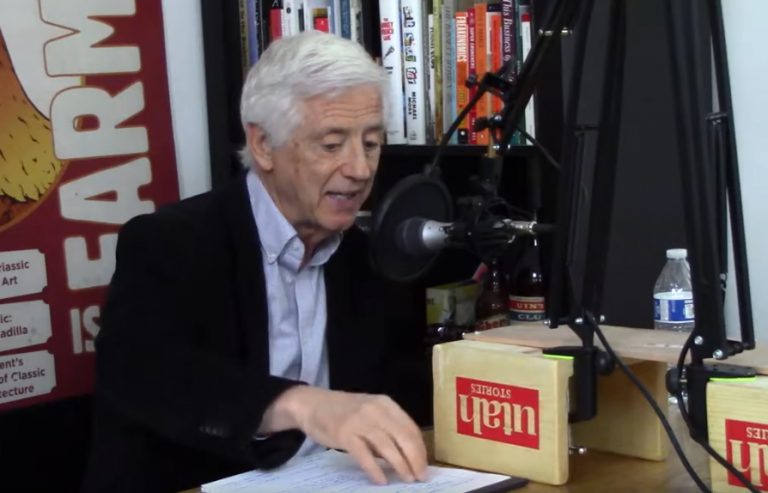
Rocky Anderson chimed in on this when he visited the Utah Stories Podcast in mid July.

Here is what he had to say about the Inland Port and the 11-Member “Inland Port Authority”:

[The inland port is] “Taking control of basically 30 percent of the land in Salt Lake City, ripping Salt Lake City off millions and millions of dollars of incremental tax base. Taking power away from our City Council, Planning and Zoning Commission, and the Mayor, for land use decisions that determines what kind of city we are going to have far into the future and it’s all going to be controlled by an unelected commission. It’s just absolutely wrong …We need decisions made by our elected officials and if they make bad decisions we can go out and replace them in a democratic manner.”

The Utah State Legislature paved the way for decision by passing HB433, which allows the 11-member inland port authority to make decisions out of normal state jurisdictional boundaries.

Anderson added, “It’s, at the bottom of it, so unbelievably corrupt. And that is what we get with the one-party system.“

The inland port passed proposal plans to develop 16,000 acres of land in Salt Lake City Northwest quadrant into a massive shipping and receiving center.

Supporters say the inland port would create jobs, it would offer Utah the status of offering a central hub for shipping and distribution. But there is so much downside to this proposal it seems unbelievable that the state leadership would force this on Utah residents.

The Harmful Environmental Impacts of the Inland Port

The biggest problem for residents in Salt Lake City is our air quality.

Devoting land to build a massive center to receive thousands of additional semi trucks is not a popular nor wise proposal. From the beginning the committee who created the “Inland Port Authority” recognized this. But they are in bed with the developers.

Utah isn’t in such dire need of trucking and forklift driver jobs that we need to sacrifice our quality of life for economic interests. Many protestors feel the state legislature is no longer working for us but for special interests, and the inland port passage, without public involvement, is a clear example.

Rocky Anderson was the former Mayor of Salt Lake City, and one of the rare politicians who wasn’t bought off by special interests. 

Anderson believes that the lawsuit filed by Mayor Biskupski against the “Inland Port Authority” was late, but still the right move. The lawsuit challenges the constitutionality of the proposal and the non-elected committee.

Biskupski describes the legislation that passed in the state legislature which undermined Salt Lake City’s leaders power as “designed to incrementally force Salt Lake City to bend to the legislature’s will.” She continued to say that this was a “gross state overreach of a municipal government.”

Biskupski is at odds with the Salt Lake City Council, who support the inland port and HB433. It’s clear this battle will continue to heat up as we prepare to determine who our next mayor of Salt Lake City will be.

Coming Up

Be sure to tune into the Utah Stories show on Friday, where we will attempt our first ever live feed of the podcast where we will be inviting on the program Mayoral candidates Luz Escamilla and David Ibarra to discuss the Inland Port among other issues.



Join our newsletter.
Stay informed.


  • Highway 6 and the Midland Trail: Utah’s Transcontinental Highway History

    From Price Canyon to Delta’s desert stretch, Utah played a central role in building the Midland Trail, one of America’s earliest transcontinental highways and the foundation of today’s Highway 6.


  • Utah Acquires US Magnesium Assets in $30M Deal to Protect the Great Salt Lake

    Utah leaders announced the state has successfully won the bid to acquire key assets of the defunct US Magnesium facility on the Great Salt Lake, including its associated water rights and property.


  • Whiskey, Bullets & a Buried Town: Archaeologists Reveal Alta’s Wild Past

    Before Alta was known for powder days and lift lines, it was a silver mining town clinging to the side of a narrow canyon. In the late 1800s, men lived at 8,000 feet, went underground each day, and endured winters that regularly buried buildings in snow. This past summer, that mining town resurfaced — literally — during construction at the Alta Ski Area.

    To understand what Alta really looked like, you don’t begin with legend. You begin with its trash — and this time, that happened almost by accident.

    Alta Ski Area was installing underground water reservoirs to support snowmaking. Because the project sits on Uinta-Wasatch-Cache National Forest land, an archaeologist was required to monitor the excavation. No one expected the trench to produce much.

    But, It did.

    Artifacts began surfacing almost immediately. Enough that the Forest Service contacted the Utah State Historic Preservation Office for help. Lexi Little, who coordinates the Utah Cultural Site Stewardship Program, helped mobilize nearly 30 volunteers to assist with what quickly became a focused two-week excavation.

    Winter deadlines were approaching. The pipes for the reservoirs had to go in the ground. There wasn’t time for a slow, extended dig.

    “It was two weeks of digging in the dirt and helping figure out exactly what we were looking at,” Little said.

    Most of the people screening soil weren’t professional archaeologists. They were trained stewards from around Utah — part of a statewide volunteer network that now approaches 500 people. They poured dirt through shaker screens, scanning for fragments that could piece together a town long buried.

    “Archaeology is human trash,” Little explained. “Archaeologists are very into trash.”

    Alta had left plenty behind.

    https://youtu.be/hzIHzx3OGoo?si=dKcl2CEz-t6FZzYw

    Victorian-style ceramics appeared first — the kind typically used in hotels. Medicine bottles followed. Ink bottles. Hand-blown glass. A porcelain doll’s foot surfaced from the soil, a small detail that shifted the mental image of the town. Families were here. Children were here. This wasn’t only a camp of miners.

    The bottles helped establish time. Manufacturing details — whether glass was hand-blown or mold-made, whether a maker’s mark appeared on the base — allowed archaeologists to date many of the artifacts to the 1870s through the 1890s, when Alta was booming as a silver mining town.

    “That gives you that range of dates for when Alta was really booming,” Little said.

    One reusable soda bottle clearly stamped “Salt Lake City” connected the canyon to the valley economy below.

    Then something unusual rolled out of a dirt pile.

    A corked bottle. Intact. Liquid still inside.

    To access this post, you must purchase Utah Stories (Digital + Print) or 3 month free trial (Digital).


  • The Only Full Bottle of Alcohol Ever Found in Utah Was Unearthed in Alta

    When a backhoe rolled a corked bottle out of the dirt at Alta this summer, no one immediately grasped what they were holding. It wasn’t empty. It wasn’t shattered. It was full. “The bottle that was discovered up at Alta is the only bottle of alcohol ever discovered in an archaeological excavation in the state…