Utah Stories

A Labor of Love: Arborist Christopher Little cares about trees

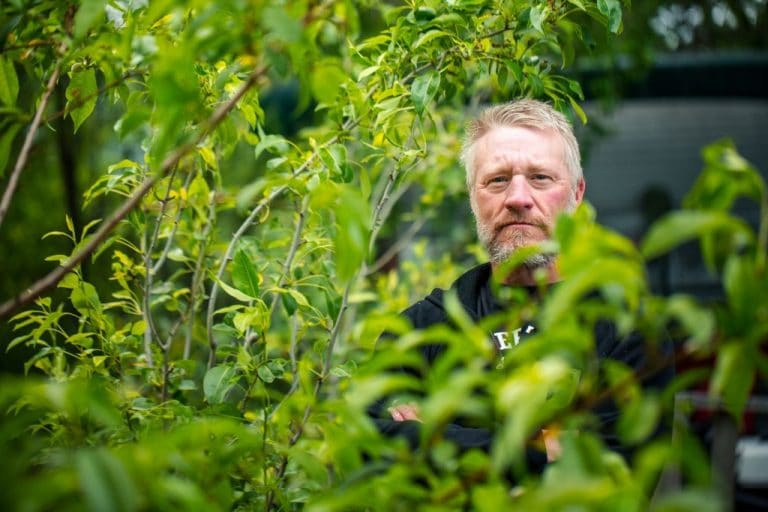
Little’s business, which he started in 2005, Arbortec Tree Preservation, LLC has a healthy client list. Besides maintaining established trees, Little will consult with businesses and homeowners to select the perfect tree for a site. What a client has planned might not be the best option for the chosen spot.

|


Arborist gives urban trees a trim

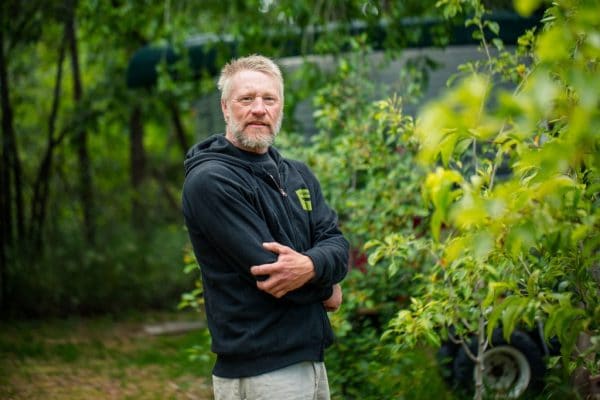
Christopher Little makes his living climbing trees. Kids might dream of growing up and having a job that includes tree climbing, but Little made it a reality.

Little is an arborist.

“An arborist is someone who works with trees in an urban setting. As opposed to a forester, an arborist works on trees at homes and properties removing disease, diagnosing health problems, removing dead branches, pruning, and maintaining trees. It is different from landscaping in that I work from start to finish with trees, maintaining their health and beauty from planting to the end of life,” Little says.

Little recalls childhood memories of his uncle who worked for Davey Trees and later for Salt Lake City as an arborist. He thought it was a “cool, rugged kind of job” and different from his father’s job as a businessman.

As he got older, his uncle started to show him the basic knots used to ascend trees safely. He also saw his uncle make a living as the sole breadwinner for his family.

“He was never out of work because trees go down in storms.” His decision was made.

His uncle pointed him to a company where he started his training. They thought he was a “natural” since he understood ropes from his climbing background. He also enrolled at Utah Valley Community College (UVCC) in a two-year arborist apprentice program.

It taught him how to work around power lines, how to ascend trees, how to keep his co-workers safe, tree biology, tree climbing, and rope rigging. All of his studies prepared him to earn a certificate with the International Society of Arboriculture (ISA).  

After a couple of years in Oregon dealing with 200-foot oaks and pines, he came back to Utah to start a business. “When I got back the trees seemed much smaller,” he recalls.

Little’s business, which he started in 2005, Arbortec Tree Preservation, LLC has a healthy client list. “I want to make trees healthy and happy. Companies bigger than mine don’t have time for fine detail and I think the trees suffer because of that. Trees are living things, much like a pet, and I take more care with them.”

Besides maintaining established trees, Little will consult with businesses and homeowners to select the perfect tree for a site. What a client has planned might not be the best option for the chosen spot.

It can be hard when a beloved tree reaches the end of its life. People are reluctant to cut them down, and it can get expensive. But dead branches become a dangerous hazard.

“Sometimes you have to bite the bullet and bring it down.”

Oftentimes a crane or bucket truck is necessary along with creatively rigged ropes.

Siberian elms help keep him in business. “If ever there was an evolutionary masterful tree—this is it,” Little says.

The elms will grow in any soil, find water in any situation, and can grow 60 to 75 feet in four years. He finds it quite “impressive” dealing with the elms. They can lose big branches in a storm and produce a flurry of white seeds that a breeze will blow to new sites.

Little likes to take the time to deal with various situations, be it cleaning up after storms, helping clients pick trees, diagnosing diseases, or assessing light and water tolerances. Why does he do it?

“It’s simple,” he says. “I love to work with trees.”


Arbortec Tree Preservation, LLC

Salt Lake City, UT 84107

801 541-6360

Did you enjoy this story? Click HERE to read about other passionate Utah characters.

, , ,


Join our newsletter.
Stay informed.


  • Whiskey, Bullets & a Buried Town: Archaeologists Reveal Alta’s Wild Past

    Before Alta was known for powder days and lift lines, it was a silver mining town clinging to the side of a narrow canyon. In the late 1800s, men lived at 8,000 feet, went underground each day, and endured winters that regularly buried buildings in snow. This past summer, that mining town resurfaced — literally — during construction at the Alta Ski Area.

    To understand what Alta really looked like, you don’t begin with legend. You begin with its trash — and this time, that happened almost by accident.

    Alta Ski Area was installing underground water reservoirs to support snowmaking. Because the project sits on Uinta-Wasatch-Cache National Forest land, an archaeologist was required to monitor the excavation. No one expected the trench to produce much.

    But, It did.

    Artifacts began surfacing almost immediately. Enough that the Forest Service contacted the Utah State Historic Preservation Office for help. Lexi Little, who coordinates the Utah Cultural Site Stewardship Program, helped mobilize nearly 30 volunteers to assist with what quickly became a focused two-week excavation.

    Winter deadlines were approaching. The pipes for the reservoirs had to go in the ground. There wasn’t time for a slow, extended dig.

    “It was two weeks of digging in the dirt and helping figure out exactly what we were looking at,” Little said.

    Most of the people screening soil weren’t professional archaeologists. They were trained stewards from around Utah — part of a statewide volunteer network that now approaches 500 people. They poured dirt through shaker screens, scanning for fragments that could piece together a town long buried.

    “Archaeology is human trash,” Little explained. “Archaeologists are very into trash.”

    Alta had left plenty behind.

    https://youtu.be/hzIHzx3OGoo?si=dKcl2CEz-t6FZzYw

    Victorian-style ceramics appeared first — the kind typically used in hotels. Medicine bottles followed. Ink bottles. Hand-blown glass. A porcelain doll’s foot surfaced from the soil, a small detail that shifted the mental image of the town. Families were here. Children were here. This wasn’t only a camp of miners.

    The bottles helped establish time. Manufacturing details — whether glass was hand-blown or mold-made, whether a maker’s mark appeared on the base — allowed archaeologists to date many of the artifacts to the 1870s through the 1890s, when Alta was booming as a silver mining town.

    “That gives you that range of dates for when Alta was really booming,” Little said.

    One reusable soda bottle clearly stamped “Salt Lake City” connected the canyon to the valley economy below.

    Then something unusual rolled out of a dirt pile.

    A corked bottle. Intact. Liquid still inside.

    Continue reading and support independent Utah journalism with a purchase of Utah Stories (Digital + Print) or 3 month free trial (Digital).


  • How Horses Help Kids Heal: Inside Utah’s Equine Therapy World

    Kelty Johnson trains horses for a living, but her deeper work happens in the quiet space between animal and human. On the Utah Stories podcast, she explains how equine therapy helps children regulate emotions, build confidence, and reconnect through presence rather than pressure.


  • Angela Brown: The Woman Behind SLUG Magazine and Craft Lake City

    Angela Brown is the publisher and owner of SLUG Magazine, one of the city’s longest-running independent publications and a central voice in Utah’s alternative arts and music scene. She is also the founder of Craft Lake City, a nonprofit that has grown into one of the state’s largest platforms for local makers and creative entrepreneurs.


  • Can Utahns Still Afford to Have Kids?

    When families cannot afford homes near their jobs, the daily math becomes brutal. Commutes stretch longer. Childcare costs pile up. Mortgages consume more of a household’s income. The result is what economists call “house-poor” families—people who technically own a home but have almost nothing left over to live on.

    The obvious question is: why isn’t this being fixed?