Community Relations

Mikaela Shafer Ogden’s Community Builder

What´s new? Answering this simple question has led Mikaela Shafer to explore and chronicle Ogden in the blog, Indie Ogden Utah.

|


Title: Mikaela Shafer

Mikaela Shafer  with Indie Ogden Utah Community Builder
Mikaela Shafer at the Indie Ogden Awards. Photos by Braden Latimer.

What´s new?

Answering this simple question has led Mikaela Shafer to explore and chronicle Ogden in the blog, Indie Ogden Utah.

Shafer moved to Ogden eight years ago from the Portland area with her daughter and then-husband. Indie Ogden Utah started out as a Mom blog. “I just talked about things I and my oldest daughter were doing, and places we were visiting,” says Shafer.

She met business owners and began telling their stories. “People started reading and sharing them,” says Shafer. “It grew from there.”

Indie Ogden Utah grew so fast that Shafer decided to throw a one-year party downtown with business owners and local residents. The City Weekly Awards had just come out and this gave Shafer the idea to start the Indie Ogden Awards the following year. “We sold out the first year and have been selling out every year since. It is now a full gala that is fun to attend.”

The community nominates and votes each year. Besides the usual awards for the best food, drink, arts, and shops, some of the unique awards for this year were ‘Best Home Away From Home,’ ‘Best Ally in the Arts,’ and ‘Best Community Leader.’

The 2019 ‘Ogdenite of the Year’ honor went to Anna Whitnack Davidson of Jessie Jeans Beans for her work with the homeless and others down on their luck. Besides feeding the homeless in her restaurant, she also finds them help when needed. She and her crew also fed and collected donations for the workers who were affected by the recent government shutdown.

“The awards change every year based on who people nominate,” says Shafer. “It is always fun because we get really tear-jerking stories and cute little tidbits that we never knew about.”

City Weekly awarded Indie Ogden Utah with the Best Weber County Spotlight Award in 2012 for shining a light on the “offbeat funkiness of O-Town,” and showcasing local music, recreation, and new restaurant reviews.

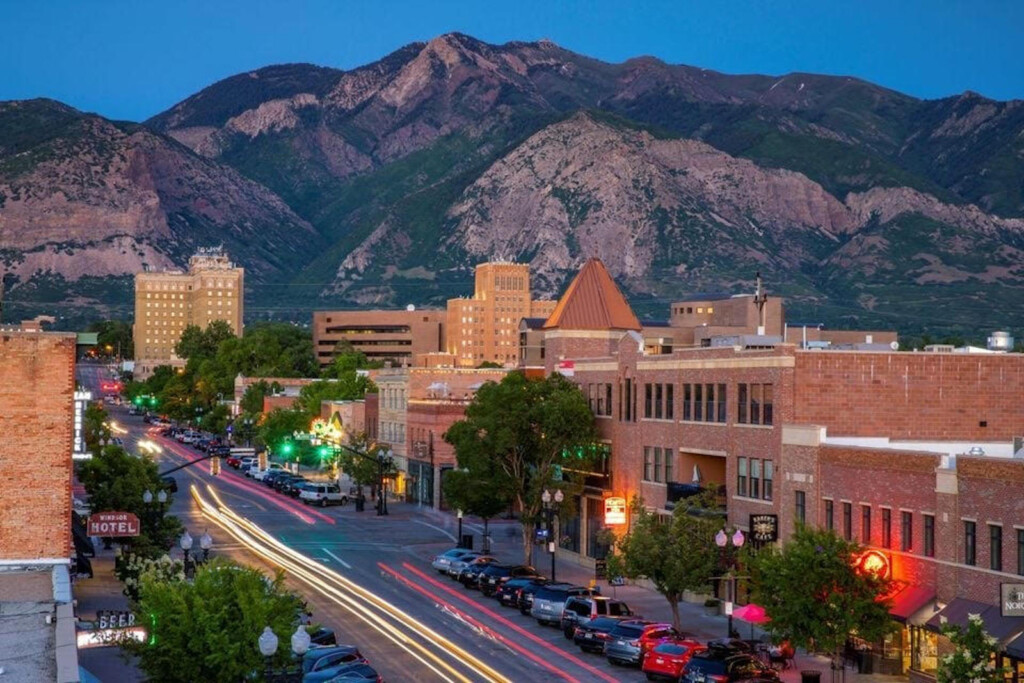
Ogden is just under 40 miles from downtown Salt Lake City, but it seems as if it is worlds away. “It’s this amazing town full of transplants and business owners. Our downtown is all locally owned, there are no chain businesses. When a new business opens, there’s a line out the door of locals waiting to support them. I would love it if more people would come to Ogden and check it out,” says Shafer.

Indie Ogden Utah is just one of Shafer’s side gigs. When she was new in town, she wanted to meet other Moms in the area, so she started a Facebook group called Ogden Rad Ladies, currently with over 2000 followers.

“It started off as the Ogden Rad Moms because I needed friends, my kid needed friends,” says Shafer. “It grew quickly and other women wanted to join because we were doing these really fun parties (weekly potlucks) and events. So I opened it up to any women or transgender women who wanted to join.”

Ogden Rad Ladies supports the women of Ogden by promoting and encouraging positive interaction, healthy friendships, community involvement, and personal growth.

Last year, recognizing the power of Ogden Rad Ladies in their community, Facebook invited 30 Facebook group administrators with community impact to a conference. “They flew us out to Chicago to meet Mark Zuckerberg and participate in a four-day-long series of workshops on how to better our communities, serve our audience better, and use Facebook as a platform to do good in the world,” says Shafer. “It was very exciting.”

Indie Ogden Utah and Ogden Rad Ladies aren’t the only things that occupy Shafer’s time. She works with over 100 clients, large and small, to help them grow their brand with social media management, copywriting, and PR. “I run my own freelancing company and I work full time for another company,” says Shafer. “I feel like I have creative ADD where I can’t just do one thing. I have to be constantly balancing a ton of plates.”


,


Join our newsletter.
Stay informed.


  • Has Utah’s Soft-on-Crime Justice Reform Made Communities Safer?

    Has this “soft-on-crime” approach resulted in safer streets?

    SALT LAKE CITY — A decade has passed since former Utah Governor Gary Herbert signed a massive justice reform bill into law in hopes that the state could reduce its prison population and manage low-level offenders through rehabilitation programs instead of incarceration. Has this reinvestment resulted in lower crime and recidivism rates?

    According to the Utah Department of Corrections, that landmark Justice Reinvestment Initiative aimed to “continue holding offenders accountable and securing our communities, but in a way that considers individual risks and treatment needs.”

    Are communities really safer when mental health and substance use needs are addressed through programs administered outside prison walls? The idea was to treat criminals differently based on their mental health needs and backgrounds. But at least one retired Adult Probation and Parole Officer, believes this “soft-on-crime” approach hasn’t resulted in safer streets.

    LOOKING BACK

    State Senator Todd Weiler, in that legislative role since 2012, helped drive the passage of the Justice Reinvestment Initiative (JRI), a massive bill that enjoyed broad-based approval among state officials and the Legislature as a whole.

    In November 2014, Weiler attended the national summit on the issue in San Diego, an event hosted by Pew Charitable Trusts. 

    “I was very involved in it. We had a lot of high hopes,” Weiler, a Woods Cross Republican, said in a recent interview. “That was about the time we were finalizing plans for the new prison. And we actually said that because of JRI we don’t need as many beds because we’ll be incarcerating fewer people. So that new prison was designed with this idea.”

    A key part of JRI dealt with adjusting sentencing for crimes related to addiction, dividing offenders into two basic groups: dangerous criminals who are a threat to society (that group goes to prison), and low-level offenders who get help kicking addictions through state-sponsored programs or private-sector rehabilitation.

    “The ultimate goal was if we have an otherwise good person who got caught up in an addiction, and as a result committed crimes, they need to be punished for their crimes,” Weiler said. “It’s not that we’re going to overlook what they did, but we wanted to focus primarily on helping them overcome their addiction and [that means] getting them back to their job and their family.” 

    Before JRI, low-level drug offenders with felonies would spend years in prison, which wreaked havoc with their lives and future prospects. Addressing the root cause of their theft and property crimes through supervision and treatment made sense. 

    “We’re all imperfect people,” Weiler said. “So we want people working their jobs, paying their bills and raising their kids rather than sitting in jail and watching TV or playing cards.”

    To access this post, you must purchase Utah Stories (Digital + Print) or 3 month free trial (Digital).


  • Salt Lake City Newcomers Club: Finding Friendship and Belonging Since 1948

    Moving away from your hometown can come with many blessings. But for some, it also comes with just as many bouts of loneliness. That ache of not knowing where to meet people, or grieving the friends you left behind, comes in waves. Workplaces and churches can sometimes provide ready-made communities, but what happens when they don’t? Where do you go to find true belonging?


  • A Ski Village or a Tipping Point? Nordic Valley Expansion Divides Ogden Valley

    The project, known as Nordic Village, is expected to roll out over the next decade and represents one of the largest tourism developments in the valley’s history.