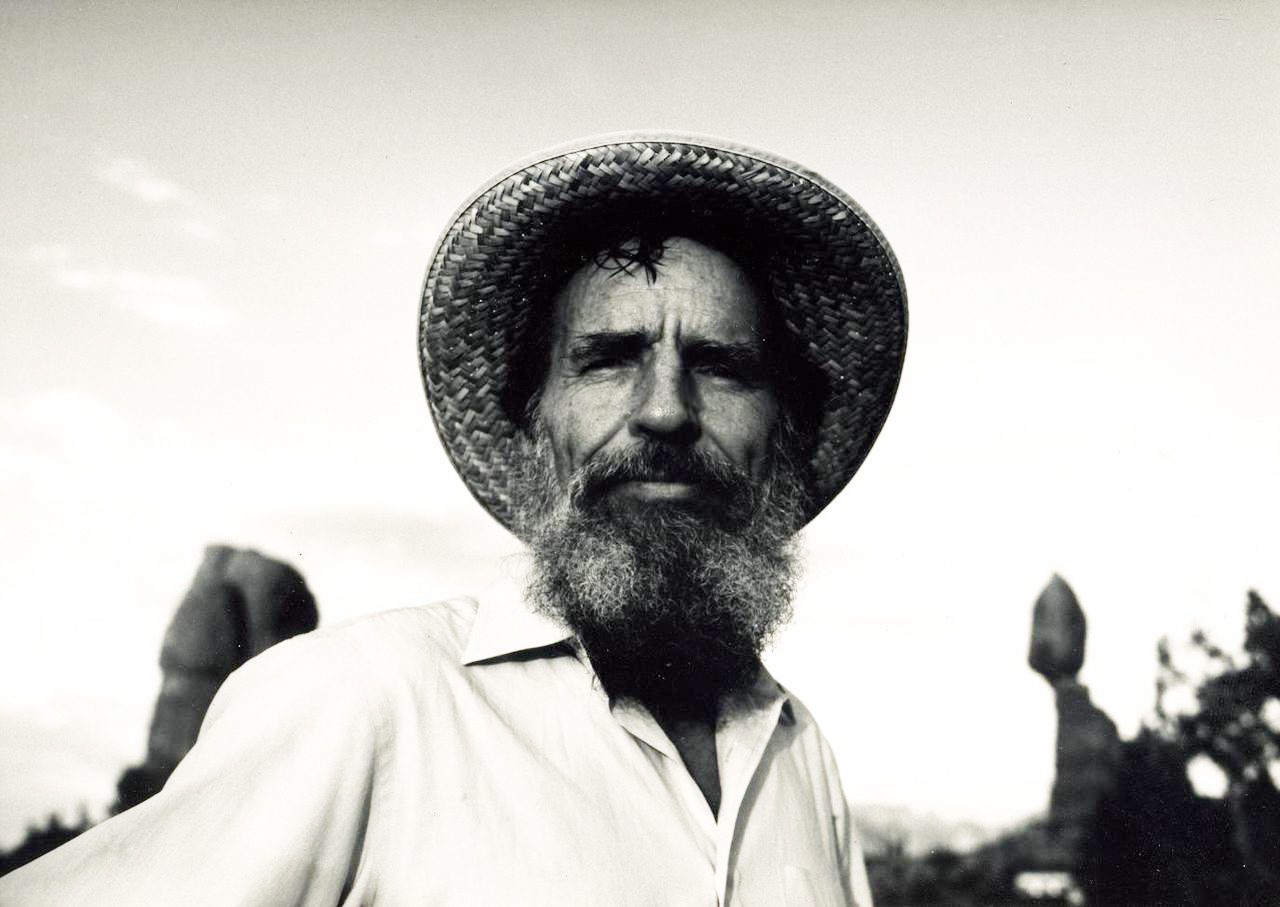
“The first literary biography of Edward Abbey in a generation, this thoughtful memoir—found in Charles Bowden’s files after his death—serves as a meditation on the writing life, the cult of readers, reputation, and the literary afterlife of a well-known writer.” – Excerpt from the back cover of The Red Caddy
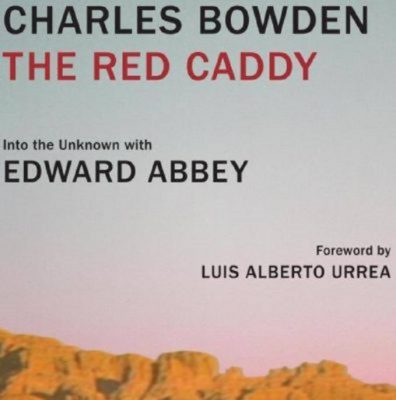
2018 marks the fiftieth anniversary of the release of Desert Solitaire, Edward Abbey’s love letter to Utah’s Arches National Monument. Commemorating the occasion, The University of Texas Press is releasing The Red Caddy, the never-published literary biography of Abbey written by the most fearless and feared writer, Charles Bowden.
Please join us on April 20, at 7 pm at Ken Sanders Rare Books, 268 S 200 E, Salt Lake City, in a Utah Humanities Council-sponsored event celebrating these two desert literary masters and long-time friends of the shop. Author Amy Irvine, filmmaker Trent Harris, journalist Scott Carrier, investigator Chad Nielsen and sonosopher Alex Caldiero will be joining us, and acclaimed filmmaker and producer Ned Judge will be showing his long-lost classic film I Loved it… I Loved it All, which features Ed Abbey revisiting Arches in a red Buick convertible. We hope to see you!

Copies of The Red Caddy: Into the Unknown with Edward Abbey will be available for purchase at this event.
The Red Caddy: Into the Unknown with Edward Abbey
Charles Bowden
120 pages |5.25 x 8|
ISBN: 978-1-4773-1579-8
Published by University of Texas Press, priced $21+tax+s/h
Ken Sanders Rare Books is a full-service antiquarian bookshop in downtown Salt Lake City.
If you would like more information about this topic, please call Cameron at (801) 521-3819, or email cmaughan@kensandersbooks.com.
About Ned Judge
Ned Judge grew up in the national park system where his father was a ranger. His film career began in 1961 when he was assigned as a cameraman/editor at a TV Station on Clark Air Force Base in the Philippines. After being discharged he returned to New Mexico and worked in local news and at the PBS station, KNME.
In 1964, he shot and produced his first national documentary about the new Wilderness Act which Congress had passed that year. He continued in news and public affairs throughout the 60’s and then landed a job in Minnesota working on a weekly, prime-time documentary series on the CBS station there. The series won several major awards. Ned’s film, Have Girl, Will Travel, about the prostitution recruitment link between the Twin Cities and New York City, won a Columbia-DuPont Award. While working for the show, Ned spent part of a summer hopping freights for Riding the High Iron, a film about the hobo life, and he also shot and directed Deliver Us From Evel , a humorous account of Evel Knievel’s failed attempt to rocket a motorcycle over the Snake River Canyon in Idaho.
In the 1980’s Ned joined NBC News in Burbank, California. It was there that he produced and directed the I Loved it All film with Ed Abbey. Judge produced several hundred stories there including a Today Show series about Hunter Thompson, a woman who helped design neutron bombs, and a story about tourist flights that actually landed on the ice at the North Pole.
He returned to the freelance life in the mind 1990’s. Ned co-produced a four hours series for TBS based on the Pulitzer-prize winning journalist Laurie Garrett’s best seller, The Coming Plague. He also produced hour documentaries for the TLC series Great Books and their science series Understanding. In the 2000’s, he worked with correspondent Lucky Severson on the PBS weekly program Religion and Ethics News Weekly. The show went off the air last year.
Ned is currently producing two PBS documentaries, one about medical cannabis and one about an innovative technology system that brings better health care to isolated rural areas around the world.