Utah Stories

Reef’s 3.0—Middle Eastern Fare Comes to Deer Valley

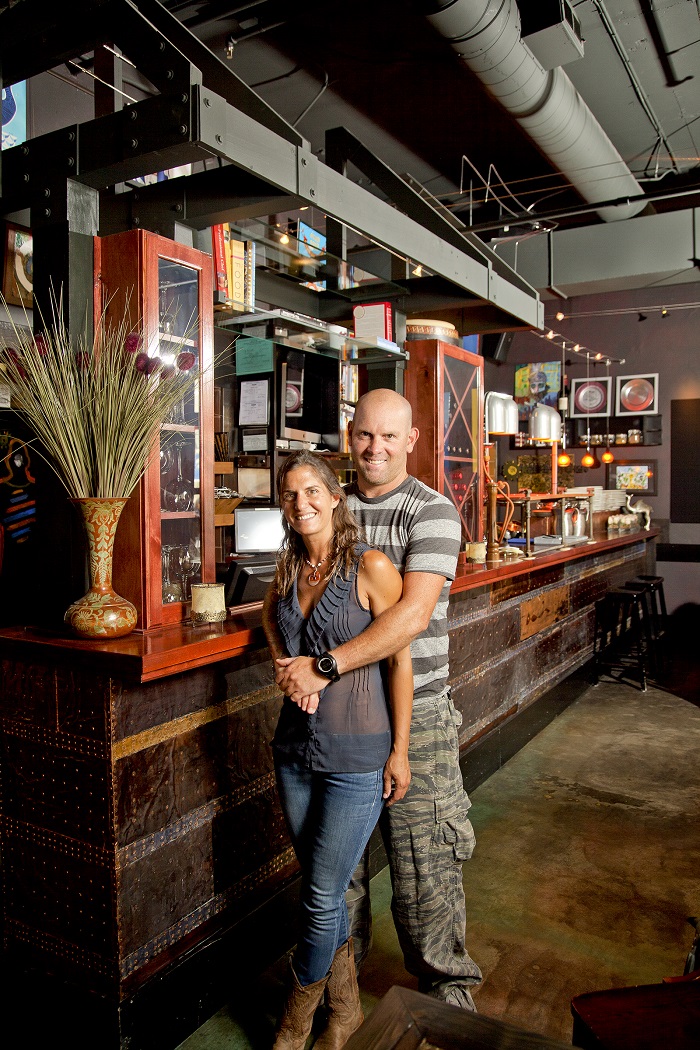
While the location has changed, Reef’s is still an independent family business with owner/chef Asi Yoked and his wife Tali at the helm.

|


Tali and Asi Yoked of Reef’s

Moving on up

Following a long run in its Marriott Plaza location on Main Street—Reef’s second—the restaurant relocated this December to its third venue in the Deer Valley Club, following a rent spike that the owners felt was unreasonable. It’s an interesting juxtaposition: a somewhat funky, Middle Eastern eatery situated in a posh Deer Valley lodge. I hope this location works for Reef’s as well as the previous ones have. It’s hard not to root for Asi and Tali’s success; they are extraordinary people and I know of no one who works harder.

Hailing from Tel Aviv, and having served in the Israeli Special Forces, the tattooed Asi is no stranger to hard work. He’s been open about dealing with drug addiction in New York City, and found his first cooking job at Denny’s in Park City. The original Reef’s was born following a successful summer of selling Middle Eastern fare like hummus and pita sandwiches at the Park City farmers market.

The vibe at the Deer Valley Club is mid-90s ski lodge, with lots of wood but little character. Local art on the walls helps give the bland-ish dining space some much-needed color splashes. But the real artwork is on the plates at Reef’s. Vibrant, deep-red sushi grade tuna is used for the poke (Hawaiian-style tuna tartare) contrasts with green avocado cubes marinated in a spicy soy sauce and served in a nifty glass with its own ice compartment to keep things cool.
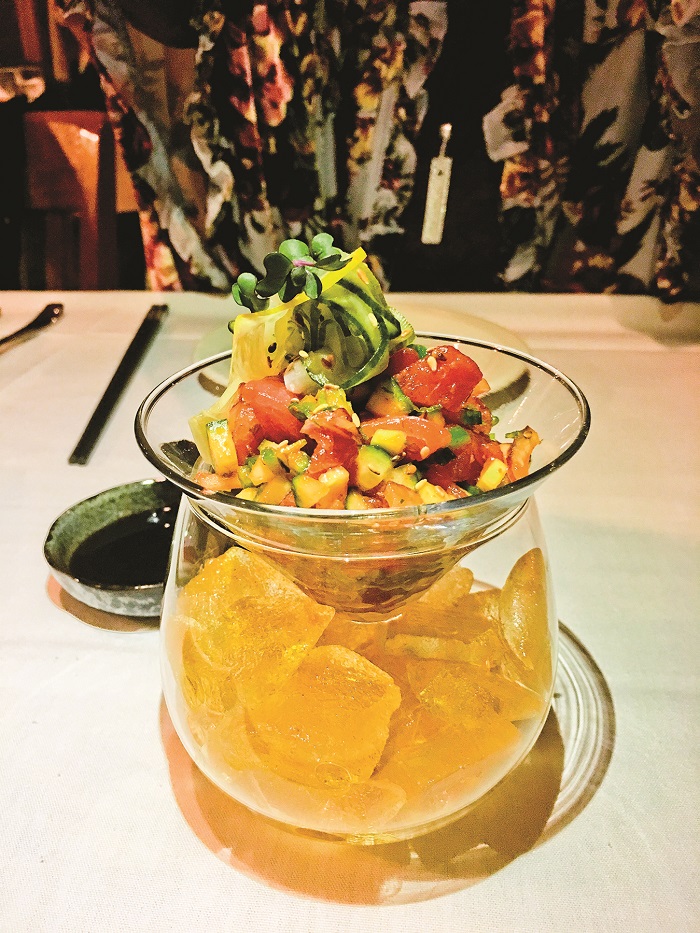
Reef’s Poke Tuna. Photos by Ted Scheffler.

Not just Middle Eastern

The poke signals a new direction for the Reef’s menu, which until now has been focused primarily on MIddle Eastern dishes. While those still account for most of the menu selections, sushi, nigiri and sashimi have been added, including a $32 Signature Roll. There’s a Ginger-Teriyaki Fish of the Day (market price) that my wife ordered and loved. When we visited it was mahi mahi with the aforementioned ginger-teriyaki sauce, heirloom tomatoes and microgreens.
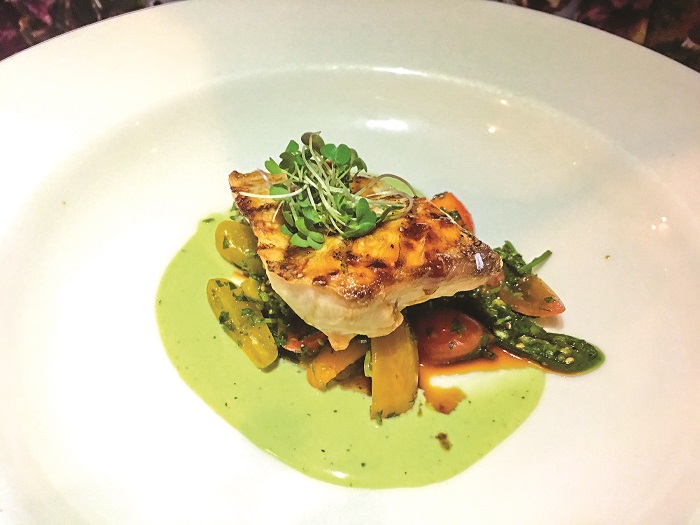
Mahi Mahi

The falafel at Reef’s is a must, and comes with a vibrant, fuschia-colored swoosh on the plate—beet and tahini sauce with sesame seeds and minced cilantro. It’s a dish, like the Israeli salad, hummus, baba ghanouj and sesame-cabbage salad, that are mainstays of Reef’s Middle East-oriented menu.
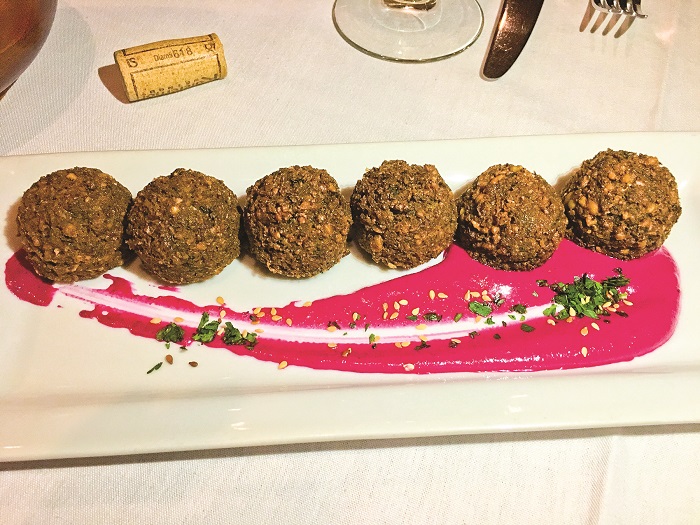
Falafel

Schnitzel Im

One of the more popular dishes over the years at Reef’s has been Asi’s chicken schnitzel. In the past, it was a traditional German/Austrian type schnitzel. On the new menu, it’s been updated a bit and now the boneless breast meat is coated and fried in a coconut-sesame breading which lends it a slightly sweet taste. This schnitzel rendition is known as schitzelonim—a sort of Israeli version of chicken fingers, albeit a very elevated one. I have to say, however, that for the $24 price tag, I expected a side dish with my schnitzel. But alas, it came simply with sauce and a couple of lemon wedges.
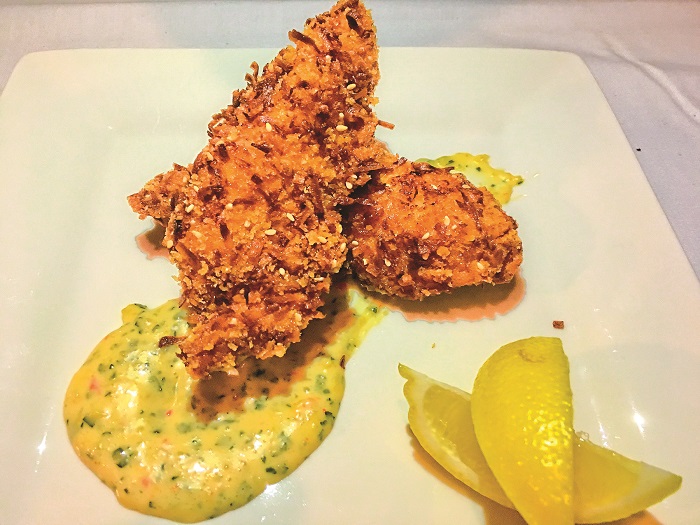
Schnitzel

We were going to pass on dessert, but Tali insisted that we indulge (gratis), and boy am I glad we did! Rich, dense, flourless chocolate olive oil cake was stupendous, as was the homemade halvah, a flaky tahini/sesame-based sort of candy cookie that, alone, is worth a trip to Deer Valley.
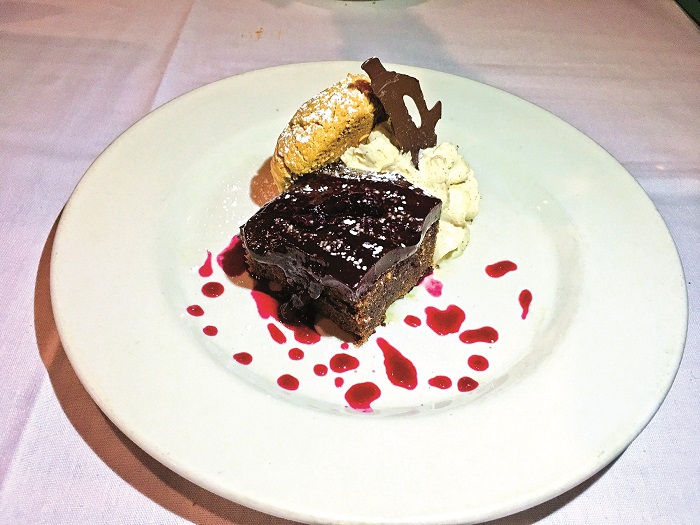
It will be interesting to see how Reef’s fares in posh Deer Valley. I suspect that visitors and locals alike will welcome Asi’s eclectic new menu. Here’s hoping that, as the saying goes, the third time’s a charm.

Reef’s
Deer Valley Club
7720 Royal Street, Park City
435-658-0323
reefsrestaurant.com

,


Join our newsletter.
Stay informed.


  • Highway 6 and the Midland Trail: Utah’s Transcontinental Highway History

    From Price Canyon to Delta’s desert stretch, Utah played a central role in building the Midland Trail, one of America’s earliest transcontinental highways and the foundation of today’s Highway 6.


  • Whiskey, Bullets & a Buried Town: Archaeologists Reveal Alta’s Wild Past

    Before Alta was known for powder days and lift lines, it was a silver mining town clinging to the side of a narrow canyon. In the late 1800s, men lived at 8,000 feet, went underground each day, and endured winters that regularly buried buildings in snow. This past summer, that mining town resurfaced — literally — during construction at the Alta Ski Area.

    To understand what Alta really looked like, you don’t begin with legend. You begin with its trash — and this time, that happened almost by accident.

    Alta Ski Area was installing underground water reservoirs to support snowmaking. Because the project sits on Uinta-Wasatch-Cache National Forest land, an archaeologist was required to monitor the excavation. No one expected the trench to produce much.

    But, It did.

    Artifacts began surfacing almost immediately. Enough that the Forest Service contacted the Utah State Historic Preservation Office for help. Lexi Little, who coordinates the Utah Cultural Site Stewardship Program, helped mobilize nearly 30 volunteers to assist with what quickly became a focused two-week excavation.

    Winter deadlines were approaching. The pipes for the reservoirs had to go in the ground. There wasn’t time for a slow, extended dig.

    “It was two weeks of digging in the dirt and helping figure out exactly what we were looking at,” Little said.

    Most of the people screening soil weren’t professional archaeologists. They were trained stewards from around Utah — part of a statewide volunteer network that now approaches 500 people. They poured dirt through shaker screens, scanning for fragments that could piece together a town long buried.

    “Archaeology is human trash,” Little explained. “Archaeologists are very into trash.”

    Alta had left plenty behind.

    https://youtu.be/hzIHzx3OGoo?si=dKcl2CEz-t6FZzYw

    Victorian-style ceramics appeared first — the kind typically used in hotels. Medicine bottles followed. Ink bottles. Hand-blown glass. A porcelain doll’s foot surfaced from the soil, a small detail that shifted the mental image of the town. Families were here. Children were here. This wasn’t only a camp of miners.

    The bottles helped establish time. Manufacturing details — whether glass was hand-blown or mold-made, whether a maker’s mark appeared on the base — allowed archaeologists to date many of the artifacts to the 1870s through the 1890s, when Alta was booming as a silver mining town.

    “That gives you that range of dates for when Alta was really booming,” Little said.

    One reusable soda bottle clearly stamped “Salt Lake City” connected the canyon to the valley economy below.

    Then something unusual rolled out of a dirt pile.

    A corked bottle. Intact. Liquid still inside.

    Continue reading and support independent Utah journalism with a purchase of Utah Stories (Digital + Print) or 3 month free trial (Digital).


  • Hearth and Hill Sugar House Restaurant Review | Salt Lake City

    Hearth and Hill Sugar House brings the menu depth and design confidence of its Park City sister to Salt Lake City. From Cheddar Biscuits and Chef’s Crudo to Scallop Saffron Risotto and Mary’s Organic Chicken, the restaurant balances eclectic offerings with consistent execution.


  • How Horses Help Kids Heal: Inside Utah’s Equine Therapy World

    Kelty Johnson trains horses for a living, but her deeper work happens in the quiet space between animal and human. On the Utah Stories podcast, she explains how equine therapy helps children regulate emotions, build confidence, and reconnect through presence rather than pressure.