Utah Stories

Utah’s Best Dive Bars

Leave the city and find a place where the vibe is friendly and the atmosphere is casual.

|


As a traveling salesman, I always appreciated the dive bars full of locals yet friendly to tourists. There are “tourist traps,” and then there are local bars. None of these picks, while famous, are tourist traps. They all offer a genuine, authentic vibe because they are owner-operated and mostly full of locals. Enjoy these dives on your next road trip. As a traveling salesman, I always appreciated the dive bars full of locals yet friendly to tourists. There are “tourist traps,” and then there are local bars. None of these picks, while famous, are tourist traps. They all offer a genuine, authentic vibe because they are owner-operated and mostly full of locals. Enjoy these dives on your next road trip. 
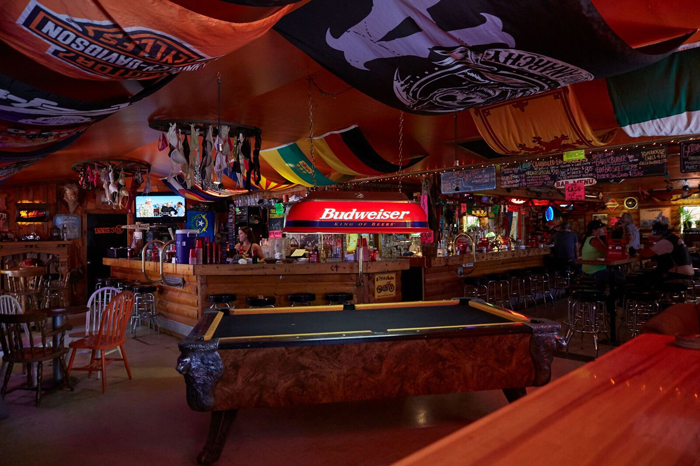
Kelly’s Roadhouse by Steven Vargo

Kelly’s Roadhouse

Situated on a country road off the I-84 freeway in Morgan Valley, Kelly’s Roadhouse is a great place to get away from the madness of the Wasatch Front. Popular with motorcyclists, there is plenty of bike parking. Don’t have a bike? There are plenty of parking spots for 4-wheeled transportation as well. Once inside, enjoy a cold beer and some of the best burgers and sandwiches in Utah. My personal favorite is the garlic burger. There is also plenty of patio seating if you prefer, just beware of the cats and the dog who like to say hello. Of special note, back inside, are brassieres hanging from the light fixtures. I don’t know why, but I prefer this to remain a mystery.

1550 West Old Highway Road, Morgan, Utah
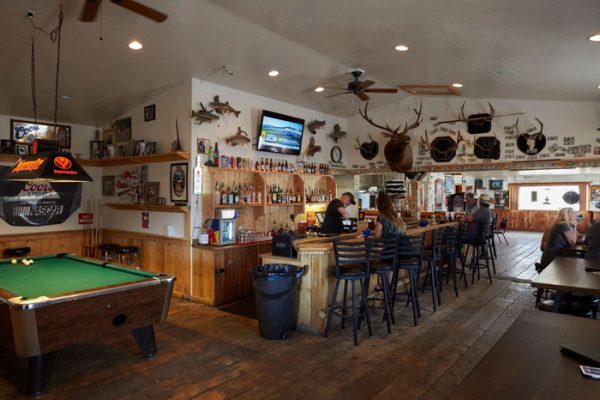
Timpanogos Tavern by Steven Vargo

Timpanogas Tavern

When you need a getaway from the metro areas, Heber City is the perfect place. The Timpanogos Tavern, or the Timp Tavern, as it is cordially known, is walking distance from a couple of hotels in town, my favorite being the Holiday Inn Express. Always filled with friendly people, you never know who you’ll be rubbing elbows with in the Timp Tavern—cowboys, hunters from the hills nearby, bikers, and, sometimes, firefighters from the U.S. Forest Service enjoying a needed break from summer’s action. You can watch, if you time it right, from the patio, a beautiful sunset as the sun goes down behind Mount Timpanogos.

1320 S Daniels Road, Heber City, Utah
Bunny’s Club by Steven Vargo

Bunny’s Club

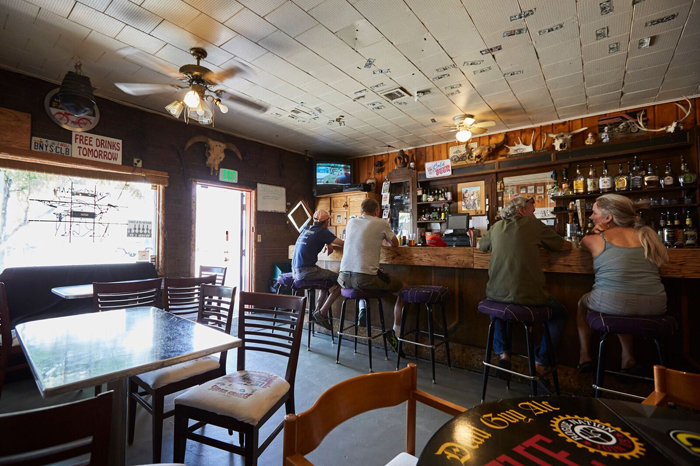
About midway down Coalville’s bucolic Main Street, Bunny’s Club doesn’t look like much from the outside, but once inside, you’ll find a friendly barkeeper, a passel of taxidermy, and a fairly spacious banquet area in the back. Another favorite of motorcyclists and the local denizens, you’ll usually find a mix of gregarious cowboys and cowgirls, weary travelers who came into town from the interstate, and bikers when the weather is warm. One of my favorite stops when I’m riding from Evanston, Wyoming, to Salt Lake City on a Sunday morning, Bunny’s is a great place to get some breakfast—but only if you like freshly made home cooking. Don’t be in a hurry, just relax, because this isn’t a fast food stop.

36 S Main, Coalville, Utah
Shooting Star Saloon by Bruce Grandin

Shooting Star Saloon

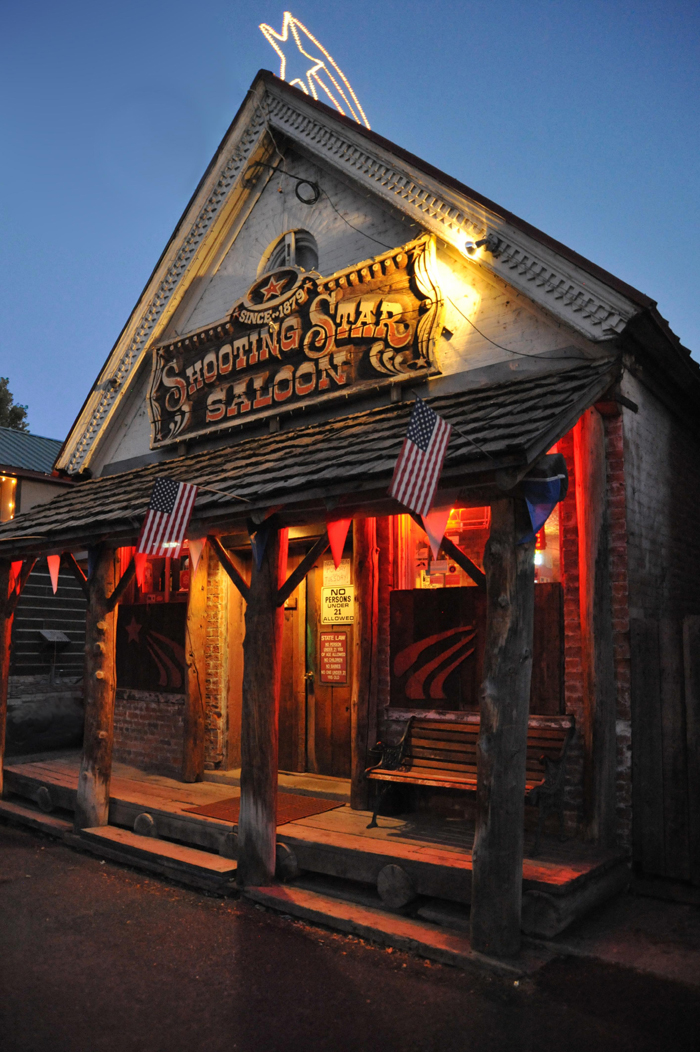
Utah’s oldest verifiable business is the Shooting Star Saloon in Huntsville. This storied bar appears right out of a wild-west movie. It is certainly one of the most famous  examples of the freedom and liberty that defines the spirit of the West.    It survived and operated as a fully-functional bar throughout the entire 13-year prohibition period, and they never got busted once for their moonshine and illegal spirits. This is thanks to the town’s residents’ protective efforts to always inform the bar owners ahead of time when a suspicious wagon or car was approaching, which could be a government inspector.    The Shooting Star features a stuffed Saint Bernard—the previous owners and guests were so attached, they couldn’t let him be buried. They offer three beers on tap and delicious burgers and dogs. It also happens to be located in one of the most scenic and fun places in Utah to visit.   The Shooting Star Saloon is located near Pineview reservoir in Huntsville. Drive Trapper’s Loop to get there. It’s an incredible ride!

7350 E 200th S, Hutsville, Utah

Photo of Road Island Diner courtesy of the diner

Road Island Diner

If you haven’t yet eaten at the Road Island Diner, or if it has been a few years since you’ve been there, it is, without a doubt, worth returning because their food has vastly improved. Before, everything came out of a box and a bag; but now, everything is made from scratch, from ice cream to pies. They even corn their own beef. The diner was moved from Rhode Island to Oakley in 2007 by Keith Walker. The menu featured all the same greasy-spoon dishes one might expect—the kind of food you trudge through (featuring gravy made from a powder) then regret afterward.

When Utah Stories last wrote about this amazing roadside attraction, the photos of the place turned out incredible. The staff were well-attired to fit the architecture, but the food, well, we didn’t mention it.   Steven and Ginny Butler, who operate Kumbaya Kitchen, a catering company, bought the diner in 2014. It was closed at the time they purchased it and were told that if they didn’t buy it, the Road Island Diner would very likely go the way of the thousands of other diners that once dotted the rural landscape. It was the third time they’d been approached and decided to finally jump in.    Now, some true culinary artists run the kitchen. They source “as local as we can.” The lamb comes from Tooele Valley Meats. They butcher local Utah lamb in a 100 to 200 mile radius. “The rest comes from Nicholas and Co,” according to Butler.    We ordered their shakes (made with real ice cream and real fruit, which were above par. “We make our own real-fruit purees,” Butler says.

981 W Weber Canyon Road, Oakley, Utah

,

Join our newsletter.
Stay informed.


  • Artist Kate Kilpatrick Brings Utah’s History to Life Through Murals

    “I think we’re all interconnected; as individuals as well as societies,” Kilpatrick notes. Her work showcases those connections exuberantly, and whatever scale she’s working on, you can bet that in terms of energy and spirit, she’s painting large.


  • Why Most People Stay Stuck in Business and What It Takes to Move Forward

    Every so often, you meet an immigrant who came here with almost nothing and managed to build something exceptional.

    Prakash Shah is the kind of man who has spent enough time around risk that he no longer treats it like an interruption.

    Today, he works in business brokerage and advisory, helping owners sell companies, helping buyers decide whether they should step in, and, when the fit is right, helping connect those buyers with private equity. He works in a world of valuations, leverage, due diligence, and hard questions that most people would rather postpone. He also operates in Utah real estate and has built a career around seeing value before it is obvious to everyone else. That is who he is now. What makes him interesting is how early that instinct started to form, and how little his life resembles the way most Americans are raised to think about comfort, career, and security.

    He grew up in Nepal in a boarding school system that would feel severe to many Americans. He was an only child, yet he saw his parents only twice a year for twelve straight years, until high school graduation. He lived inside routine. He shared space with boys from different social classes and different family circumstances. The school was structured enough that money did not buy you any special standing once you were inside. Everyone followed the same rules. Everyone was subject to the same discipline. In his case, it was an army school. Everything was measured. Everything was scheduled. In that kind of environment, you do not build your life around preference. You build it around adaptation.

    That contrast matters.

    A lot of American children are raised to search for what fits them. What are you passionate about? What do you enjoy? What feels right? Those are not bad questions, but they can create a habit of waiting for life to align itself before action begins. Prakash learned something else much earlier. He learned that life often does not align itself first. You enter the room as it is, you deal with the people in it, and you figure out how to function without making your comfort the center of every decision. He said that one of the biggest lessons from those years was tolerance, the ability to live with people from all walks of life and genuinely learn to get along with them. That is not a soft value. In business, it turns into resilience. In negotiation, it turns into patience. In career terms, it turns into range.

    When he came to the United States over 25 years ago, he did not arrive with the kind of runway that allows for a prolonged identity search. He came with two suitcases and enough money for one semester. He went to Hunter College in New York City, then to NYIT near Central Park, studying media and then media and technology management. He also studied psychology. Those details matter because they show something about his mind. He was interested in people before he built a career around deals. Even then, what attracted him was not technical prestige. It was understanding motives, behavior, and how people reveal themselves.

    But New York is merciless toward vague ambition. It demands payment in rent, transit, food, and time.

    Prakash worked constantly. He took multiple jobs. He paid tuition, paid rent, and skipped most of what Americans imagine as college life. There were no romantic years of drifting from café to concert to self-discovery. He talked about not having the luxury of dates, travel, or finding himself. He was working. Even laundry was not a small detail. In New York, he pointed out, you do not just throw clothes in a machine at home. You haul them to the laundromat, count quarters, and measure what is necessary. He also described distraction in a way that most native-born Americans probably do not think about. For immigrants, distraction is not always pleasure. Sometimes distraction is the constant pressure of competing needs. Tuition or rent. Food or savings. A better coat or another month of making do. He was not romanticizing the struggle. He was describing the arithmetic of it.

    That arithmetic did not make him cautious. If anything, it did the opposite.

    While in college, he had the option of safer analytical work. Instead, he took a sales job with Time Warner Cable that sent him into the South Bronx from 6 p.m. to 10 p.m. to knock on doors. He is not a physically imposing man. He knew exactly what kind of neighborhoods he was walking into. He described apartment buildings where people kept pit bulls, where tension was normal, where one mistake in tone or timing could end a conversation immediately. For most people, that kind of job would have been something to survive and forget. For him, it became a school in human behavior. “It’s not about talking… it’s about listening,” he said.

    One story from that period says almost everything about how he operates. He knocked on a door one night around 8:45 and found himself facing a huge man with a gun on the table, pit bulls nearby, and a half-eaten pizza in front of him. It had all the ingredients of a very bad scene.

    Continue reading and support independent Utah journalism with a purchase of Utah Stories (Digital + Print) or 3 month free trial (Digital).


  • Ancient Pyramid Discovered in Sugar House Park, Salt Lake City

    A Salt Lake City resident says he may have uncovered what he believes to be a buried structure beneath a well-known hill in Sugar House Park, raising questions that have drawn both curiosity and skepticism.


  • Utah Fits All Scholarship Applications Open Through April 30 for K–12 Students

    Utah families have more learning paths than ever and, increasingly, more ways to make those paths affordable. This spring, the Utah Fits All Scholarship opened  for new family applications on April 1, and the application window stays open for one month. The program is a public K–12 scholarship that provides $4,000 to $8,000 per student,…