Utah Stories

5 Must-Hike Ogden Trails

Whether scenic, steep, technical, alpine, lakes, dogs, or streams, Ogden has it.

|


Photos by Maria Milligan

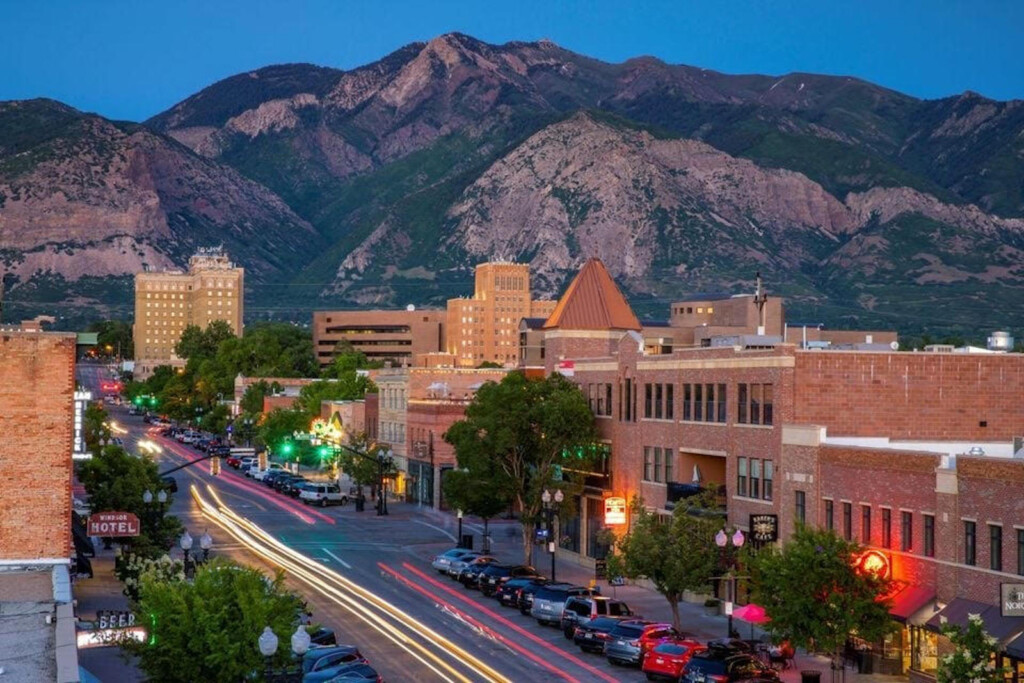
Utah has more than its fair share of great trails and beautiful camping spots. Having major cities at the base of mountain ranges means you don’t have to go far from home to find challenging hikes, quiet wilderness areas, and stunning views. Downtown Ogden may not make you feel like you are getting back to nature, but if you go a few blocks east you’ll hit dozens of trail-heads. Here are five Ogden hikes that are not far from the city center, but can make you feel like you’re in the middle of nowhere.

Hidden Valley

This trail is steep (you’ll climb over 2,000 vertical feet), which makes for a more difficult hike but also keeps the number of hikers down if you prefer solitude. This five-mile round-trip hike ends in a valley carpeted with wildflowers. It also connects to the Taylor Canyon trail at the end, so you can make a loop instead if you prefer. Begin at the 22nd Street Trailhead and follow the Indian Trail for the first half mile. Watch the uphill side of the trail for painted rocks indicating the beginning of Hidden Valley Trail (it’s easy to miss).

Strongs Canyon Trail

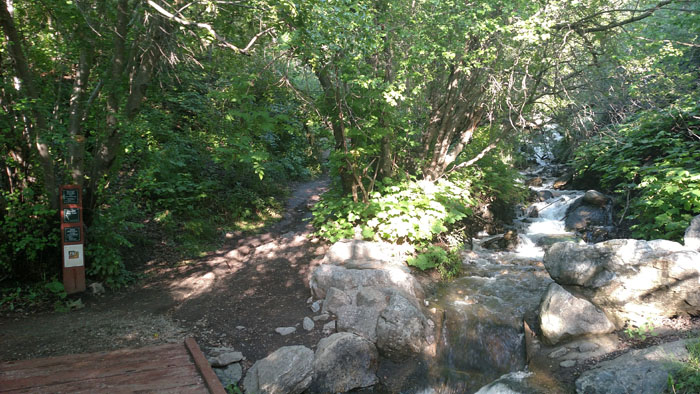
The Strongs Canyon Trail is one of several that branch off from the 36th Street Trailhead. You can turn off the trail to get to Waterfall Canyon or Beus Canyon, but Strongs is a great hike on its own with beautiful views of the river. It is also not as highly-trafficked as the others. My husband and I hiked it on a beautiful weeknight last week and saw only two other people, neither of whom stuck to the Strongs Canyon Trail. Be prepared; this year’s heavy snow-pack has turned some parts of the trail into small rocky streams. I stepped carefully and kept my shoes dry without too much effort.

Ben Lomond Peak

This trail is definitely for more experienced hikers, but the payoff is awesome. Perhaps the only thing more impressive than the mountain itself is the view you get from the summit. The hike is over 15 miles round-trip, so plan accordingly. You can reach the Ben Lomond Trailhead from North Fork Park, near Liberty. You can also reach the summit via the North Skyline Trail, though this route tends to have more bikers, so keep that in mind.

Castle Rock

If you enjoy bouldering, you will want to check out Castle Rock, which can be reached by hiking south along Shoreline Trail from 22nd Street. When I asked my father-in-law (an Ogden native) about his favorite hikes in the area, this one was high on the list. He says if you want to climb the rock, head around to the southwest corner to find some hand and footholds.

Malan’s Peak (and Basin)

This hike is about five miles round-trip and offers great views overlooking Ogden. The trail is shady until you get closer to the top, but it has constant uphill climbs in the second half, so be prepared for a workout. If you decide to camp, make the effort to go the extra half mile or so to Malan’s Basin, which was once home to a nineteenth-century hotel. Bring plenty of water; it gets hot quickly once you’re out of the shade.


,

Join our newsletter.
Stay informed.


  • A Ski Village or a Tipping Point? Nordic Valley Expansion Divides Ogden Valley

    The project, known as Nordic Village, is expected to roll out over the next decade and represents one of the largest tourism developments in the valley’s history.


  • Utah Fits All Scholarship Applications Open Through April 30 for K–12 Students

    Utah families have more learning paths than ever and, increasingly, more ways to make those paths affordable. This spring, the Utah Fits All Scholarship opened  for new family applications on April 1, and the application window stays open for one month. The program is a public K–12 scholarship that provides $4,000 to $8,000 per student,…


  • Left in a Box as a Baby: Trauma, Alcoholism, and Addiction

    A man abandoned as a baby builds a structured life in law enforcement, but unresolved trauma and alcoholism slowly begin to unravel it. His story raises a harder question about how change actually happens.


  • The $7 Million Recruit: How NIL Changed College Athletics Forever

    In 2012, Jabari Parker, a top high school prospect and member of the Church of Jesus Christ of Latter-day Saints, was facing his biggest decision to that point in his life: where to play college basketball. 

    Fans of BYU athletics hoped and perhaps prayed that Parker would pick the school owned by the church he was raised in. BYU was listed as one of his final choices. But he ultimately chose to spend his college years at Duke before attempting a career in the NBA. BYU fans were disappointed, but no one was truly surprised. Duke over BYU was the best choice for a young prospect in 2012. 

    A.J. Dybantsa.

    What changed between 2012 and 2024 when A.J. Dybantsa, the number one high school prospect, chose BYU over every other school? The answer is roughly $7 million dollars. That is what Dybantsa is reportedly making to play basketball at BYU. 

    The deal was supported by Utah Jazz owner Ryan Smith, who met multiple times with the Dybantsa family in multiple attempts to bring the young player to Provo. 

    According to Smith, he had no financial role in bringing Dybantsa to BYU, but the influence of Utah’s most famous billionaire acting as a “booster” or unofficial recruiter certainly swayed the decision.

    Prior to 2021, boosters acting as recruiters was taboo to the NCAA governing body. It was called improper recruiting. But in 2021, California began the modern era of NIL, or the ability of a college athlete to benefit from their name, image, or likeness, when they passed the “Fair Pay to Play Act.” 

    This new law gave college athletes in California the ability to benefit from their NIL, something that was banned in the rest of the country to that point. The NCAA saw that this law would create an unfair advantage for California schools that could now give young athletes the chance to make money off their talent and image while still in college. 

    The NCAA knew they needed to do something quickly, so they rushed through a policy that opened up NIL to all college athletes in the country, and it has been expanding and evolving over the last four years. 

    Grant Duff, who has coached at the University of Utah, Weber State University, and is now the defensive coordinator for Idaho State University, says, “The best part of NIL is that athletes have an opportunity to make good money. The downside comes with the free-for-all that money causes.”

    Dybantsa confers with BYU Head coach, Kevin Young.

    One of the biggest current examples of what a school can do when the boosters are willing to pay for success is Texas Tech University. From 2020-2024, Texas Tech had 34 wins, which works out to 6.8 wins per year with a low of 4 wins and high of 8. Then Texas Tech’s boosters got involved, led by Cody Campbell, an oil industry businessman and Chairman of the Texas Tech board. The football program was given 28 million dollars for NIL with a simple message attached to the large pile of money: Win. And win now. And win they did. 

    By signing NIL deals with athletes in the transfer portal, Texas Tech went from a middle-of-the-pack school in their conference to one of the top 12 teams in the country. They didn’t just win games in 2025, they made many of their opponents look like they didn’t belong on the same field, including the University of Utah and BYU twice. That is what money can buy.

    Continue reading and support independent Utah journalism with a purchase of Utah Stories (Digital + Print) or 3 month free trial (Digital).