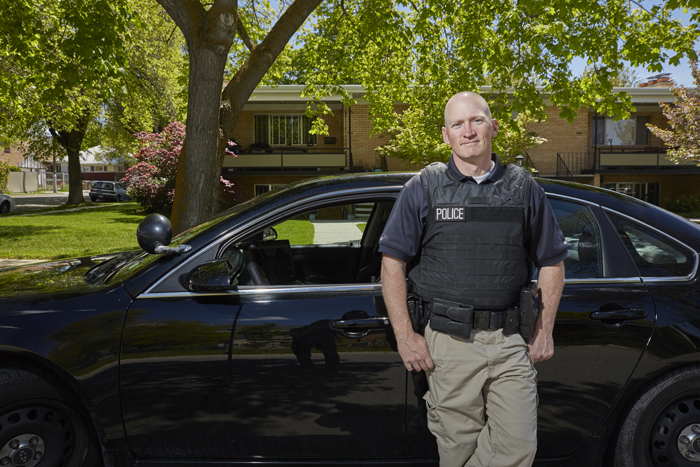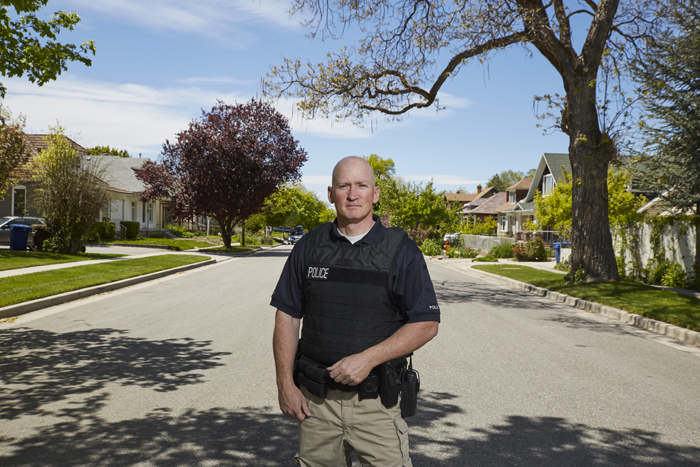
Officer Joshua Ashdown is charged with keeping the streets of Sugar House as safe as possible. From home invasions to vehicle burglaries, Ashdown and the other officers that patrol the area have their work cut out for them every day. Since being assigned to the Sugar House area, Ashdown says the burglary trend in the area has been decreasing.
Utah Stories: How long have you been on the job?
Ashdown: I have been working for Salt Lake City Police since July of 2016.
Utah Stories: How did the burglary investigation situation look when you first arrived on the job?
Ashdown: The burglaries ebb and flow depending on several different factors. One major factor is the weather. When it is very cold, rains or snows, most crime numbers take a dip. In the warmer months [the] numbers increase. Another factor is simply who is in or out of jail. One person can make crime spike all on their own. This is why I’m more concerned with longer trends as alarms than anomalies.
Utah Stories: What are the current, most significant crimes happening in Sugar House?
Ashdown: The main issues we have in Sugar House are vehicles burglaries, retail theft, and people experiencing homelessness who have established campsites around that area.
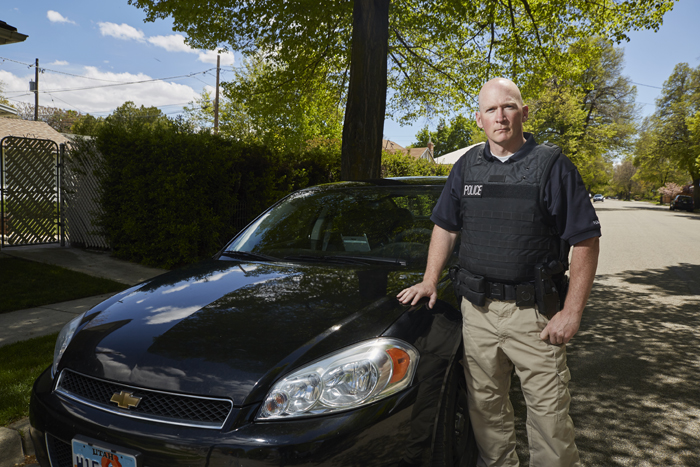 Utah Stories: Sugar House residents have said there were a lot of burglaries, a string of them happening last year, taking place at homes, especially on the streets adjoining alleyways. What has the department done to address this problem?
Ashdown: Homes near alleyways have been and always will be a slightly larger target location due to the nature of the rear access to a home, which makes it easier for criminals to commit thefts without being noticed. As there being “many” I have noticed a trend in this current assignment and that is simply how perception is driven by a much more robust social connection that we all had even four or five years ago. Now we have several social sites where neighbors can connect and build a tighter community than ever before. This is a fantastic tool and is an invaluable resource for the residents that will help them better fight crime and nuisances in their areas. When neighbors are better connected, they will hear about people who they have never meet nor would’ve met before becoming the victim of a crime. With all the social media connections, many people hear about more crime than ever and they believe crime is up when it is not. This doesn’t mean that there will not be a localized area or street where a criminal(s) has targeted and committed several crimes as they passed through. As I read through many reports, this did not show as a pattern noticeable enough for me to see.
Utah Stories: What are the biggest ongoing investigations your department is conducting?
Ashdown: That all depends on what the data is showing as far as reported crimes. We meet several times a month and analyze what trends are occurring and then direct resources to combat them. The focus changes frequently and can shift after arresting even one person… Long term theft is always a focus. Another topic we are being very proactive on is how the new homeless resource center will be best policed by us. We are already working to be ahead of the curve. The layout of the area, the process, and the system are completely different, and it would be highly difficult for drug dealers to set up shop in the Sugar House area in the way they’ve done so in Rio Grande. I can assure you that the police will be watching, planning, and responding to the new homeless resources center with a very concentrated eye.
Utah Stories: Is there an ongoing investigation concerning organized bike theft?
Ashdown: I know that at one time we had a detective that worked on bike thefts as a specialty. She was transferred to another detective assignment and I haven’t heard of anyone doing this right now, but I may be wrong. I do know that one of the biggest challenges with bike thefts is that people rarely have serial numbers. It also helps to have a list of components and anything about the bike that makes it unique such as a particular scratch, dent, etc. Another aspect that has been helpful is online communities where other cyclists let the group know that they should to be on the lookout for their bike. This has helped us catch people on several occasions. Of course, always lock up your bike; don’t leave it on a porch, and notice if anyone is following you on a ride.
Utah Stories: We reported about a problem with prostitution. It was out of the Sugar House jurisdiction (near the campus of South Salt Lake Community College). Do you know if that problem has been addressed or improved?
Ashdown: The area you’re speaking of is known as the “south track,” the other area is known as the “north track,” which covers the North Temple area. One thing you will notice about both areas is low cost lodging services. Both areas have experienced prostitution for as long as I’ve worked here and likely, much longer. Prostitution is not a high-crime level, and that makes it difficult to deter through arrest procedures. We do have a full-time Organized Crime Unit that has a main focus of these crime types. They work undercover with officers acting as Johns and prostitutes. They also work the Internet sites where more of the prostitution has move to.
Utah Stories: What is the best thing residents can do to prevent crime and burglary in Sugar House?
Ashdown: Actually, many Sugar House Residents are already doing many of these things. I would suggest getting involved in neighborhood social sites, but keep in mind that you will hear of more crimes simply because you are connected to more people that way. There may be crime spikes but just like the flood of news we get now, there will be a flood of stories. Attend the community council meetings, start a neighborhood watch, and do so through the police department because we will provide a car and training that you can use. Report suspicious activity and if you see a license plate, note that. Document all your serial numbers. Get to know your neighbors. Leave porch lights on at night. Get an alarm system and stay involved in your community.