“There is a problem with Capitalism,” I hear young people say. “Capitalism and corporations are killing this country!” But is capitalism really the problem? Capitalism is a system that works if that system isn’t manipulated by special interests. The founding fathers knew that decentralized power was a key to creating opportunity but capitalism has the tendency to centralize power.
Thomas Jefferson’s vision for America was to prohibit banks from financing massive enterprises which would inhibit large corporations from dominating the economy. Jefferson’s idea was to instead have a country of farmers and tradespeople who could grow and build what they needed and live in tight-knit communities, but his vision was at odds with the realities of the infant nation.
When George Washington chose Alexander Hamilton to become the first U.S. Treasury Secretary, he had ideas for how to shape our country very similar to the model of England, and allow a central bank to control the circulation and printing of money.
Thomas Jefferson was busy in France when this critical shaping of the future country’s finances was occurring. When he returned he was shocked to see that his vision wasn’t panning out, but instead saw a plan that would create a debt-burdened nation, with a centralized, powerful federal government, this was because funds were needed to finance a standing military.
Hamilton’s big idea was to sell national debt as bonds producing a secondary form of currency. Nations or wealthy individuals who wanted to earn a percentage of return on their idle money could purchase this debt. This idea so infuriated Jefferson that he spread rumors about Hamilton that his actual intentions were to form a monarchy.
Marriner Eccles and the Great Depression
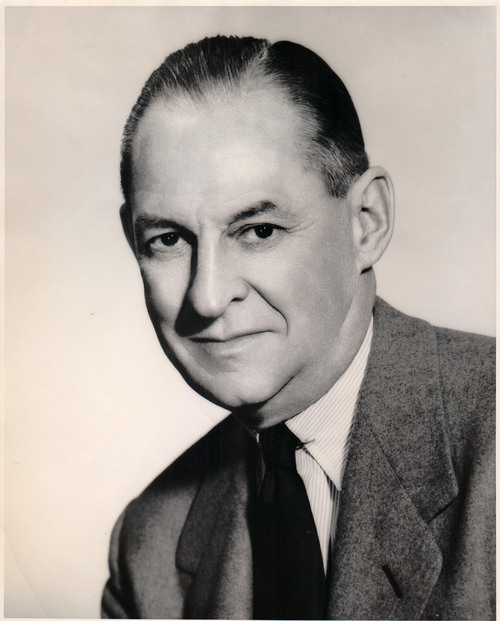
Fast-forward 150 years to the Great Depression. Under President Herbert Hoover, the U.S. Stock Market crashed, runs on banks were common, and one Utahn was at that time in charge of the largest banking entity in Utah. First Security Bank operated under Marriner Eccles. Eccles was the president of an astounding 15 companies and had interests in 18 companies. From banking to construction to lumber to sugar, he was Utah’s foremost capitalist.
Marriner Eccles believed that the answer to escaping the morass of the Great Depression was by putting the massive 40% of unemployed Americans back to work. His solution was to run up the federal debt. The problem was that people were saving every penny, and the only way consumers would stop saving was by increasing payrolls. He believed this would increase the “velocity” of money in circulation.
Eccles arguments were heard before a Senate Finance Committee and eventually reached President Franklin Roosevelt. He convinced Roosevelt that banking reform and government spending were two of the five keys to kick starting the economic engine.
Whether it was New Deal policies or the huge build up for WWII that saved America from the Great Depression is subject of debate. But certainly getting people back to work was the factor that made the difference.
Small Business vs. Wall Street
Today our country faces a $20 trillion national debt. In the past eight years the U.S. economy as a whole has realized stagnant growth at 1.4 percent, while the largest corporations have grown at a phenomenal pace realizing 35 percent growth since the crash of 2009. The greatest portion of the U.S. economy has always been small businesses, but now the only significant growth is occurring at the very top. Is socialism and more government control the solution?
Analyzing small businesses for the past eight years, I’ve seen the terrible consequences of government over-regulation. Small restaurant owners pay rent for months, killing their chances of success while waiting on permits to be approved by myriad government agencies. Food entrepreneurs suffer under huge barriers created by the FDA (Food and Drug Administration) and the USDA (U.S. Department of Agriculture) that make it extremely difficult for anyone to make a food product to sell to the public without huge capital expense.
I’ve witnessed local developers and politicians working together to monopolize the buying public with franchises they themselves own, ignoring inherent conflicts of interest. Now a developer/politician is the President of the Utah Senate and crony capitalism runs rampant.
Perhaps government spending has saved our economy from another Great Depression, but eight-years into this Great Recession there is no end in sight. Marriner Eccles was an ardent believer in the free-market economy. His 18 businesses flourished due to the effective distribution of and creation of capital. Capital is created by new ideas put into a free market. Small business innovation should be grown from the grassroots up. Government spending can maintain economic activity, but it cannot produce new wealth and opportunity because when the government has the power to pick winners and losers it will always choose the big and powerful over small start-ups.
We aren’t producing capital as our country once was because the system is rigged. The greatest hope of changing things is by changing our behavior. If we collectively stopped purchasing from corporations who have bought off our political leaders we could make a difference. If we refrained from spending our dollars on the greatest recipients of corporate welfare (Walmart, Scheels and Cabela’s, to name a few), and instead bought from local small businesses we could realize a new economic order. We could have a New Deal that would bring power back to the people. A balance between the Jeffersonian and Hamiltonian views on the economy could finally be realized.