
 Impact Hub
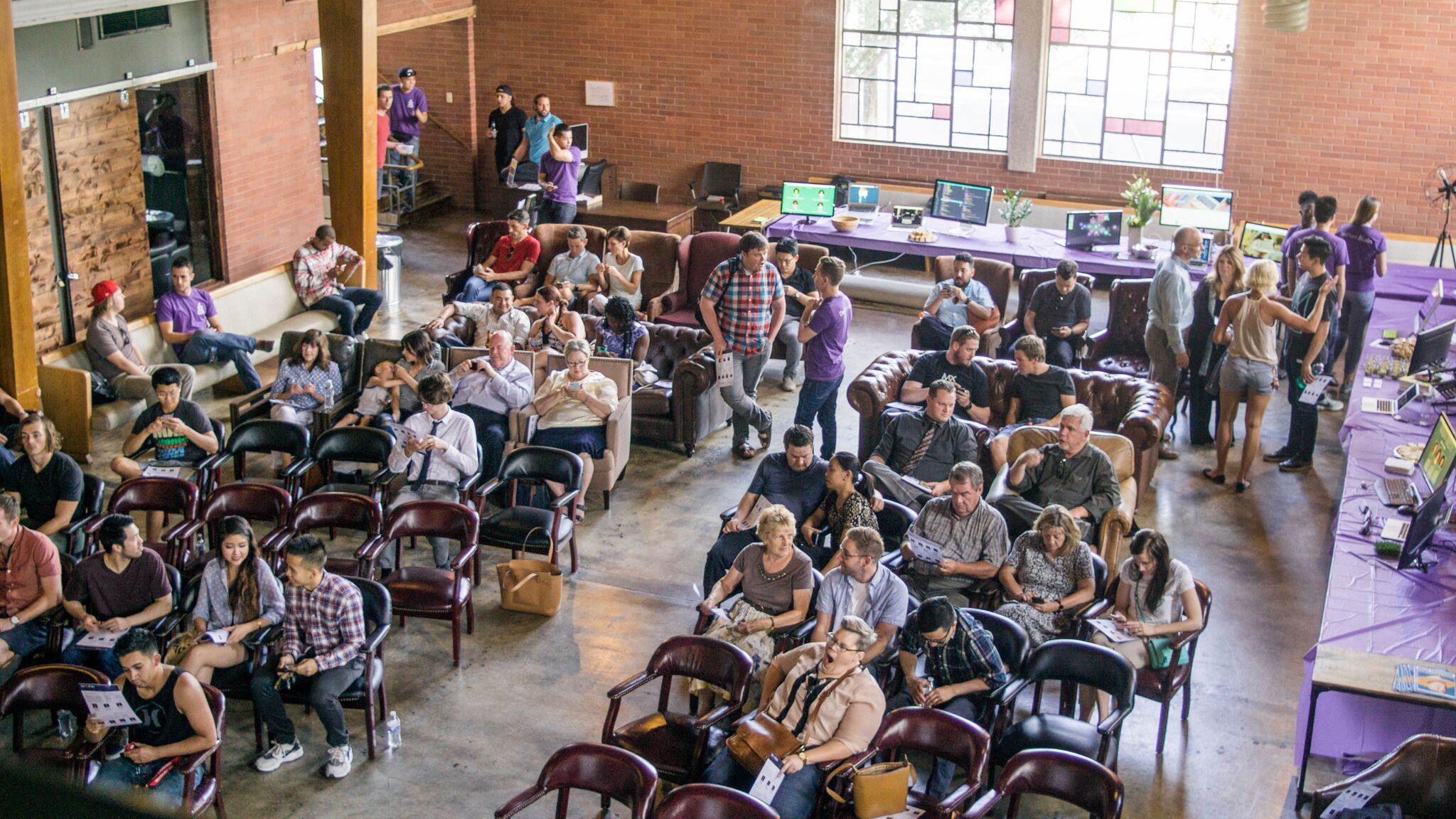
Impact Hub of Salt Lake, was started in 2013 by Dustin Haggett, after he observed the concept in San Francisco. Impact Hub is a franchise that provides flexible offices and space to its members, made up of entrepreneurs, nonprofits, community organizations, freelancers etc, who desire a sense of community and mentoring.
Impact Hub also offers ongoing programs, events and skills building workshops. They supply fiber internet and multiple meeting rooms, and on a daily basis you will encounter 80 or more people.
“We are really trying to focus on our impact and our global community,” Haggett said. “We have a really diverse startup community and a lean startup accelerator, BoomStartup, that operates out of our space.”
Membership fees range from $35 a month, which gives you access to all the events and programs, to $200 a month which is a 24/7 unlimited membership to the space and all they offer.
“It can be a lonely thing when you are starting your own business or nonprofit,” Haggett said. “Just being around other people that are also doing it or have done it, can really accelerate the learning curve.
Impact Hub is located at 150 South State Street #1
 Church and State
Church and State was started by co-founders Ron Heffernan and Thomas Lee in an effort to create a space and a community for entrepreneurship and innovation. Church and State focuses on collaboration, community, education and events. They offer 24/7 co-working, dedicated desk and a private office if needed. Rates start at $99 a month for a seat to $500 a month for an office space.
Church and State is a non-profit and their 5,000 square foot space is open and free to the public Monday-Friday, 9am to 5pm.
“We also contribute to raising awareness of the business-friendly climate of Utah on a global scale,” June Chen, Chief Evangelist, stated. “We have also partnered with SimpleCitizen, a Utah start-up that is currently participating in Y Combinator, to launch a digital visa solution to guide applicants through the visa process.”
Church and State is at 370 South 300 East, both in SLC.