“There are all these movies on Netflix telling people how bad industrial agriculture is and attempting to turn them into vegans. I don’t like their portrayal, and it just demonstrates the widespread misunderstanding of industrial agriculture,” said Collin Bateman, a third-generation farmer at Utah’s largest dairy.
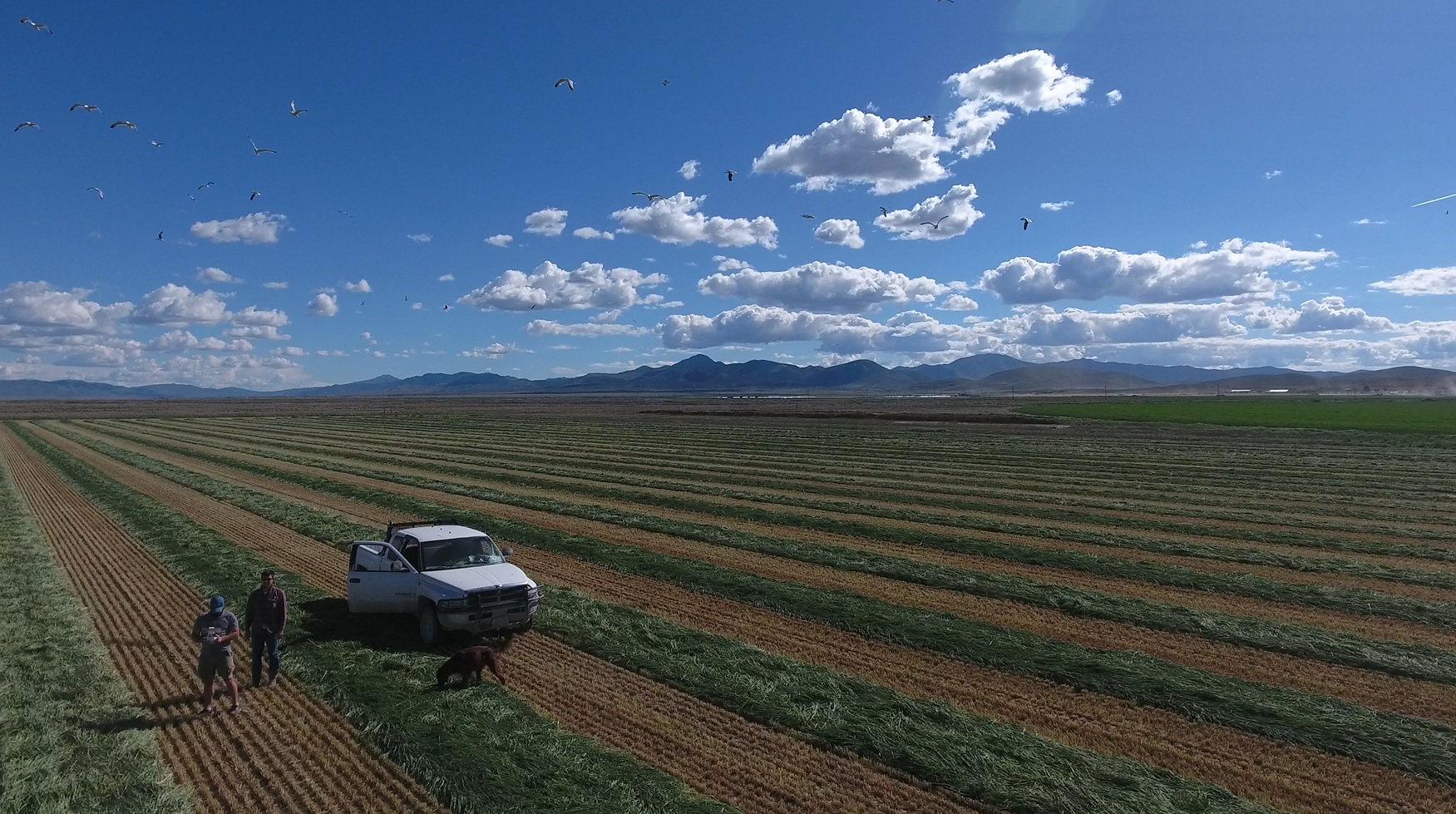
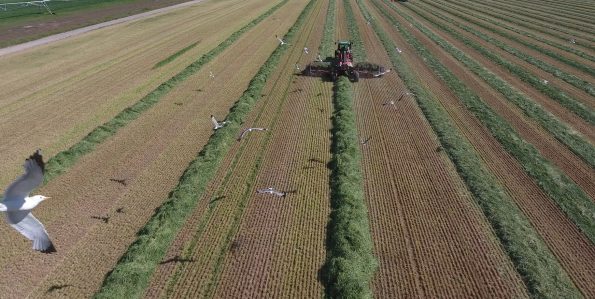
Collin invited me to ride on his John Deere tractor as he planted corn. Collin is a sun-tanned twenty-year-old who was born and raised on the Bateman Dairy in Mosida, Utah, which rests on the west shore of Utah Lake. The view is stunning, with pillowy clouds over the Timpanogos Mountains and the pristine lake view with the Wasatch Front in the distance. On this other side of the lake we are in a different world. It’s amazingly quiet here. The seagulls cry out as they swoop down around other farm implements which rake or windrow the wheat harvest.
While attending college, Collin is getting his first big experience outside of his small town, about how uneducated students his age are when it comes to agriculture, and how food is produced. He recently gave a presentation in a communication class and found only one other student out of fifty who had a basic understanding of agriculture. “He was from a small town too. I really would like to see more people learn what goes into producing the food they eat,” Collin says.
I have begun to realize my own ignorance on this subject. Passing through rural Utah, I realize now the difference between a dairy and a feedlot. Dairy cows are usually either Jerseys, which are brown and smaller, with big eyes, and produce a creamier milk; and/or Holsteins, which are massive, spotted black and white, and can produce 56 pounds of milk in one milking, and up to 170 pounds in a day.
Besides just cows, I’m beginning to understand the difference between straw and hay. I realize how sad it is that I spent 35 years of my life not knowing there was a difference. I also realize that when it comes to “ag”, which is the truncated form of the word “agriculture,” I am indeed a neophyte and a city slicker, but the more time I spend on farms, the more I understand that the lifestyle of a farmer is far superior to ours in many ways. Who wouldn’t want to be outside, driving tractors, growing crops, and feeding and caring for animals all day? On the Bateman farm, the great circle of life unfolds before my eyes, and here in this closed-loop, I can see the incredible sophistication that goes into producing a $3 gallon of milk bought from a Utah Wal-Mart or Smith’s store.
In Utah, inexpensive milk is in great demand. Large families with lots of kids take much of their protein and vitamins from tall glasses of milk. I would have a glass after school and another glass with breakfast and dinner. My brothers and I drank a gallon a day. “But where does it come from?” If you had asked me or any of my friends that question, our answers would have been the same; “the supermarket.”
In my own ignorance, I would have never expected it would require hundreds of acres of fields, constant biological testing; pedometers strapped to the legs of every cow tracking gigabytes of data to support and sustain thousands of cows which operate in a specialized choreographed operation to ensure that each cow is milked three times per day. But while the milking operations are a huge part of a diary, about a third of all of the work on the farm is work done in the fields.
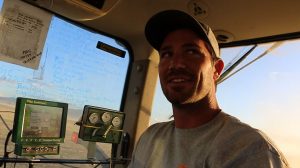
On Collin’s right are read-outs from three screens. An iPad app is fed data from a GPS system, allowing him to plant his corn to the precision of inches. This ensures that every bit of land will be utilized for production. Collin is a third-generation farmer who wants to spend his life on the family farm and continue to improve the efficiency of operations. “It’s a lot of fun growing up on a farm if you are a boy,” he says, “maybe not as much fun if you are a girl.” Collin’s sisters don’t work on the farm as much as he does, and aren’t quite so passionate about it.
The Bateman family goes far above and beyond the standard dairy in their work to create “a continuous circle,” as his father, Brad, puts it. Nothing is wasted at the Bateman farm. All of the cow manure is processed in a tank where the solids are separated from the liquids. And all the solids are sent to compost piles where they will age for about a year, until they produce incredibly fertile soil, which is then spread on fields which grow the feed for their cows.
As I present the rest of this story, understand that this is written from the perspective of someone who makes observations and has all of three years’ experience under my belt writing about farms and farmers. Because, while the Bateman Diary Farm is indeed a model of efficiency and modernity, and provides great jobs for over 100 Utahns, I can’t help but feel sorry for the cows. Would others feel as I do? Maybe not. I’m biased, and I’m not trying to convince anybody to change any habits.
I’ve brought my 18-month-old Irish Setter, Joey, with me, and I can see in the cow’s eyes some of the same emotions I see in Joey’s. When I walk past the heifers with Joey, they become excited and inquisitive, bobbing their heads a bit and clearly interested in a closer inspection. There is intelligence behind those eyes, and while they have everything they need, including a very comfortable bed of sand to lie down in, and the very best feed any cow could ever want, they are confined in pens and standing in their own manure on a concrete slab for a majority of their day. The Holstein’s udders are so inflated it appears they could burst. The Jerseys, who are quite a bit smaller, appear like they could at least enjoy a nice walk without their udders dragging on the ground.
This is in no way a criticism of the Bateman farm, this is simply an observation of what is required to supply families all over the United States their $3 per gallon milk. While I might pay an extra $2 for a gallon, which would allow the cows to spend most of their day in a pasture, the market and consumers demand the cheapest price possible. Collin tells me, “Milk is a commodity, and this year, because the dollar is so strong, there is less powdered milk being exported to other countries, so this will likely not be a good year for us. Last year and 2014 were good years, but this year the price of milk is too low.”
I’ve seen other industrial dairies in Utah, where the cows appear far less healthy. And the next time I buy milk I would like to support Bateman’s because I can see they go the extra mile, as they are able.
You can buy our milk in Smith’s and Wal-Mart, but it won’t be labeled as Bateman Dairy because they are a part of the Utah dairy co-operative. All milk is treated the same in Utah. Consumers can’t choose one brand or another because they’re all part of a co-op. I see this as a problem. Milk should not be a commodity to be treated the same as tar or oil.
Bateman dairy should be labeled as such, so I can buy it and know what went into it and how it was produced. It certainly is about time we started learning the stories behind what goes into producing our food. I strongly believe that if milk were “de-commoditized” as beer, cheese and bread have been, we could all buy milk as we see most fit for the conditions we want to support.
Read about Tagge Farm here
Read more about Utah’s Dairies here.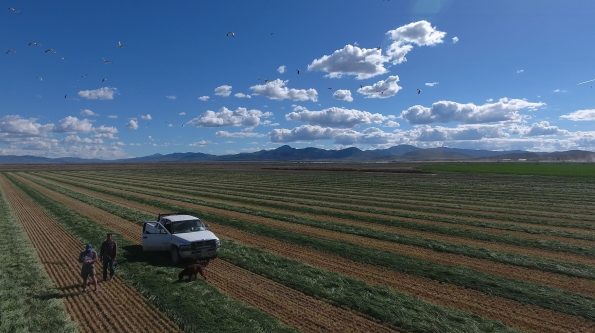
Special thanks to David Luquin for taking me on an extensive tour of the farm