
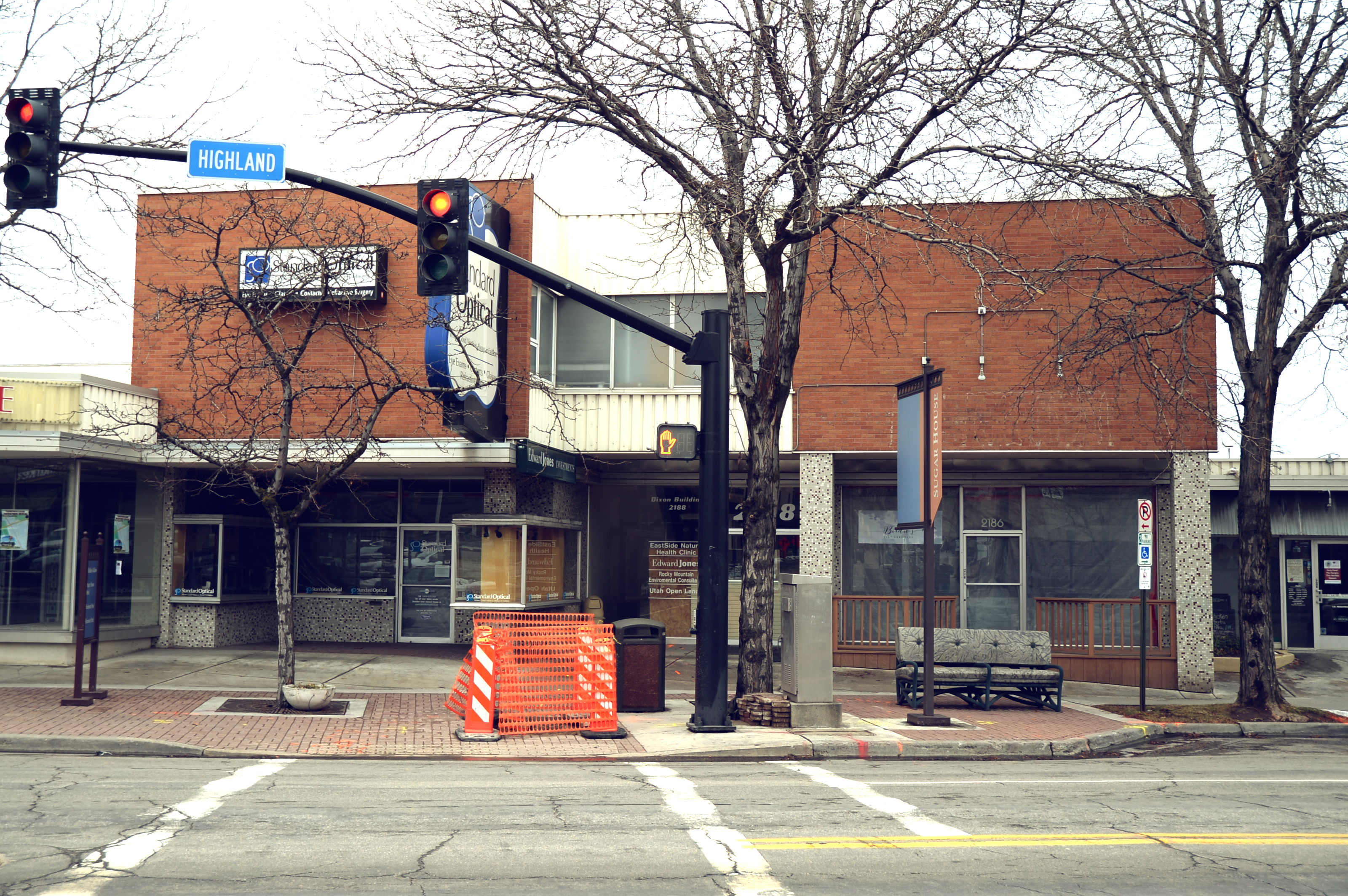
 If you have visited the Sugar House area lately, especially any address along 2100 South, you may have found that parking is a bit of headache. With all the new businesses, restaurants and developments moving in, Sugar House is bustling with activity.
Needing to replace the irrigation system along Highland Drive and 2100 South, the Salt Lake City Engineering Department presented a proposed streetscape redesign last month at the Sugar House Chamber meeting. At the time, they proposed eliminating roughly 10 parking spots along 2100 South by adding pavers in all the thin grass strips. Since that meeting, the design has been changed a bit as a result of feedback from the business and property owners in the area.
According to Jeff Sokol, Project Representative for SLC Engineering Department, the beautification part of the project has not yet been approved in the budget so currently no timeline can be given.
“The current recommendation that our designers are going with is, they will probably only lose two parking spots along the entire length of the project as we reconfigure some of the islands and bump-outs and re-work the entrances into the businesses,” Sokol said.
This change is far less impacting than the original vision, which is a bonus for area business owners, residents and visitors. The entire project area under consideration is everything south of the Granite block, from Sugarmont Drive to I-80.
The new goal is to minimize any loss of spaces while still making the area more aesthetically pleasing. Right now, the design plan is to replace the thin grass strips with pavers, and add color with several hanging baskets throughout.
“When we spoke to the business owners that would be affected, they indicated they could really not afford to lose any parking,” Sokol stated. “We really do want to take care of them, and we don’t want to put anyone in a situation where our project hurts their business.”
Sokol welcomes feedback from the community. He can be reached at Jeffrey.sokol@slcgov.com