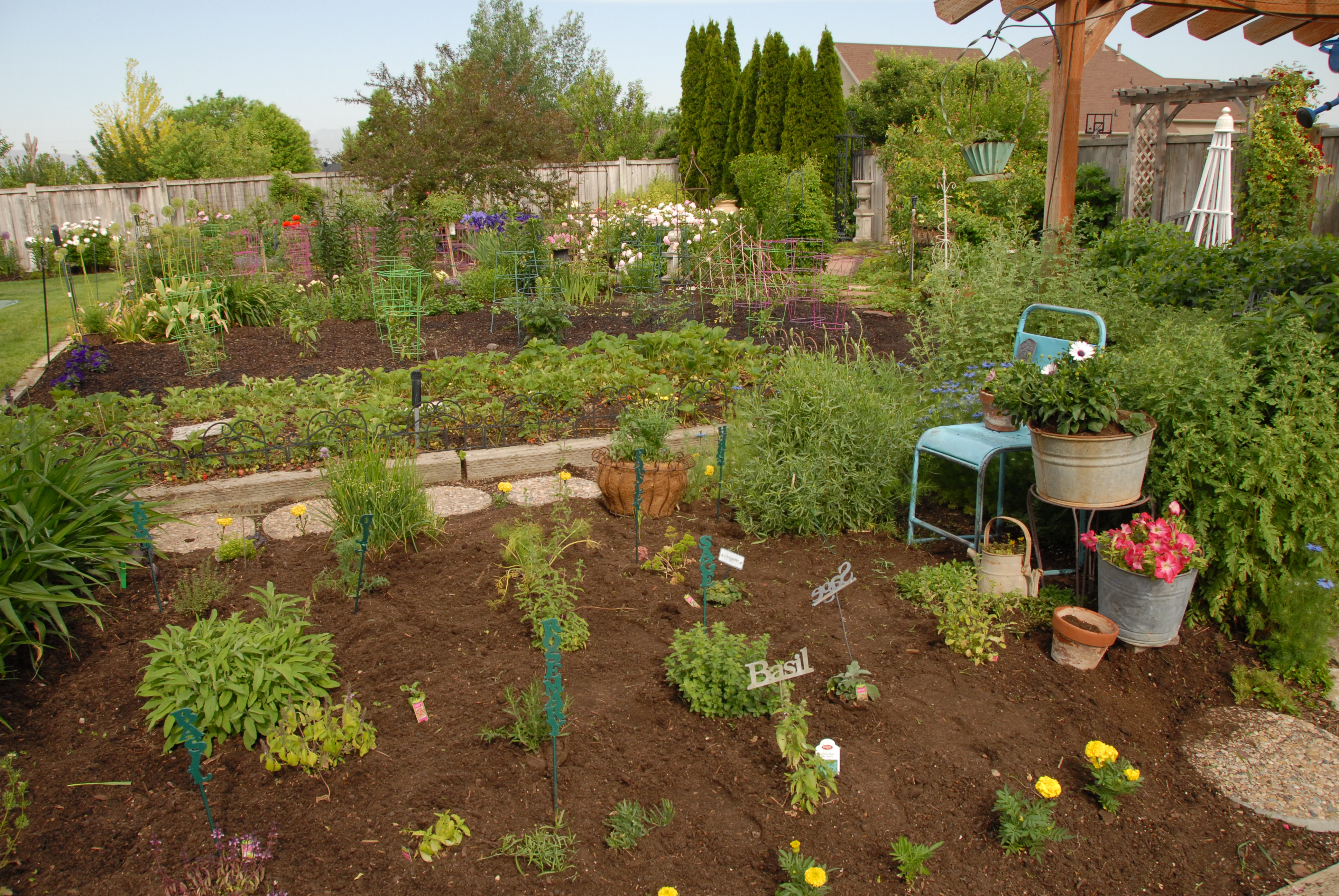
 The Hidden Garden Tour celebrates its 20th anniversary. The tour was originally organized in 1996 by Intermountain Healthcare in Provo. “They started the Hidden Garden Tour as a way to raise money for their volunteer programs,” says USU Extension Horticulturist Michael Caron. “Then several years ago… they asked Utah County Master Gardener Volunteers if they wanted to organize and take over that tour and use it as a fundraiser for their education programs.” In 2013, Caron stepped into the role of USU Extension Educator, taking over the management side of things for the Hidden Garden Tour program. “It’s all run by volunteers and I deal with the money,” says Caron.
Many of the volunteers who run the Hidden Garden Tour are Master Gardeners. These volunteers sign up for an extensive training program that teaches them the skills of garden horticulture outreach to the communities of Thanksgiving Point, Utah and Salt Lake Counties. Caron says, “It’s a 15 week class that will start at the end of January—usually every year—and run through the end of April”
At Thanksgiving Point volunteers are able to attend an additional in-depth series during the fall which lasts about 7 weeks. This series allows volunteers the opportunity to explore subjects in greater detail. The extra training also serves to increase volunteer capacity. This is done through teaching about plant materials, gardening, good practices and water conservation. The Master Gardener Program also requires 40 hours of service to the community gardens and interacting with the public about water conservation, proper plant placement and other sustainable practices. The program costs about $200, but considering the amount that goes into the training via classes and labs, it looks like a great deal.
After receiving this training, the Master Gardeners are ready to educate those interested in the Hidden Garden Tour. “This year there are many gardens to choose from, with locations spread out in American Fork, Draper, Lindon, Moroni, Orem, Provo, Riverton, Salt Lake City, Sandy and West Jordan,” Caron says,
“This year we have more gardens than I think we have ever had—we have about 19 properties lined up.” The tour includes a look into both public and private garden for these limited two days. Tickets can be purchased online for $13 or for $15 during the tour. All proceeds go back into the community through Utah State University; from there the money is invested in educational material, equipment and community outreach programs.
For ticket holders, the tour also offers the opportunity to enjoy free workshops or gardening classes.
Speaking of the classes being offered Caron says, “We go out and look at what are some hot items, what are some hot topics right now.” On June 3, the Conservation Park Education Center in 8275 S 1300 W, West Jordan will offer a class on Localscapes led by Cynthia Bee. The class will cover how to create landscapes that do well in the Utah climate. Also on June 3, Caron will be leading a course on the 10 Most Common Landscape Problems. On June 4, participants can check out the Perfect Plants for Small Places and Dream Gardens at Wasatch Shadows Classes at 9295 S. 255 W, Sandy Utah.
Dates: Friday, June 3, (noon to 8 pm) and Saturday, June 4, (10 am to 7 pm)
Tickets: $13 advance sale $15 at the gardens
For more about the Hidden Garden Tour, check out their website at hiddengarden.org