Utah Stories

Beer Meetups

Area Meetup groups connect through common liquid interests.

|


“Beer makes you feel the way you ought to feel without beer.” ~Henry Lawson, 19th Century writer and poet.
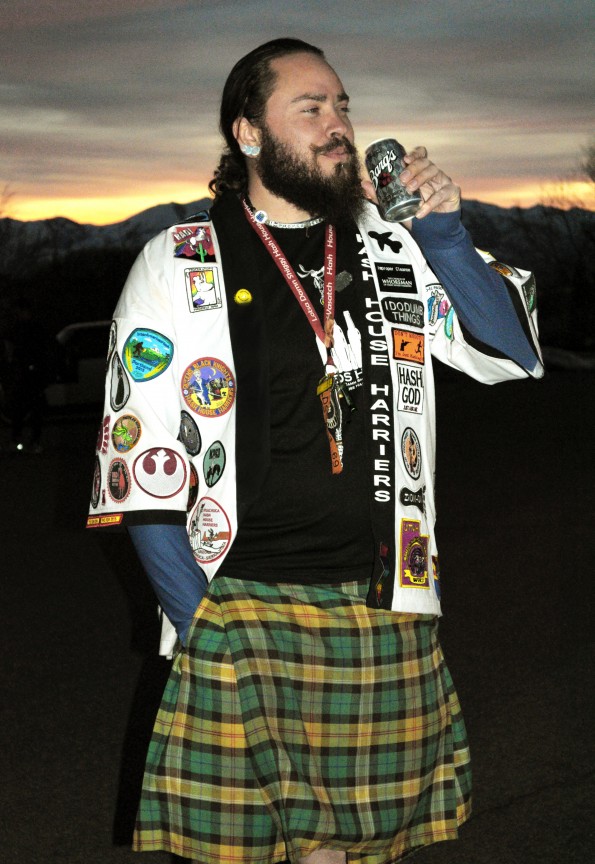
Improper Cleanse2
Improper Cleanse, of Hash Hound Harriers, enjoy a pre-trail beverage. Photo by Paige Wiren

Beer historically has been the focal point of social gatherings, and modern technology allows strangers to connect in new ways and enjoy a cold one. Meetup is a social network portal through which people can create or join a group of like-minded individuals. Consider joining one of these local beer-focused Meetup groups.

Salt Lake Beer Drinkers connects through amber nectar. Launched by a young man riding the tailwinds of divorce, the group has evolved into a lively, inclusive troupe of suds lovers. On this night the group has met at Piper Down’s “Geeks Who Drink” event. Participants occupy a handful of high tops close to the emcee stage. Some have been attending these gatherings for two years; others have just started coming, but the social ambiance encourages friendship. One woman notes that meeting this way in a bar, “doesn’t have a meat market feeling,” and different individuals agree that they appreciate the social construct in which those who attend just want to meet other people. Thirsty Thursday is a favorite group standby. Scott, the group’s original administrator notes, “Not many people who come the first time never come back.”

Hash Hound Harriers history dates back to early 20th century British colonies. Fast forward to Utah in the 21st century where there are a few local “kennels,” or clubs. These rowdy and intrepid beer drinkers engage in a loosely structured ritual event in which chosen “hares” make an impermanent trails for “hounds” to follow. The trail willy-nilly follows the hares’ lead up or down creeks, on or off footpaths. Hounds “running trail” must also stop at marked cues and perform ritual acts, such as singing collectively known HHH songs. Beer wets pre,- during, and after-trail run activity. There are no rules, only traditions. The overall tone of the organization is bawdy and those who participate should not easily offend. The Whoremans are a local kennel of tight-knit and welcoming adventurers. One member considers this eccentric clan his “chosen family.” “Improper Cleanse,” the group’s organizer, stresses that overall function of the group is to “have fun and instill camaraderie.”

Beer Meets Business gathers at an area bar on the fourth Friday of every month. Comprised mostly of entrepreneurs, this is a group of of professionals who like to make new connections. Ray says that he and his business partner are there not to do business with other members, but to network and maybe find new prospect leads. “If I don’t get anything out of it,” he says, “at least I’ll have fun on a Friday night.” Ten people circle a fire pit at Campfire Lounge. Two gentlemen discuss developing a business model. Others engage in less business oriented conversation because, as organizer Linda says, “It’s Friday and sometimes you don’t necessarily want to talk about business.” But the opportunity remains to professionally hobnob while downing a brew.


Join our newsletter.
Stay informed.


  • Whiskey, Bullets & a Buried Town: Archaeologists Reveal Alta’s Wild Past

    Before Alta was known for powder days and lift lines, it was a silver mining town clinging to the side of a narrow canyon. In the late 1800s, men lived at 8,000 feet, went underground each day, and endured winters that regularly buried buildings in snow. This past summer, that mining town resurfaced — literally — during construction at the Alta Ski Area.

    To understand what Alta really looked like, you don’t begin with legend. You begin with its trash — and this time, that happened almost by accident.

    Alta Ski Area was installing underground water reservoirs to support snowmaking. Because the project sits on Uinta-Wasatch-Cache National Forest land, an archaeologist was required to monitor the excavation. No one expected the trench to produce much.

    But, It did.

    Artifacts began surfacing almost immediately. Enough that the Forest Service contacted the Utah State Historic Preservation Office for help. Lexi Little, who coordinates the Utah Cultural Site Stewardship Program, helped mobilize nearly 30 volunteers to assist with what quickly became a focused two-week excavation.

    Winter deadlines were approaching. The pipes for the reservoirs had to go in the ground. There wasn’t time for a slow, extended dig.

    “It was two weeks of digging in the dirt and helping figure out exactly what we were looking at,” Little said.

    Most of the people screening soil weren’t professional archaeologists. They were trained stewards from around Utah — part of a statewide volunteer network that now approaches 500 people. They poured dirt through shaker screens, scanning for fragments that could piece together a town long buried.

    “Archaeology is human trash,” Little explained. “Archaeologists are very into trash.”

    Alta had left plenty behind.

    https://youtu.be/hzIHzx3OGoo?si=dKcl2CEz-t6FZzYw

    Victorian-style ceramics appeared first — the kind typically used in hotels. Medicine bottles followed. Ink bottles. Hand-blown glass. A porcelain doll’s foot surfaced from the soil, a small detail that shifted the mental image of the town. Families were here. Children were here. This wasn’t only a camp of miners.

    The bottles helped establish time. Manufacturing details — whether glass was hand-blown or mold-made, whether a maker’s mark appeared on the base — allowed archaeologists to date many of the artifacts to the 1870s through the 1890s, when Alta was booming as a silver mining town.

    “That gives you that range of dates for when Alta was really booming,” Little said.

    One reusable soda bottle clearly stamped “Salt Lake City” connected the canyon to the valley economy below.

    Then something unusual rolled out of a dirt pile.

    A corked bottle. Intact. Liquid still inside.

    Continue reading and support independent Utah journalism with a purchase of Utah Stories (Digital + Print) or 3 month free trial (Digital).


  • How Horses Help Kids Heal: Inside Utah’s Equine Therapy World

    Kelty Johnson trains horses for a living, but her deeper work happens in the quiet space between animal and human. On the Utah Stories podcast, she explains how equine therapy helps children regulate emotions, build confidence, and reconnect through presence rather than pressure.


  • Angela Brown: The Woman Behind SLUG Magazine and Craft Lake City

    Angela Brown is the publisher and owner of SLUG Magazine, one of the city’s longest-running independent publications and a central voice in Utah’s alternative arts and music scene. She is also the founder of Craft Lake City, a nonprofit that has grown into one of the state’s largest platforms for local makers and creative entrepreneurs.


  • Can Utahns Still Afford to Have Kids?

    When families cannot afford homes near their jobs, the daily math becomes brutal. Commutes stretch longer. Childcare costs pile up. Mortgages consume more of a household’s income. The result is what economists call “house-poor” families—people who technically own a home but have almost nothing left over to live on.

    The obvious question is: why isn’t this being fixed?