Utah Stories

Broadway Bee: The Zephyr Club

The Zephyr Club is gone but not forgotten – once drew the best of rock and blues

|


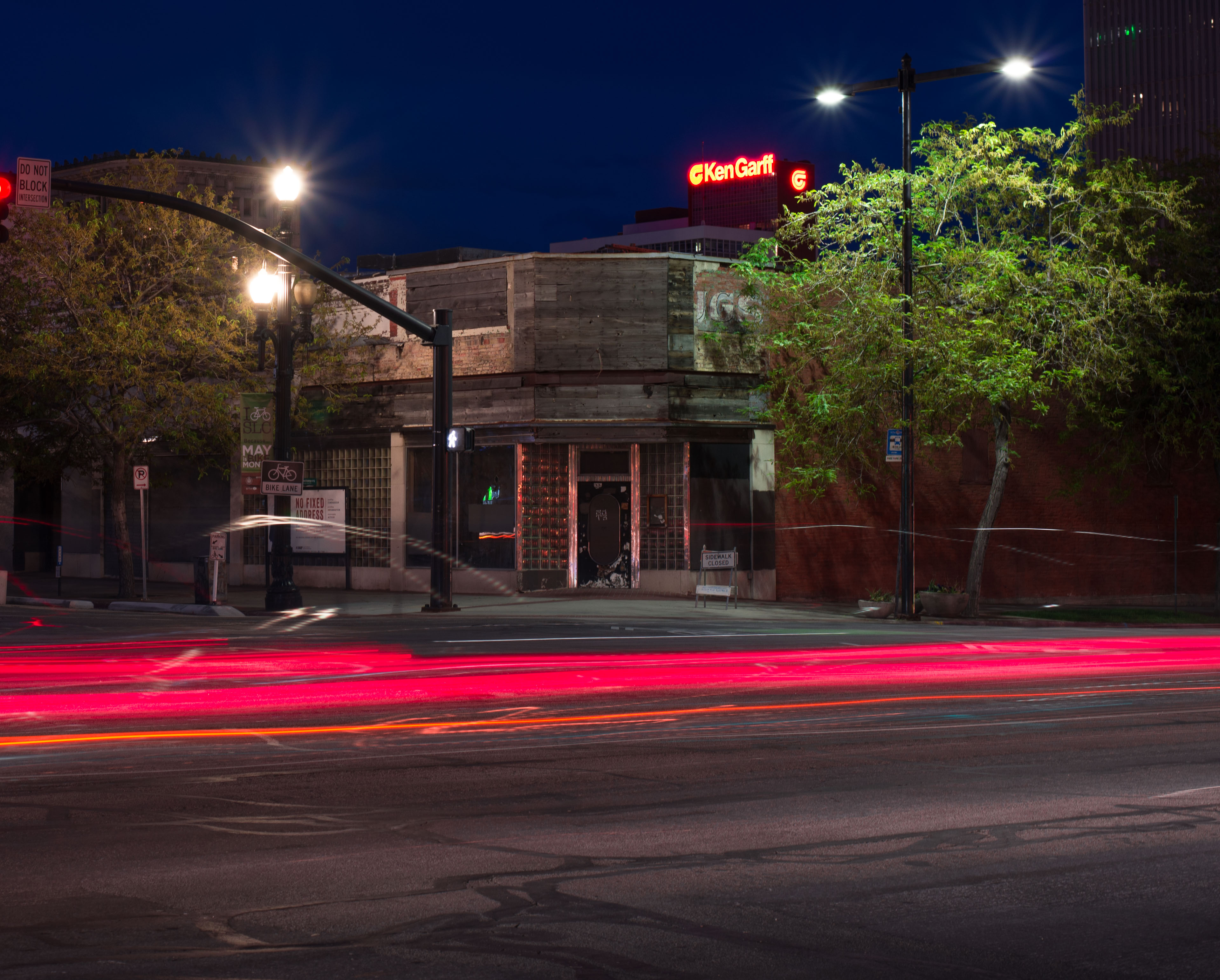
Abandonded Zepher club 3
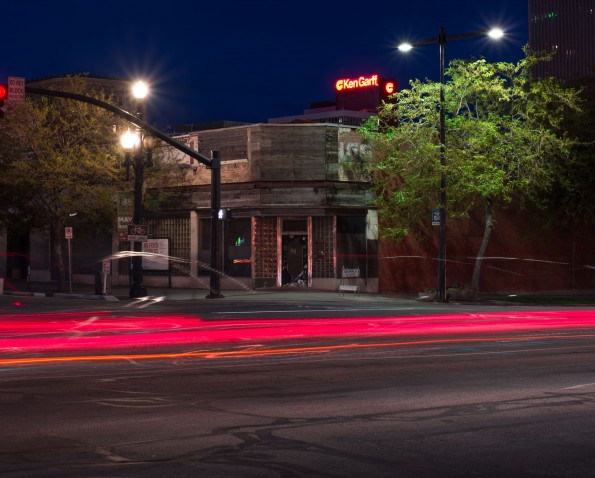
Salt Lake’s Zephyr Club Photo by Mike Jones

The Zephyr Club once blew hot rock and blues through Salt Lake City.

There are few Salt Lake City buildings that show a greater contrast between the recent past and present than the former Zephyr Club’s crumbling façade. At its zenith during the late 1980s and early 90s, the Zephyr, with its art deco gleaming metal front door framed by glass blocks, was the epicenter of live music and nightlife in the capital city. At its 300 South/West Temple location, the club hosted acts that ranged from local bluesmen to world famous artists such as Warren Zevon and Robert Palmer.

“We started as a supper club but we also had live music and it became apparent the first three nights we were open that what people really wanted was the music,” said former owner Otto Mileti.

The Zephyr had features that made it a great place for live music. With a capacity of about 400 people and a ceiling just barely high enough to accommodate a balcony, the audience felt close to the performers. “It was big enough to have a good crowd but still be a cozy club,” said Mileti.

While the Zephyr hosted artists of all stripes, there was a deep shade of blues throughout the club’s history according to Michael Ricks, a local musician with the Tempo Timers blues band and the long-time Zephyr sound engineer.

“The club really got on the map with the blues guys,” said Ricks. Mileti said while big names like John Lee Hooker, George Thorogood, and even the White Stripes and the Black Keys in their early days would fill the club, there was a core group of local “bread and butter bands” that always drew a crowd.

“There were groups like the Crazy 8’s, Little Women (fronted by Jerry Joseph now of Jerry Joseph and the Jack Mormons) Monkey Meat and a few others that were just part of our regular line up,” Mileti said.

Mileti said the Zephyr also led the charge for the ways bars and, at the time, private clubs, could advertise and make money in a state with strict liquor regulations. Mileti said they gave out free memberships and worked around advertising restrictions by labeling ads first as the member newsletter for the club and later with disclaimers noting the ads were intended for Zephyr members only.  

When Mileti’s lease ran out in 2004 and a “gentleman’s agreement” to buy the building fell through, the building went to auction and was purchased by the Bamberger Investment and Exploration Company. Disputes with the city over demolishing the block have led to its current, essentially abandoned state, but for many Salt Lakers, passing by the boarded-up frontage of the once lively club, the echoes of great rock and blues still resound.

 

Join our newsletter.
Stay informed.


  • Highway 6 and the Midland Trail: Utah’s Transcontinental Highway History

    From Price Canyon to Delta’s desert stretch, Utah played a central role in building the Midland Trail, one of America’s earliest transcontinental highways and the foundation of today’s Highway 6.


  • Whiskey, Bullets & a Buried Town: Archaeologists Reveal Alta’s Wild Past

    Before Alta was known for powder days and lift lines, it was a silver mining town clinging to the side of a narrow canyon. In the late 1800s, men lived at 8,000 feet, went underground each day, and endured winters that regularly buried buildings in snow. This past summer, that mining town resurfaced — literally — during construction at the Alta Ski Area.

    To understand what Alta really looked like, you don’t begin with legend. You begin with its trash — and this time, that happened almost by accident.

    Alta Ski Area was installing underground water reservoirs to support snowmaking. Because the project sits on Uinta-Wasatch-Cache National Forest land, an archaeologist was required to monitor the excavation. No one expected the trench to produce much.

    But, It did.

    Artifacts began surfacing almost immediately. Enough that the Forest Service contacted the Utah State Historic Preservation Office for help. Lexi Little, who coordinates the Utah Cultural Site Stewardship Program, helped mobilize nearly 30 volunteers to assist with what quickly became a focused two-week excavation.

    Winter deadlines were approaching. The pipes for the reservoirs had to go in the ground. There wasn’t time for a slow, extended dig.

    “It was two weeks of digging in the dirt and helping figure out exactly what we were looking at,” Little said.

    Most of the people screening soil weren’t professional archaeologists. They were trained stewards from around Utah — part of a statewide volunteer network that now approaches 500 people. They poured dirt through shaker screens, scanning for fragments that could piece together a town long buried.

    “Archaeology is human trash,” Little explained. “Archaeologists are very into trash.”

    Alta had left plenty behind.

    https://youtu.be/hzIHzx3OGoo?si=dKcl2CEz-t6FZzYw

    Victorian-style ceramics appeared first — the kind typically used in hotels. Medicine bottles followed. Ink bottles. Hand-blown glass. A porcelain doll’s foot surfaced from the soil, a small detail that shifted the mental image of the town. Families were here. Children were here. This wasn’t only a camp of miners.

    The bottles helped establish time. Manufacturing details — whether glass was hand-blown or mold-made, whether a maker’s mark appeared on the base — allowed archaeologists to date many of the artifacts to the 1870s through the 1890s, when Alta was booming as a silver mining town.

    “That gives you that range of dates for when Alta was really booming,” Little said.

    One reusable soda bottle clearly stamped “Salt Lake City” connected the canyon to the valley economy below.

    Then something unusual rolled out of a dirt pile.

    A corked bottle. Intact. Liquid still inside.

    To access this post, you must purchase Utah Stories (Digital + Print) or 3 month free trial (Digital).


  • The Only Full Bottle of Alcohol Ever Found in Utah Was Unearthed in Alta

    When a backhoe rolled a corked bottle out of the dirt at Alta this summer, no one immediately grasped what they were holding. It wasn’t empty. It wasn’t shattered. It was full. “The bottle that was discovered up at Alta is the only bottle of alcohol ever discovered in an archaeological excavation in the state…


  • How Horses Help Kids Heal: Inside Utah’s Equine Therapy World

    Kelty Johnson trains horses for a living, but her deeper work happens in the quiet space between animal and human. On the Utah Stories podcast, she explains how equine therapy helps children regulate emotions, build confidence, and reconnect through presence rather than pressure.