Utah Stories

Startup Ogden

Startup Ogden – where grassroots tech meets bureaucratic development- and it’s working out quite nicely.

|


sRI4ME8oHrQ1p9TlBGkLdpslqg6_dMLconB0dsZxD2Y
Photo by Kim Bowsher

Ogden’s progressive development is expanding at warp speed. In addition to rebuilding its downtown and residential areas, the comeback city of the Intermountain West is also a developing tech hub.

About a decade ago, city administration recognized opportunity in a dilapidated downtown building. With federal grant money and Weber State University funding, a collaborative venture was created. The restored Washington Boulevard building now houses a downtown campus for Weber State University and a shared work space.

Weber State University Bookstore occupies the first floor, and is essentially an Apple Campus Store. “There’s an authorized Apple retailer right here that no one seems to know about,” tenant Joel Grasmeyer says. “You can take your computer in for service without driving to Farmington and waiting in line.” University classroom and lecture spaces, conference rooms and the Ogden Small Business Development Center occupy part of the second level.

Weber State’s lease offers a heightened university downtown presence, something Weber has wanted for years since moving above Harrison Blvd., and the funds from that lease have allowed Ogden City to nurture a startup community in the other half of the building. Startup Ogden takes the remainder of the second floor and all of the third story.

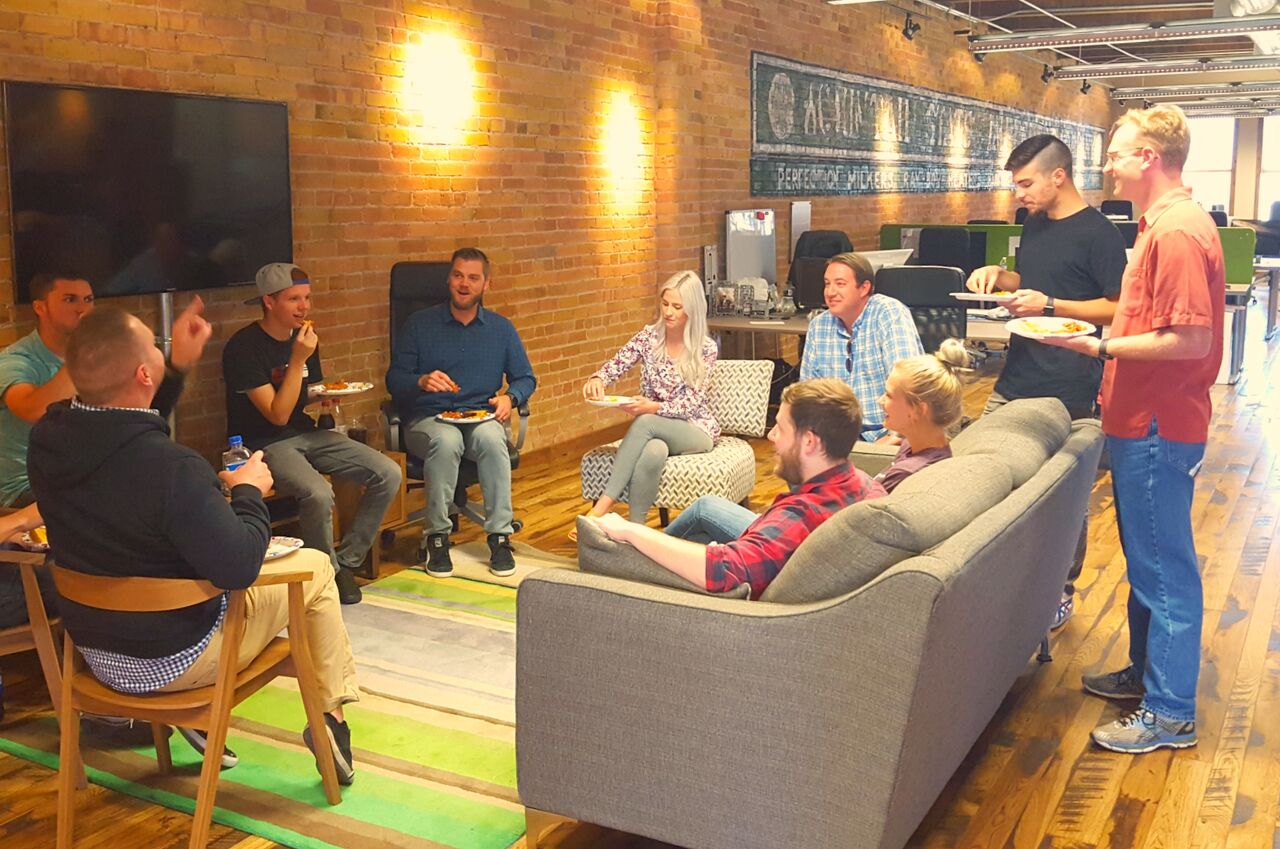
Startup Ogden is a collective low-rent workspace for tech, professional services and other startup entrepreneurs. The building is beautiful and perfectly suited to those hoping to launch new ideas.

Rents range from $50-$100 dollars a month, a payment that includes wifi, mail service, showers, lounge space and meeting rooms. Because all of the building maintenance and expenses are covered by the Weber State lease on the first floor, one hundred percent of the Startup Ogden rents go back to the Startup Ogden community by way of events, workshops, and guest speakers.

Startup Ogden’s work atmosphere buzzes. Joel Grasmeyer is the developer behind several iOS apps including Real Estate Tools and Construction Cost Estimator. Joel likes Startup Ogden for the collaboration opportunities. “Honestly, most of these people would be working from home, if not here. It’s the random run-ins and idea-sharing sessions happening here that are just incredibly valuable. When you’re running a business it can be hard to stay motivated, but sitting in a room with others who are trying to do the same thing, it helps keep you going.”

Matt Sutherland is co-founder of HQ, a web and mobile app developer. One of their current projects, Far Better, will help business travelers book a trip from airport shuttle to flight, hotel, rental car and return trip in a matter of seconds.

Each Wednesday the group Hack Ogden meets over lunch.  According to Joel, “It’s sort of a Ted Talk meets Master Minds group.” Other events include Free Lunch Fridays and the annual Startup Weekend held in cooperation with StartupWeekend.org.

Drop in at one of the Startup Ogden events. Hack Ogden and Free Lunch Fridays are open to the public, and you’ll get a chance to meet some other area entrepreneurs and to learn more about co-officing in one Ogden’s most forward-thinking and historic settings.


 

Join our newsletter.
Stay informed.


  • Highway 6 and the Midland Trail: Utah’s Transcontinental Highway History

    From Price Canyon to Delta’s desert stretch, Utah played a central role in building the Midland Trail, one of America’s earliest transcontinental highways and the foundation of today’s Highway 6.


  • Utah Acquires US Magnesium Assets in $30M Deal to Protect the Great Salt Lake

    Utah leaders announced the state has successfully won the bid to acquire key assets of the defunct US Magnesium facility on the Great Salt Lake, including its associated water rights and property.


  • Whiskey, Bullets & a Buried Town: Archaeologists Reveal Alta’s Wild Past

    Before Alta was known for powder days and lift lines, it was a silver mining town clinging to the side of a narrow canyon. In the late 1800s, men lived at 8,000 feet, went underground each day, and endured winters that regularly buried buildings in snow. This past summer, that mining town resurfaced — literally — during construction at the Alta Ski Area.

    To understand what Alta really looked like, you don’t begin with legend. You begin with its trash — and this time, that happened almost by accident.

    Alta Ski Area was installing underground water reservoirs to support snowmaking. Because the project sits on Uinta-Wasatch-Cache National Forest land, an archaeologist was required to monitor the excavation. No one expected the trench to produce much.

    But, It did.

    Artifacts began surfacing almost immediately. Enough that the Forest Service contacted the Utah State Historic Preservation Office for help. Lexi Little, who coordinates the Utah Cultural Site Stewardship Program, helped mobilize nearly 30 volunteers to assist with what quickly became a focused two-week excavation.

    Winter deadlines were approaching. The pipes for the reservoirs had to go in the ground. There wasn’t time for a slow, extended dig.

    “It was two weeks of digging in the dirt and helping figure out exactly what we were looking at,” Little said.

    Most of the people screening soil weren’t professional archaeologists. They were trained stewards from around Utah — part of a statewide volunteer network that now approaches 500 people. They poured dirt through shaker screens, scanning for fragments that could piece together a town long buried.

    “Archaeology is human trash,” Little explained. “Archaeologists are very into trash.”

    Alta had left plenty behind.

    https://youtu.be/hzIHzx3OGoo?si=dKcl2CEz-t6FZzYw

    Victorian-style ceramics appeared first — the kind typically used in hotels. Medicine bottles followed. Ink bottles. Hand-blown glass. A porcelain doll’s foot surfaced from the soil, a small detail that shifted the mental image of the town. Families were here. Children were here. This wasn’t only a camp of miners.

    The bottles helped establish time. Manufacturing details — whether glass was hand-blown or mold-made, whether a maker’s mark appeared on the base — allowed archaeologists to date many of the artifacts to the 1870s through the 1890s, when Alta was booming as a silver mining town.

    “That gives you that range of dates for when Alta was really booming,” Little said.

    One reusable soda bottle clearly stamped “Salt Lake City” connected the canyon to the valley economy below.

    Then something unusual rolled out of a dirt pile.

    A corked bottle. Intact. Liquid still inside.

    To access this post, you must purchase Utah Stories (Digital + Print) or 3 month free trial (Digital).


  • The Only Full Bottle of Alcohol Ever Found in Utah Was Unearthed in Alta

    When a backhoe rolled a corked bottle out of the dirt at Alta this summer, no one immediately grasped what they were holding. It wasn’t empty. It wasn’t shattered. It was full. “The bottle that was discovered up at Alta is the only bottle of alcohol ever discovered in an archaeological excavation in the state…