Moab

Moab’s Base Camp Adventure Lodge

Tom Higginson traded corporate stress for red rock beauty.

|


IMG_8605
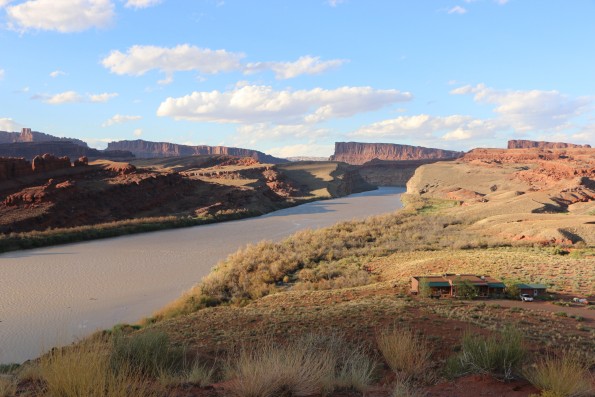
Moab’s Base Camp Adventure Lodge. Photos by Richard Markosian

In the Moab 4×4 Center, conversation turns to abandoned uranium mines. Tom Higginson, I’m told, extensively explored mines in the area. One he frequented contained historic relics including a table, cups and chairs and a jacket, as if the miners who worked there went out for a stroll 70 years ago and never came back.

Tom was living in the old Camelot Lodge space, they said, on the Colorado River shore. Flashback to 12 years ago. I remember visiting a place that was for sale where there was an incredible disc golf course with camels that were for sale. Anyhow, I was on a mission to find and meet Tom.

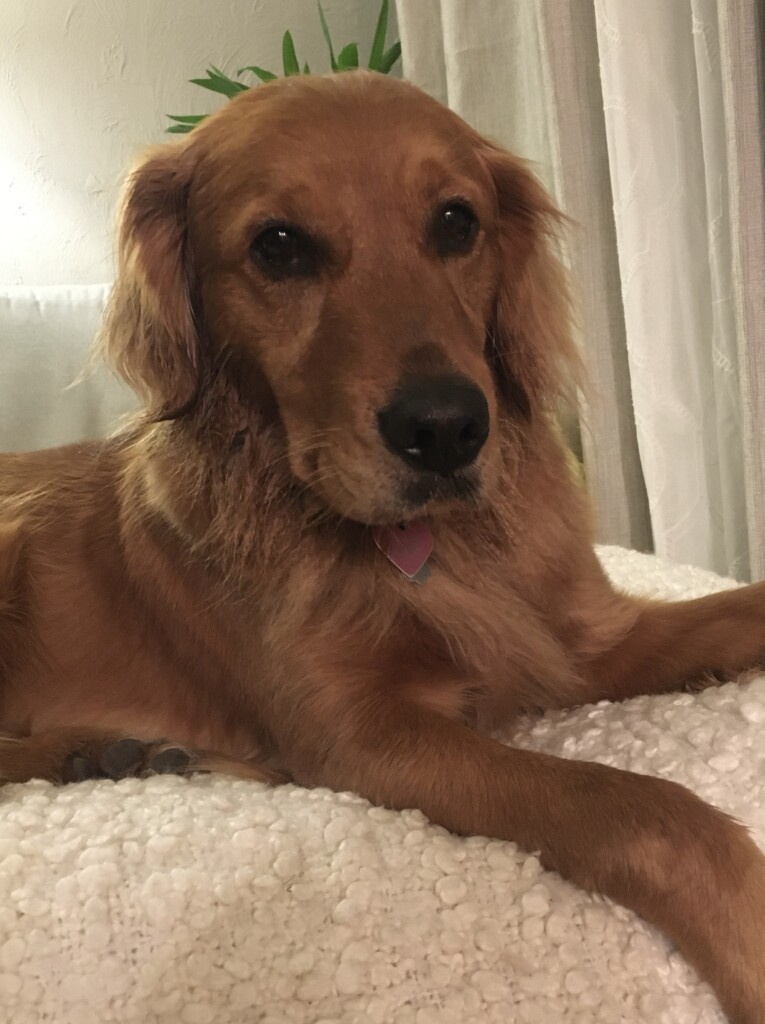
A month later I returned to Moab. I was driving a 4×4 vehicle because to reach Tom’s front door I would need it to clear Hurrah Pass on a rugged old mining road. In the passenger’s seat is Joey, my ten-month-old Irish Setter. We arrive late in the afternoon and settle in for the night. Tomorrow we will negotiate the pass.

I’ve left Tom a couple of messages on his phone, so I assume he is expecting me. I imagine him as a hermit or at least a recluse, but I’m sure he won’t mind a knock on his door in the morning.

Joey and I sleep under a moonless sky. The Milky Way’s vivid blue and purple hues commingle in the galaxy’s milky expanse. I’ve heard this is one of the best places on earth to stargaze. This is the first time I’ve felt so close to the larger universe. Later, the clouds roll in, the sky darkens and it starts to rain. I close the hatch on the Chevy Traverse and listen to the raindrops as my dog and I fall asleep.

Eighty years ago, when Everett Ruess was in his 20s, he wandered these lands for three consecutive summers. Equipped with writing and painting implements, Ruess traveled with a burro. Three times he returned to civilization, and each time he felt like civilization rejected him while the red rocks, desert cliffs and solitude called him back.

This is my third time camping in Moab in the past three months. Kane Creek road offers dozens of excellent campsites with as much or as little seclusion as a person could want. Here I feel the pull of the silent desert solitude. I can imagine staying here for contented weeks exploring “articulating nature” as Ruess did. But I have no intention of disappearing into the wild, and Joey seems very weirded out by the massive desert expanse. Joey gives me a “What the hell are we doing here?” look. He’s about to find out.

Meeting Tom and Kobae

The next morning, I don’t see any way of getting up and over Hurrah Pass in the Chevy. I might be fine, but if I bent the axle in the truck I borrowed from my brother I would need to buy the truck. So I attempt Plan B: floating the Colorado for a few miles and showing up on Tom’s beach, but I learn that the touring companies could only get me out in the morning and pick me up in the afternoon. It’s already too late for a morning trip. I have failed.

Then, just before I’m leaving town, Tom returns my message. “That’s too bad,” he says. “Maybe next time I could meet you halfway.”

“What about this time, meeting halfway?” I ask. Tom has to think about it because Kobae, his giant tortoise, has escaped out of his hole and he can’t leave while his tortoise is at large.

Tom has reconsidered and calls me back. “Hey,” he says, “if you can pick up an eight-pack of hot dogs for the ringtails, I can meet you halfway.” I have no idea what he’s talking about, but I’ll find some hot dogs for a lift. Tom is far more social than I had imagined.

Tom is a successful retired business owner. He launched a series of indoor soccer facilities, one after another, then he traded some stock to purchase the Camelot Lodge, changed the name to Base Camp, and operated it as a manager’s retreat.

Eventually he bought Base Camp from his company so he could live there full time. “I decided I’d had enough of the same monotonous San Diego weather. It’s always around 80-90 degrees in the summer and 60-80 degrees in the winter. I wanted a place where I could kayak, motorcycle and have four seasons. This is perfect.”

I worry that Tom might be a little too normal to make for an interesting story until he explains to me why I’ve brought hot dogs. “In about an hour after the sun goes down, you can meet all of my friends here.” Tom has befriended not only ringtails which are skinny, long-tailed raccoon-type animals, but also lizards, skunks, birds, raccoons and hawks. He feeds them all; they are his “babies,” and he has documented his encounters with a bird who cleans his house of flies and furry mammals.
IMG_8572
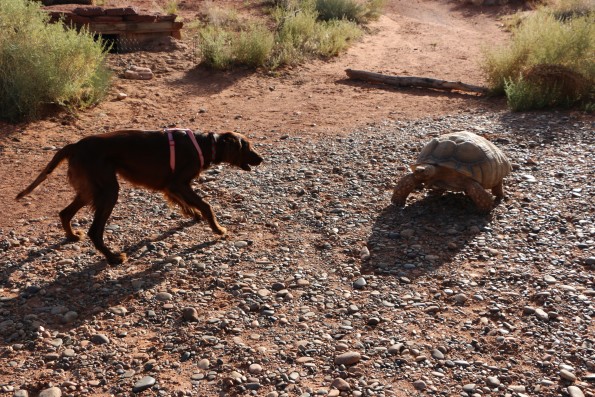
Joey the Irish Setter Puppy meets Kobae the giant tortoise

Kobae, Tom’s massive 140-pound “security tortoise,” has adapted well to his desert home. He is fearless of Joey who is amazed watching the the massive reptile.

Tom tells me that a hawk was killing his songbirds, and he decided to do something about it. His first tactic was to buy a dozen walkie-talkies and put them in trees and every place where he saw the hawk stop to perch. Every time the bird would land he would yell obscenities. Still, the hawk persisted to come and kill Tom’s “babies.” So he started throwing snowballs at the hawk in the winter, but the hawk continued to taunt Tom, showing how easy it was to evade him.

Tom then decided to follow the hawk to his home. Tom found the canyon the hawk inhabited, and he saw his nemesis there living in a cliff. Tom launched another snowball. He explained he never hit the bird, but he wanted to intimidate and scare him off.

The next day the hawk arrived with a dead bird. The hawk stood flat on the ground. Tom approached the bird. He recorded the event on his video camera, as he proceeded to reach his hand out to the carnivorous hawk who remained still and allowed Tom to pet him. For the next eight minutes Tom stroked the hawk and said kind words to him. (This entire event is recorded)

Then the hawk departed, leaving the dead bird as a peace offering. He flew off and never returned. In exchange, Tom has never returned to the hawk’s canyon. “We made an agreement that night. He sticks to it, and so do I.”

We watch the sunset on the massive red rock cliff behind Tom’s home. It glows vermilion. No ringtails arrive, but a baby skunk shows up and eats a hot dog. Tom drives me back to my truck in the dark. Tom knows not only former uranium mines, but also all the trails in and out for miles. He frequently rescues off-roaders. A massive flash flood left several people stranded and they stayed overnight at Tom’s house while the road was washed out.

Guests at Tom’s Base Camp can meet his animals and become acquainted with a more profound side of the red rock wilderness.
IMG_8652
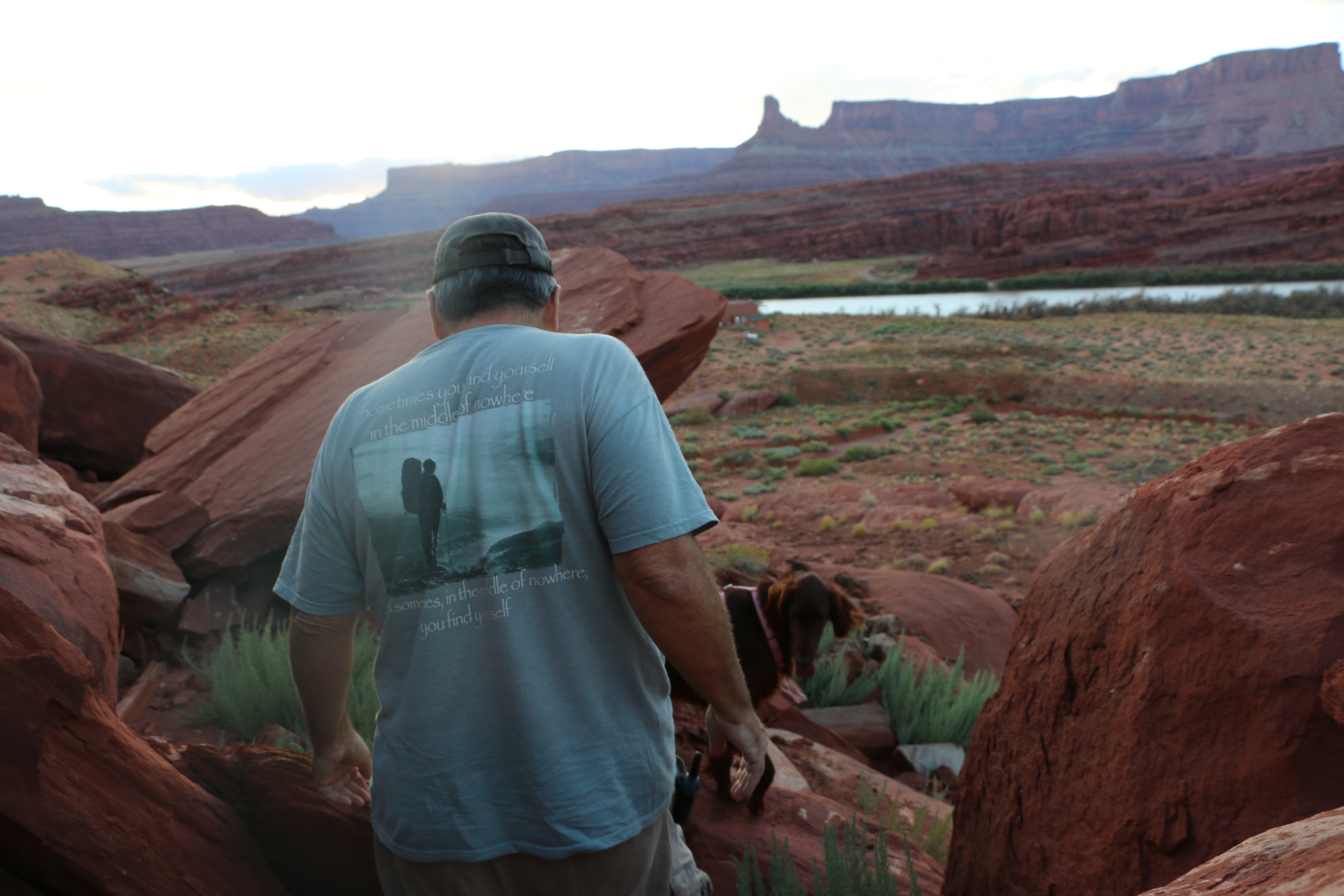
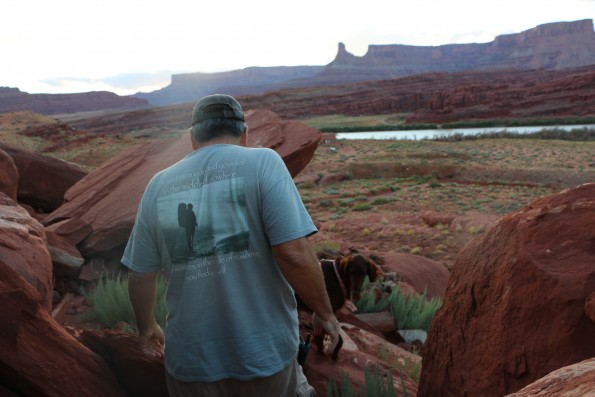
Tom Higginson hiking through red rock country


The Base Camp Adventure Lodge is located on Lockhart Basin Road in Moab, Utah. Call (435) 258-6264 for more information. 

 

,


Join our newsletter.
Stay informed.


  • Moab’s Off-Road Legend Dan Mick: Inside Hell’s Revenge and the Fight for Public Land Access

    The story of Moab’s off-road world isn’t just about machines. It’s about the people who have shaped this place — people like Dan Mick, who has spent a lifetime climbing impossible angles and helping others experience the wonder of the slickrock and the trails.


  • Artist Kate Kilpatrick Brings Utah’s History to Life Through Murals

    “I think we’re all interconnected; as individuals as well as societies,” Kilpatrick notes. Her work showcases those connections exuberantly, and whatever scale she’s working on, you can bet that in terms of energy and spirit, she’s painting large.


  • Dyslexia and ADHD in Kids: Why Some Students Struggle to Read in School

    That’s what led to my conversation with Donell Pons, a Utah-based dyslexia expert who has spent more than two decades working with students who struggle to read. What struck me right away is how often we get the problem wrong from the start.


  • Why Most People Stay Stuck in Business and What It Takes to Move Forward

    Every so often, you meet an immigrant who came here with almost nothing and managed to build something exceptional.

    Prakash Shah is the kind of man who has spent enough time around risk that he no longer treats it like an interruption.

    Today, he works in business brokerage and advisory, helping owners sell companies, helping buyers decide whether they should step in, and, when the fit is right, helping connect those buyers with private equity. He works in a world of valuations, leverage, due diligence, and hard questions that most people would rather postpone. He also operates in Utah real estate and has built a career around seeing value before it is obvious to everyone else. That is who he is now. What makes him interesting is how early that instinct started to form, and how little his life resembles the way most Americans are raised to think about comfort, career, and security.

    He grew up in Nepal in a boarding school system that would feel severe to many Americans. He was an only child, yet he saw his parents only twice a year for twelve straight years, until high school graduation. He lived inside routine. He shared space with boys from different social classes and different family circumstances. The school was structured enough that money did not buy you any special standing once you were inside. Everyone followed the same rules. Everyone was subject to the same discipline. In his case, it was an army school. Everything was measured. Everything was scheduled. In that kind of environment, you do not build your life around preference. You build it around adaptation.

    That contrast matters.

    A lot of American children are raised to search for what fits them. What are you passionate about? What do you enjoy? What feels right? Those are not bad questions, but they can create a habit of waiting for life to align itself before action begins. Prakash learned something else much earlier. He learned that life often does not align itself first. You enter the room as it is, you deal with the people in it, and you figure out how to function without making your comfort the center of every decision. He said that one of the biggest lessons from those years was tolerance, the ability to live with people from all walks of life and genuinely learn to get along with them. That is not a soft value. In business, it turns into resilience. In negotiation, it turns into patience. In career terms, it turns into range.

    When he came to the United States over 25 years ago, he did not arrive with the kind of runway that allows for a prolonged identity search. He came with two suitcases and enough money for one semester. He went to Hunter College in New York City, then to NYIT near Central Park, studying media and then media and technology management. He also studied psychology. Those details matter because they show something about his mind. He was interested in people before he built a career around deals. Even then, what attracted him was not technical prestige. It was understanding motives, behavior, and how people reveal themselves.

    But New York is merciless toward vague ambition. It demands payment in rent, transit, food, and time.

    Prakash worked constantly. He took multiple jobs. He paid tuition, paid rent, and skipped most of what Americans imagine as college life. There were no romantic years of drifting from café to concert to self-discovery. He talked about not having the luxury of dates, travel, or finding himself. He was working. Even laundry was not a small detail. In New York, he pointed out, you do not just throw clothes in a machine at home. You haul them to the laundromat, count quarters, and measure what is necessary. He also described distraction in a way that most native-born Americans probably do not think about. For immigrants, distraction is not always pleasure. Sometimes distraction is the constant pressure of competing needs. Tuition or rent. Food or savings. A better coat or another month of making do. He was not romanticizing the struggle. He was describing the arithmetic of it.

    That arithmetic did not make him cautious. If anything, it did the opposite.

    While in college, he had the option of safer analytical work. Instead, he took a sales job with Time Warner Cable that sent him into the South Bronx from 6 p.m. to 10 p.m. to knock on doors. He is not a physically imposing man. He knew exactly what kind of neighborhoods he was walking into. He described apartment buildings where people kept pit bulls, where tension was normal, where one mistake in tone or timing could end a conversation immediately. For most people, that kind of job would have been something to survive and forget. For him, it became a school in human behavior. “It’s not about talking… it’s about listening,” he said.

    One story from that period says almost everything about how he operates. He knocked on a door one night around 8:45 and found himself facing a huge man with a gun on the table, pit bulls nearby, and a half-eaten pizza in front of him. It had all the ingredients of a very bad scene.

    Continue reading and support independent Utah journalism with a purchase of Utah Stories (Digital + Print) or 3 month free trial (Digital).