From Rocket Scientists to Executives, People Have Changes Their Lives to Become Best Friends to All Creatures Great and Small
Walking into the headquarters of Best Friends’ dining area, we notice that the appreciation for life extends beyond animals. In the facility, large, mature pinyon trees, predating construction, have been saved by skillful design. Trees growing through the building provide shade for the front entrance and the back terrace. The cafeteria offers a $5 vegan salad bar to all employees and guests. The daily special is marinara and spaghetti with garlic bread, and everything is fresh and healthful.
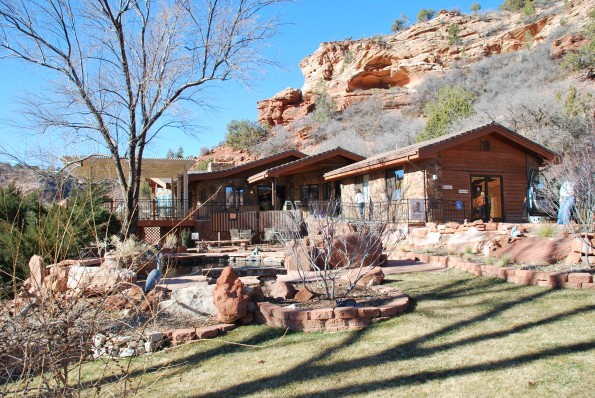
The lunch deck balcony offers a panoramic view of Angel Canyon. Red rock cliffs and box canyons filled with meadows provide an idyllic setting for the sanctuary’s 1,700 animals, the population of which includes more than rescued dogs and cats. Numbering in the menagerie are saved parrots, pigs, horses and rabbits. All of the animals are housed in over a dozen buildings, and cared for by over 200 staff and volunteers on a given day.
Meandering Kanab Creek flows through a narrow valley of cottonwood trees. One of the original founders of Best Friends agrees to meet us on the headquarters’ expansive balcony.
It feels like we have just stepped into Never Never Land, but unlike the fairy tale, Best Friends’ staff are professional grown-ups who chose to be here. There are scientists, executives and architects who gave up more worldly accomplishments and instead decided to dedicate their lives to the simple work of caring for animals. “The man who manages the kitten house once managed the parts department at the Mercedes dealership,” we are told. “Another former rocket scientists scoops litter now.”
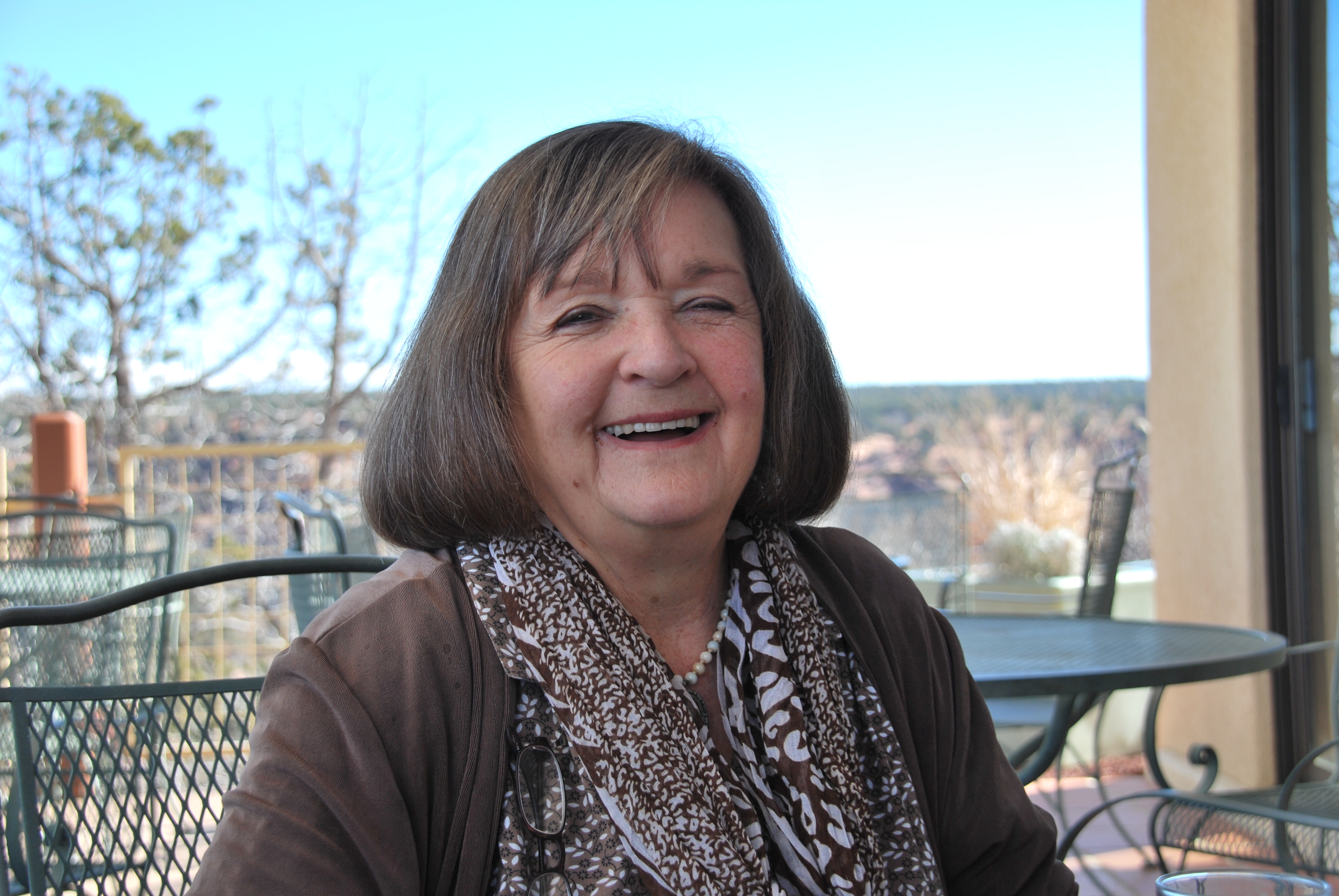
A female Peter Pan is sitting at our table: Faith Maloney is an obvious idealist, optimist and dreamer who, 30 years ago, along with 27 of her best friends, believed that they could better the world by saving animals. Listening to Faith, it’s easy to believe that fairy tales can come true.
After learning that 17 million animals were being killed annually in US animal shelters, Faith says that she and her friends wanted to start a sanctuary. In her distinct British accent she relates, “It was an unfathomable number,” adding, “so the need was there. It was as obvious as the nose on your face.” So, Faith and her like-minded friends from a broad group of professional backgrounds, age and geography, decided to take a vow of poverty, pool all of their money, buy land and work with each other to achieve the goal of creating an animal sanctuary.
Initially, their homes were all crowded with pets they had rescued. “A lot of rescues start this way. You put them in the bathroom, then in the bedroom, then in the garage and finally you go, oops I think we need a place,” says Maloney.
Eventually they found a great deal on 30 acres in Angel Canyon in Kanab, Utah. They had some very basic housing structures built. Only one original house came with the property, so many people lived in trailers. When it was determined that Faith would start and operate DogTown, she decided to live in a single-wide trailer beside the dogs she was caring for. “We weren’t fussy. We were very good at being poor.”
Faith explains, “I used to drive around town and look at people who had leftover lumber, the short pieces of 2x4s, and, with my English accent I would ask, ‘Do you want those?’ And I would go scouring people’s junk piles. We have really worked from the bottom up.”
It didn’t hurt that three of the founding members were also architects. So, once money was raised, they would design and build the animal houses themselves. Faith says with no experience or real expertise, she began managing the housing of hundreds of dogs, using only her powers of observation as an artist. She refined the methods to train and socialize the dogs and improved their housing, “It was a lot of trial and error,” she says.
The houses for the dogs are well engineered so that the acoustics of many dogs barking with lots of hard surfaces is not overwhelming. Panels deflect and dampen the sound. All of the dogs have easy access to both indoor and outdoor areas. When we walk in, three small dogs come up to the gate and greet us. Two are wearing green collars, indicating they are okay to pet. One has a red collar, meaning keep away. The goal is to “socialize” all of the dogs so that visitors can come and adopt them.
While DogTown had humble beginnings, today it’s incredibly well thought out and really a marvel. The six-sided house has five pens for groups of animals who live well together, and there are areas to keep those who aren’t socialized apart from the others. The prize- fighting pit bulls which belonged to Michael Vick are here. Three have been adopted; two still remain. Dozens of homeless pets who were picked up after Hurricane Katrina were adopted through Best Friends. Katrina brought a huge amount of notoriety to the organization, followed by a TV program.
DogTown was the subject of a four-season reality TV show that aired on the National Geographic Channel.
DogTown has a specially designed house for small dogs, special in that the dogs are protected from the predatory birds who might swoop down and get them. Another house is for big dogs. There’s one for puppies, and one for older dogs.
Visitors come from all over the United States to volunteer. Last year hundreds of volunteers arrived at Best Friends. And they tell us that 70 percent of all dogs that come through the sanctuary are adopted.
Best Friends is now the largest pet sanctuary in the United States. Best Friends has No Kill operations in Los Angeles, New York and Salt Lake City. Amazingly, the fairy tale to “save them all” just might become a reality.