
Some would call them the fourth branch of government, but political lobbyists see themselves more as educators. You know who they are, but do you really know what they do?
A lobbyist is someone hired by a business or a cause to convince lawmakers to support that business or cause. In essence, they’re paid to persuade. For example, oil companies send lobbyists to Washington to try to make life easier for oil companies. In Utah recently, lobbyists have been involved in controversial legislation concerning payday lenders, electronic billboards and the state’s huge vitamin supplements industry. So just how do these businesses persuade legislators to pass laws in their favor?
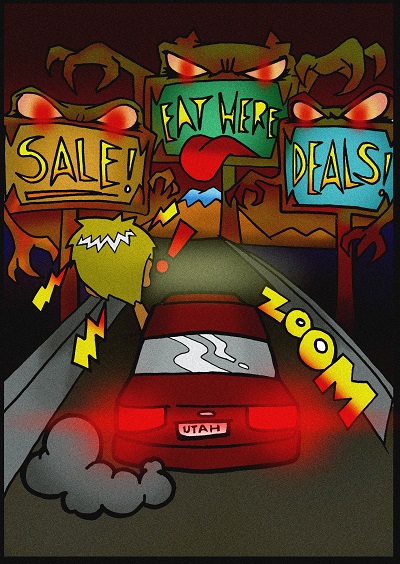
One industry that uses lobbyists and big campaign donations is the outdoor sign industry. They spend their money fairly equally between Republicans and Democrats, caring more about the outcome of their interests rather than political lines. The industry, including two local companies, Yesco and Reagan, would like to see fewer restrictions on billboards, more billboards and more electronic billboards.
During the 2014 legislative session two competing bills were introduced. SB 82 would have prohibited cities from enacting electronic billboard ordinances or prevent the upgrading of paper billboards to electronic signs. At the same time SB 223 was introduced. This bill would have strictly controlled the process for erecting or renewing signs. According to the Utah League of Cities and Towns, “The legislature is weary of billboard battles and refused to consider either bill.”
The outdoor sign industry continues to lobby to promote their business. Other in the community would like to see less of the signs that block the view to the Wasatch Mountain Range. The ULCT worries that local control of sign placement could be lost by blanket legislation.
Senator Margaret Dayton of Orem introduced SB 82 last year. She received campaign contribution from Reagan Outdoor Advertising. When asked about the 2015 session and if she or anyone else planned to introduce the legislation again she said, “At this date, I am not aware of any such legislation.”
Kelly Atkinson was a state representative from West Jordan from 1986 to 1996 and then in 2000 he became a lobbyist. He currently lobbies for Educators Mutual Insurance and for the Fraternal Order of Police. He says, “The job of a lobbyist is to educate legislators.”
Utah has the shortest legislative session of all 50 states at 45 days. Those days include weekends so the legislature has about 32 to 35 days to look at “1000 pieces of legislation and set the state’s budget,” according to Atkinson. All legislators are men and women who work in other professions – the legislature is a part time job. It is also a job with a high turn over. Atkinson estimates that there is a 20 to 25% turnover every election. With so little time and with novice officials it is impossible to know everything about every issue and bill that comes up. That is where the lobbyists come in.
There are three types of lobbyists. There are “in-house” lobbyists” who are employed by a company such as Questar Gas. Their salary comes from the company and they work lobbying for issues related to their companies.
The second type is a contract lobbyists. Atkinson falls under this category and his business is called Atkinson Consulting. Businesses, or groups come to him and hire him to lobby based on his knowledge and experience.
The third type is known as citizen lobbyists. These people are not paid for their work, but lobby for things they are passionate about. For example Utah has a strong citizen lobby that deals with autism issues.
A lobbyist’s job is to help the elected officials understand bills and the thinking behind them. Typically, Atkinsons says, a legislator will want to know why he or she should vote for a particular piece of legislation and also what the opposition will say about why they shouldn’t vote for it. “A good lobbyist should have the answers to both questions and if they don’t they lose credibility.” And lobbyists live and die by credibility.
Lobbyist’s work to pass legislation or sometimes, to stop legislation. Utah’s legislature works on a constitutional 2/3rds majority system. This means a minimum of 38 representatives must vote for a bill for it to pass and 15 senators. Then it goes on to be signed by the governor. For a lobbyist that means a lot of educating and a lot of time spent talking. Atkinson says, “You can’t get caustic or nasty if they don’t agree with you. People have agendas and personal things going on that influence them so it’s best to thank them for listening and hope you’ve helped them understand and issue better than before.”
In his experience Atkinson has observed that most people in political office have natural cynicism and natural curiosity. The cynicism comes from all the people approaching them with an agenda. They constantly wonder what people are trying to get. The curiosity leads them to listen and question when they hear new information. Good legislators will follow up on the information they learn and make informed decisions. With approximately 477 (the number can change daily) registered lobbyists for the upcoming session they have a wealth of sources to turn to.
Read part two of this story.
Story by Connie Lewis