Utah Stories

Habit for Humanity Bargains

Utah’s Habitat for Humanity not only provides homes for low-income families, it also operates a thrift store for essential building materials.

|

utah habitat for humanity


utah habitat for humanity
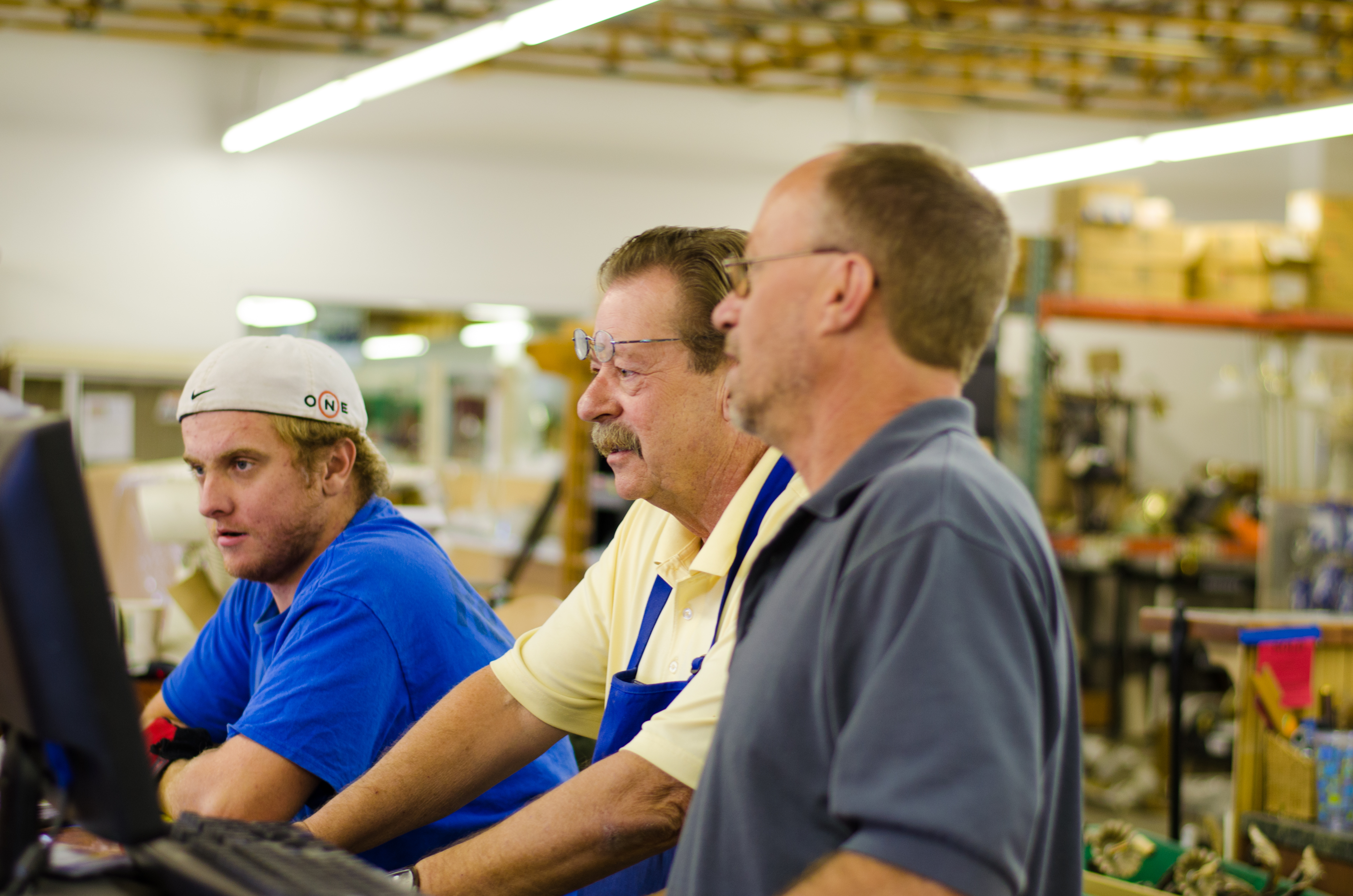
Habitat for Humanity Kevin Mathena, Bill Hungzinger and Layne Burrows

Anyone who has ever done remodeling knows “the list”–that scrap of paper scrawled with, “Get paint, nails, caulk, etc., etc., etc.”

At the Habitat for Humanity ReStore, one can not only fill the list, but also perhaps find a dolphin-shaped table! “It’s one of the more unusual items I’ve seen donated,” says Layne Burrows, who has worked there for five years.

The ReStore is in essence a bargain thrift store for those needing building materials. In the 30,000 square foot warehouse, its 15 departments include plumbing, electrical, flooring,appliances, furniture and an occasional dolphin table. The inventory is constantly changing. Contractors, building managers and individuals donate excess items when a project is completed. The ReStore collects over 90 full truckloads of material a month, and nearly 200 people shop there daily.

“Everyone deserves a decent place to live,” says Ed Blake executive director for the Salt Lake Valley Habitat for Humanity. Blake says the “stars aligned” to make the ReStore a success since it started five years ago. “True Value Hardware held their national convention here. When they closed, the exhibitors donated 24 semi-loads of brand new products for us.”

The ReStore, however, is only one aspect of Habitat’s presence in the Salt Lake area. To date, it has built 92 homes for low-income individuals to own. “A person applying for a home makes between 30 and 60 percent of the area’s average income. They must contribute 225 hours of sweat-equity to the project. They then receive a zero percent interest 30-year loan at $550 to $650 a month that pays it forward to the next recipient. A typical homeowner is a single mom. She’s not doing it for herself; she’s doing it for her kids,” Blake says.

Habitat is also backing a Healthy Homes program. Blake explains that for many chronically ill people, conditions such as asthma are a result of a house problem. “A doctor can’t write a prescription to fix a house. When we work with a homeowner, we have a 100-point checklist that looks for things such as mold and bad drafts. We are finding that one dollar in house repair equates to saving nearly nine dollars in Medicare costs.”

For Blake, being a director is somewhat of a dream position. He came to Habitat after a successful career in real estate. “It wasn’t Jimmy Carter that got me hooked. My wife simply said to me, ‘You should do something that you like.’ This job gives me the opportunity to see the light in people each day.”

The ReStore, 1276 S. 500 W.
Open M-Sat, 9 am – 6 pm



Join our newsletter.
Stay informed.


  • Highway 6 and the Midland Trail: Utah’s Transcontinental Highway History

    From Price Canyon to Delta’s desert stretch, Utah played a central role in building the Midland Trail, one of America’s earliest transcontinental highways and the foundation of today’s Highway 6.


  • Utah Acquires US Magnesium Assets in $30M Deal to Protect the Great Salt Lake

    Utah leaders announced the state has successfully won the bid to acquire key assets of the defunct US Magnesium facility on the Great Salt Lake, including its associated water rights and property.


  • Whiskey, Bullets & a Buried Town: Archaeologists Reveal Alta’s Wild Past

    Before Alta was known for powder days and lift lines, it was a silver mining town clinging to the side of a narrow canyon. In the late 1800s, men lived at 8,000 feet, went underground each day, and endured winters that regularly buried buildings in snow. This past summer, that mining town resurfaced — literally — during construction at the Alta Ski Area.

    To understand what Alta really looked like, you don’t begin with legend. You begin with its trash — and this time, that happened almost by accident.

    Alta Ski Area was installing underground water reservoirs to support snowmaking. Because the project sits on Uinta-Wasatch-Cache National Forest land, an archaeologist was required to monitor the excavation. No one expected the trench to produce much.

    But, It did.

    Artifacts began surfacing almost immediately. Enough that the Forest Service contacted the Utah State Historic Preservation Office for help. Lexi Little, who coordinates the Utah Cultural Site Stewardship Program, helped mobilize nearly 30 volunteers to assist with what quickly became a focused two-week excavation.

    Winter deadlines were approaching. The pipes for the reservoirs had to go in the ground. There wasn’t time for a slow, extended dig.

    “It was two weeks of digging in the dirt and helping figure out exactly what we were looking at,” Little said.

    Most of the people screening soil weren’t professional archaeologists. They were trained stewards from around Utah — part of a statewide volunteer network that now approaches 500 people. They poured dirt through shaker screens, scanning for fragments that could piece together a town long buried.

    “Archaeology is human trash,” Little explained. “Archaeologists are very into trash.”

    Alta had left plenty behind.

    https://youtu.be/hzIHzx3OGoo?si=dKcl2CEz-t6FZzYw

    Victorian-style ceramics appeared first — the kind typically used in hotels. Medicine bottles followed. Ink bottles. Hand-blown glass. A porcelain doll’s foot surfaced from the soil, a small detail that shifted the mental image of the town. Families were here. Children were here. This wasn’t only a camp of miners.

    The bottles helped establish time. Manufacturing details — whether glass was hand-blown or mold-made, whether a maker’s mark appeared on the base — allowed archaeologists to date many of the artifacts to the 1870s through the 1890s, when Alta was booming as a silver mining town.

    “That gives you that range of dates for when Alta was really booming,” Little said.

    One reusable soda bottle clearly stamped “Salt Lake City” connected the canyon to the valley economy below.

    Then something unusual rolled out of a dirt pile.

    A corked bottle. Intact. Liquid still inside.

    To access this post, you must purchase Utah Stories (Digital + Print) or 3 month free trial (Digital).


  • The Only Full Bottle of Alcohol Ever Found in Utah Was Unearthed in Alta

    When a backhoe rolled a corked bottle out of the dirt at Alta this summer, no one immediately grasped what they were holding. It wasn’t empty. It wasn’t shattered. It was full. “The bottle that was discovered up at Alta is the only bottle of alcohol ever discovered in an archaeological excavation in the state…