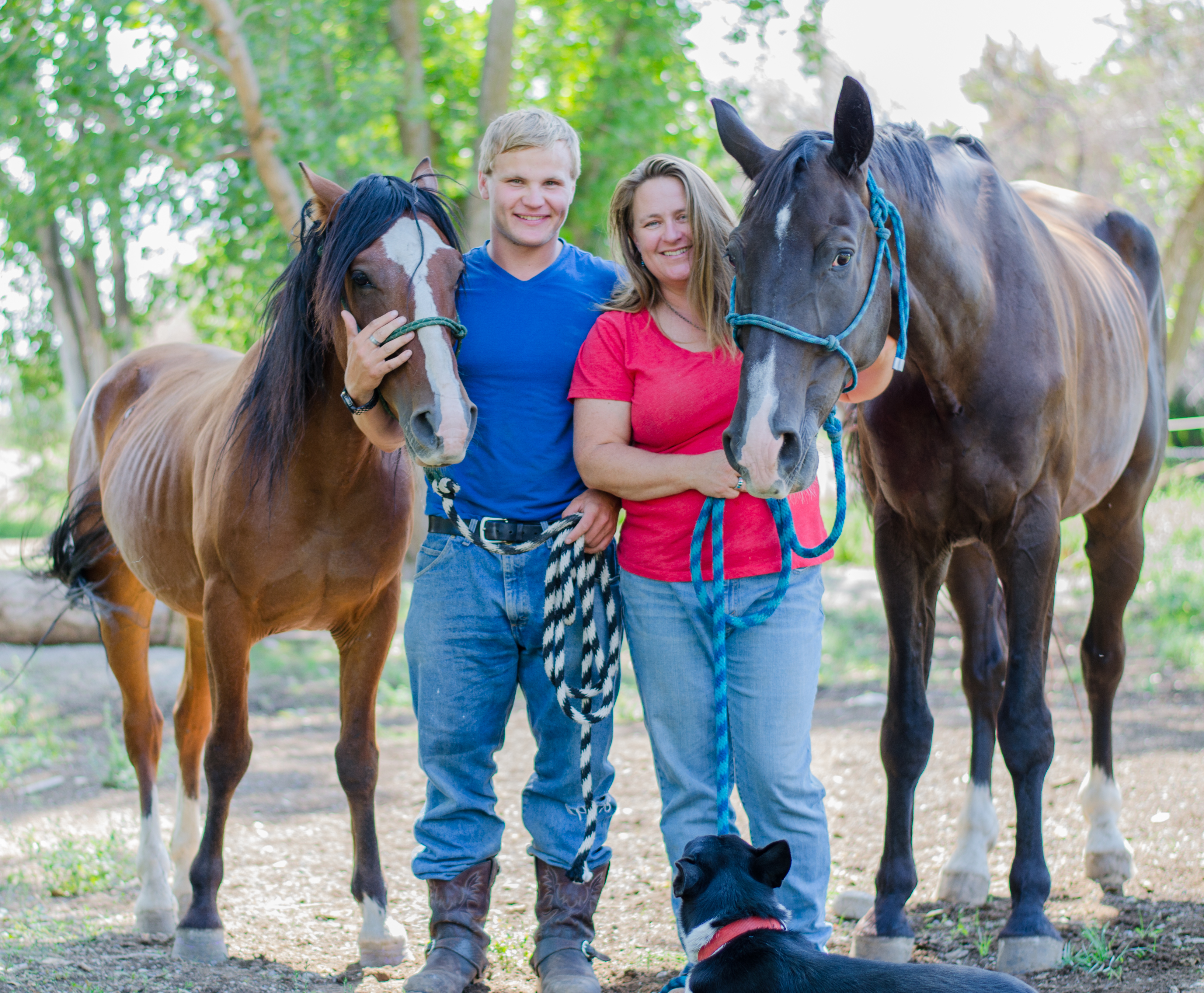
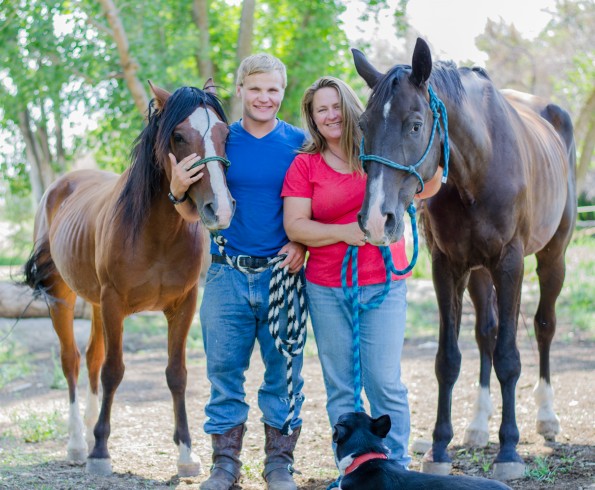
Thor was a wild mustang with a troubled past; so was 17-year-old Michael Dunn. Together they have made an amazing recovery and discovered a new life. “I was never really a fan of horses, but I’m a fan of Thor,” Michael says. While this may sound like a great plot for a movie, it is a true story made possible by The Stable Place, a non-profit whose mission is to connect troubled youth with horses that have been neglected, abused or abandoned. The Stable Place is Jayme Alexander’s resourseful creation.
Alexander rescues horses who are psychologically distressed. These horses require special, attention and love that most people are not willing or able to provide. But Alexander recognizes that individuals with special needs have an ability to connect with these horses that also have special needs. When they’re ready, she reintegrates the horses back into the community. It is a win-win-win situation. Win for the horses, win for those whom the horses help, and win for the adoptive home.
Alexander employs horses that have agreeable temperaments to help work with at-risk youth and individuals with autism and disabilities. Using modified equipment and individually-tailored approaches, Alexander and the horses nurture relationship building and teach discipline and responsibility. She’s created partnerships with youth substance abuse facilities and the program has helped change lives. Dunn tells us how the Stable Place rescued him: “I got involved with drugs and alcohol pretty young. I tried it after a friend made it known that I could get stuff from him. It was all downhill from there. I mostly did it because I was curious. It ended up taking me to a pretty bad place.”
The breaking point for Dunn’s parents was when he was arrested for trespassing and a drug charge was added. His parents enrolled Dunn in a wilderness program. When he was ready to graduate from the program he was excited to go home and start his life again. He says, “Over the phone my parents told me I wasn’t coming home and that I was going to a boarding school in Utah. I was devastated.”
Dunn was enrolled in the Gateway Academy in Utah, which has an equestrian program that works with The Stable Place. It was there that Dunn met Thor.
Thor had spent a lot of time in the wild and no one could get close to him. “The second time I came to the Stable Place a friend of mine challenged me to hug Thor. I accepted the challenge and I’ve been working with him ever since.”
A bond developed between Dunn and Thor. Six months after Dunn started working with him, Dunn adopted Thor. “I never thought I would work with horses. I find it very relaxing and a lot more fun than most things. I feel like I can connect with horses on a very different level than you can with a friend or another person. Working with Thor has taught me patience.”
But the work has not been without hardships. “Thor’s hurt me pretty bad in the past,” said Dunn, “He stopped short once and threw me. Sometimes working with him can be hard, but at the end of the day I still love him and wouldn’t trade him for anything.”
Stable Place spokesperson Amanda Sutton shares that horses come to The Stable Place by different means. The Sheriff’s Department delivers some that have been legally seized; some Alexander finds on ksl.com. Buck is a ranch horse that could no longer work to the standard that cattle-driving requires. “And one time,” Amanda recounts, “West Valley animal control brought a horse here that they found wandering the streets.”
Alexander believes that horses will naturally flourish if they have a job to do. “We see where the horse excels,” Sutton says, “whether its English, Western, jumping or cart driving, and then work with them according to their skills.” Sutton’s adopted “been there, done that” horse, Dotty, who was trained in jumping and dressage. “She was fancy,” says Sutton. “But then Dotty was used as a breed mare and later developed a sway back. She was sold to what Sutton describes as a “horse flipper” who decided that Dotty wasn’t a profitable investment. It is those who see the animals as more than “investments” who make the win-win connections that characterize the holistic intent of The Stable Place.
Dunn says, “When I graduate, I want to take a year off from school and take some time to travel around the state camping with Thor and my dog, Hiccup. I definitely want to keep working with horses.”
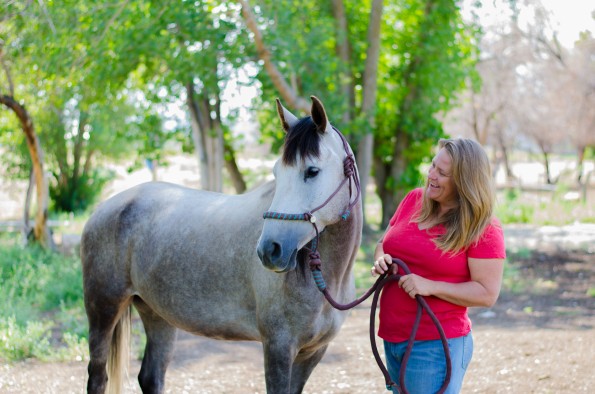
The Stable Place is located at 2877 Cassell St. in West Valley City, Utah