Utah Stories

Salt Lake City Cosplay

Cosplay can turn into a lifetime pursuit of fun.

|


IMG_8762
Salt Lake Comic Con Cosplay Photo by Crystal Nageli

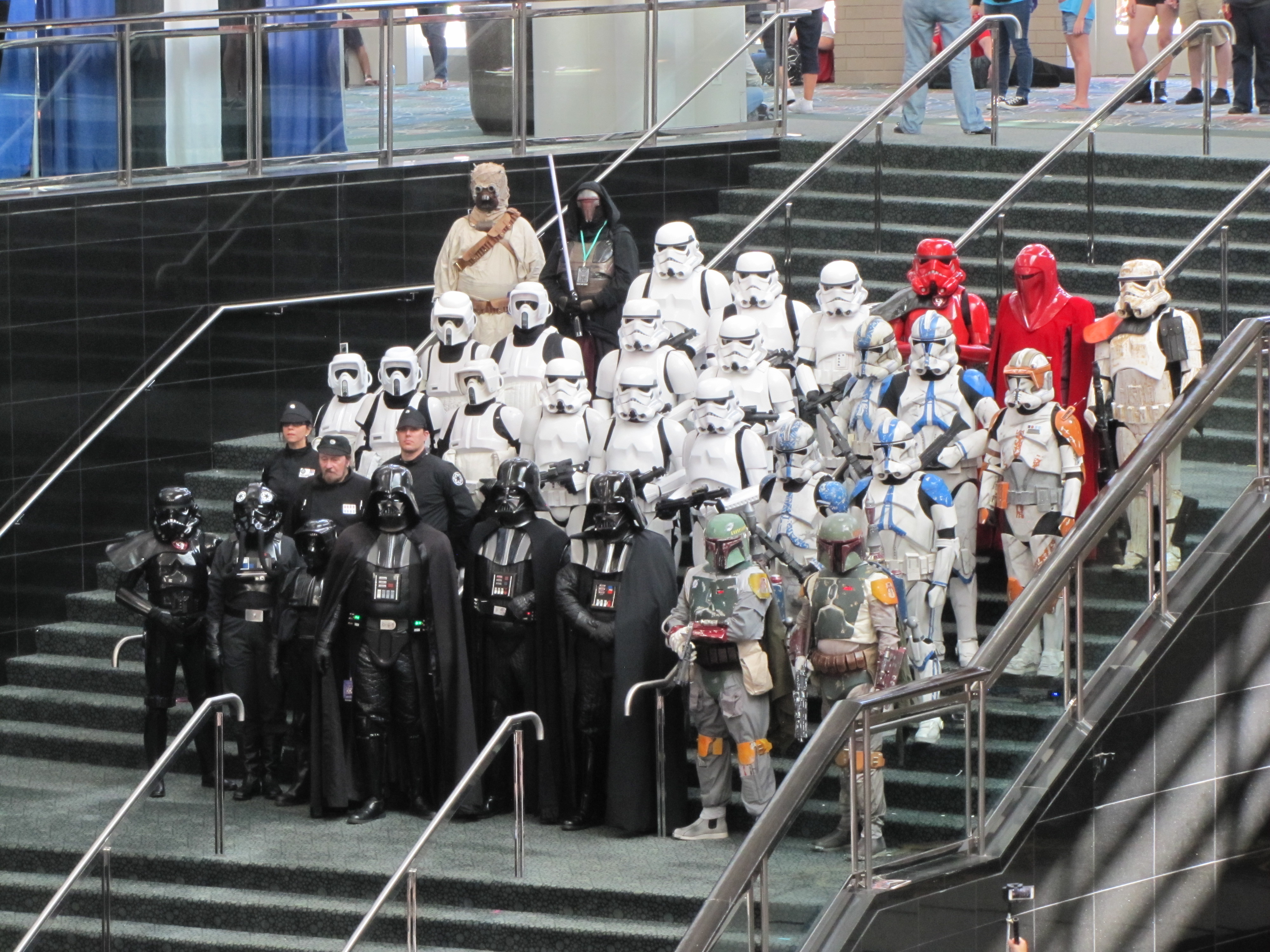
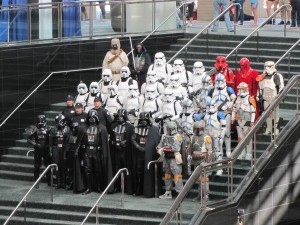
Salt Lake Comic Con is an opportunity to escape from reality and play out fantasies. A walk through the crowded halls and auditorium reveals everything from Princess Batmans to scores of Deadpools and Harleys.

 While some costumes look thrown together or appear as if they were purchased from Victoria’s Secret, others are elaborate and obviously crafted with love and care. Eric Hall takes cosplay to a new level, sometimes working and refining his costumes for years.

He portrays superheroes and science fiction characters at events and conventions. At Salt Lake Comic Con, in September, he roamed the convention center as Aquaman and Data, complete with pet cat, Spot. 

“It all started with a love of Halloween. My mom worked in community theater and so I grew up around costumes, makeup and acting,” Eric explains. His first serious costume, at age 10, was a robot he put together with a vacuum cleaner box, dryer hoses, bleach bottles and the plastic containers from 25 cent toy machines. He won his school costume parade and was hooked for life. 

With only a few missteps along the way, such as the blue food coloring that he couldn’t wash off his face for four days, Eric perfected his costume skills through imagination and by looking for bargains at after-Halloween sales and thrift stores.

He has created costumes for several comic book characters including Green Lantern, Aquaman, Superman and the Green Goblin. But some of his favorites come from the world of Star Trek.

photo (14)
Eric Hall as Data with his friend Twiki

He gets a lot of attention with his Data costume with people telling him he looks and sounds a lot like the real character, but his overall favorite is an elaborate Borg costume that has won top prize at the Las Vegas Costume Contest four different times.

Attention to detail is the key to his realistic creations. He started the Borg costume in 1993, and all the elements come from thrift stores.The chest is made from a bicycle motocross vest, the right leg is made from roller blade armor, the right arm is made from a leaf blower, his head is covered with a kid’s plastic baseball helmet painted white with martial art sparring gear added in. He recently wired in electroluminescent lights and uses a voice changer for authentic effect. He said that he is constantly updating it and refining it and adds something new every year.

 As much joy as Eric gets from dressing up as his favorite characters, he also uses his powers for good. Eric started an organization called H.E.R.O.I.C (Heroes Engaging Real Organizations in Charity). He invited fellow cosplayers to join him working at charity events. They volunteer at organizations such as MDA, Make-A-Wish, Toys for Tots and the Downs Syndrome Walk. They dress up and go to the events to meet and greet the kids, pose for pictures and run arts and crafts booths. The kids are thrilled to meet their favorite superhero and the players help draw attention to the cause and thus increase donations.

Cosplay, is just what it says, play, but sometimes costumed heroes turn into real heroes when their cause is just.

Story by Connie Lewis



Join our newsletter.
Stay informed.


  • Highway 6 and the Midland Trail: Utah’s Transcontinental Highway History

    From Price Canyon to Delta’s desert stretch, Utah played a central role in building the Midland Trail, one of America’s earliest transcontinental highways and the foundation of today’s Highway 6.


  • Whiskey, Bullets & a Buried Town: Archaeologists Reveal Alta’s Wild Past

    Before Alta was known for powder days and lift lines, it was a silver mining town clinging to the side of a narrow canyon. In the late 1800s, men lived at 8,000 feet, went underground each day, and endured winters that regularly buried buildings in snow. This past summer, that mining town resurfaced — literally — during construction at the Alta Ski Area.

    To understand what Alta really looked like, you don’t begin with legend. You begin with its trash — and this time, that happened almost by accident.

    Alta Ski Area was installing underground water reservoirs to support snowmaking. Because the project sits on Uinta-Wasatch-Cache National Forest land, an archaeologist was required to monitor the excavation. No one expected the trench to produce much.

    But, It did.

    Artifacts began surfacing almost immediately. Enough that the Forest Service contacted the Utah State Historic Preservation Office for help. Lexi Little, who coordinates the Utah Cultural Site Stewardship Program, helped mobilize nearly 30 volunteers to assist with what quickly became a focused two-week excavation.

    Winter deadlines were approaching. The pipes for the reservoirs had to go in the ground. There wasn’t time for a slow, extended dig.

    “It was two weeks of digging in the dirt and helping figure out exactly what we were looking at,” Little said.

    Most of the people screening soil weren’t professional archaeologists. They were trained stewards from around Utah — part of a statewide volunteer network that now approaches 500 people. They poured dirt through shaker screens, scanning for fragments that could piece together a town long buried.

    “Archaeology is human trash,” Little explained. “Archaeologists are very into trash.”

    Alta had left plenty behind.

    https://youtu.be/hzIHzx3OGoo?si=dKcl2CEz-t6FZzYw

    Victorian-style ceramics appeared first — the kind typically used in hotels. Medicine bottles followed. Ink bottles. Hand-blown glass. A porcelain doll’s foot surfaced from the soil, a small detail that shifted the mental image of the town. Families were here. Children were here. This wasn’t only a camp of miners.

    The bottles helped establish time. Manufacturing details — whether glass was hand-blown or mold-made, whether a maker’s mark appeared on the base — allowed archaeologists to date many of the artifacts to the 1870s through the 1890s, when Alta was booming as a silver mining town.

    “That gives you that range of dates for when Alta was really booming,” Little said.

    One reusable soda bottle clearly stamped “Salt Lake City” connected the canyon to the valley economy below.

    Then something unusual rolled out of a dirt pile.

    A corked bottle. Intact. Liquid still inside.

    Continue reading and support independent Utah journalism with a purchase of Utah Stories (Digital + Print) or 3 month free trial (Digital).


  • The Only Full Bottle of Alcohol Ever Found in Utah Was Unearthed in Alta

    When a backhoe rolled a corked bottle out of the dirt at Alta this summer, no one immediately grasped what they were holding. It wasn’t empty. It wasn’t shattered. It was full. “The bottle that was discovered up at Alta is the only bottle of alcohol ever discovered in an archaeological excavation in the state…


  • How Horses Help Kids Heal: Inside Utah’s Equine Therapy World

    Kelty Johnson trains horses for a living, but her deeper work happens in the quiet space between animal and human. On the Utah Stories podcast, she explains how equine therapy helps children regulate emotions, build confidence, and reconnect through presence rather than pressure.