Utah Stories

Survival in the Wild West: One Utah Mountain Man’s Story

Take a trip back to the Old West with this famed Mountain Man from Koosharem, Utah.

|

utah wild wild west

Survival in the Wild West once depended on tight-knit communities of skilled people willing to work hard. The value of their currency was in their word and their skills. We set out to central Utah to speak to a mountain man and a cowboy who still live by these values.

Wayne County, Utah— there are no major employers or industries. Here there are very few “good jobs” or even careers. People manage to get by with less. Miles from big freeways, there are no big towns. Towns reveal their smallness by their weird names: Bicknell, Loa, Lyman and Koosharem. Developers don’t invest in Wayne County. Instead, people seem to happily accept their lives of hard work, making much less money than city folk. So, why do people choose to live here?

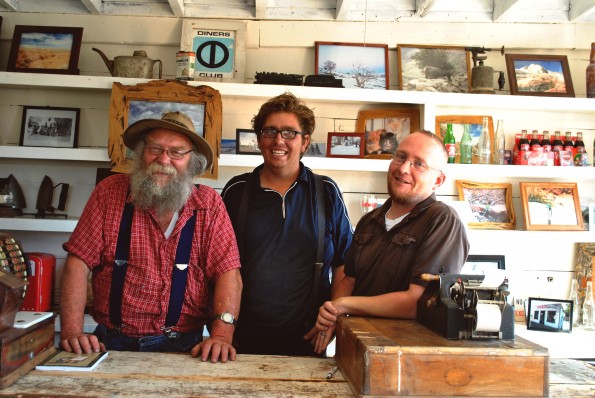
“Because this is the greatest place on earth. These are the best people you will find anywhere.” James Barney explains succinctly. After a tour of duty in Afghanistan and Iraq, James has moved back home to Koosharem to raise his family in the very small town in which he grew up.

He found a bargain on a foreclosed home, and he has fixed it up for himself and his wife and three children. His twin brother, Tim, is working in California doing excavation trying to save enough to move back. And, his younger brother, Wayde, gets by with his wife, both taking whatever jobs come their way.

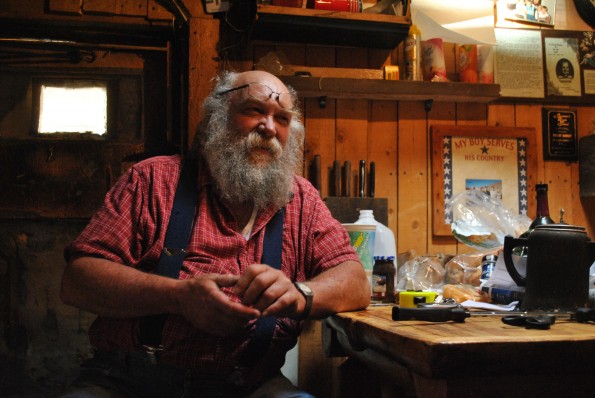
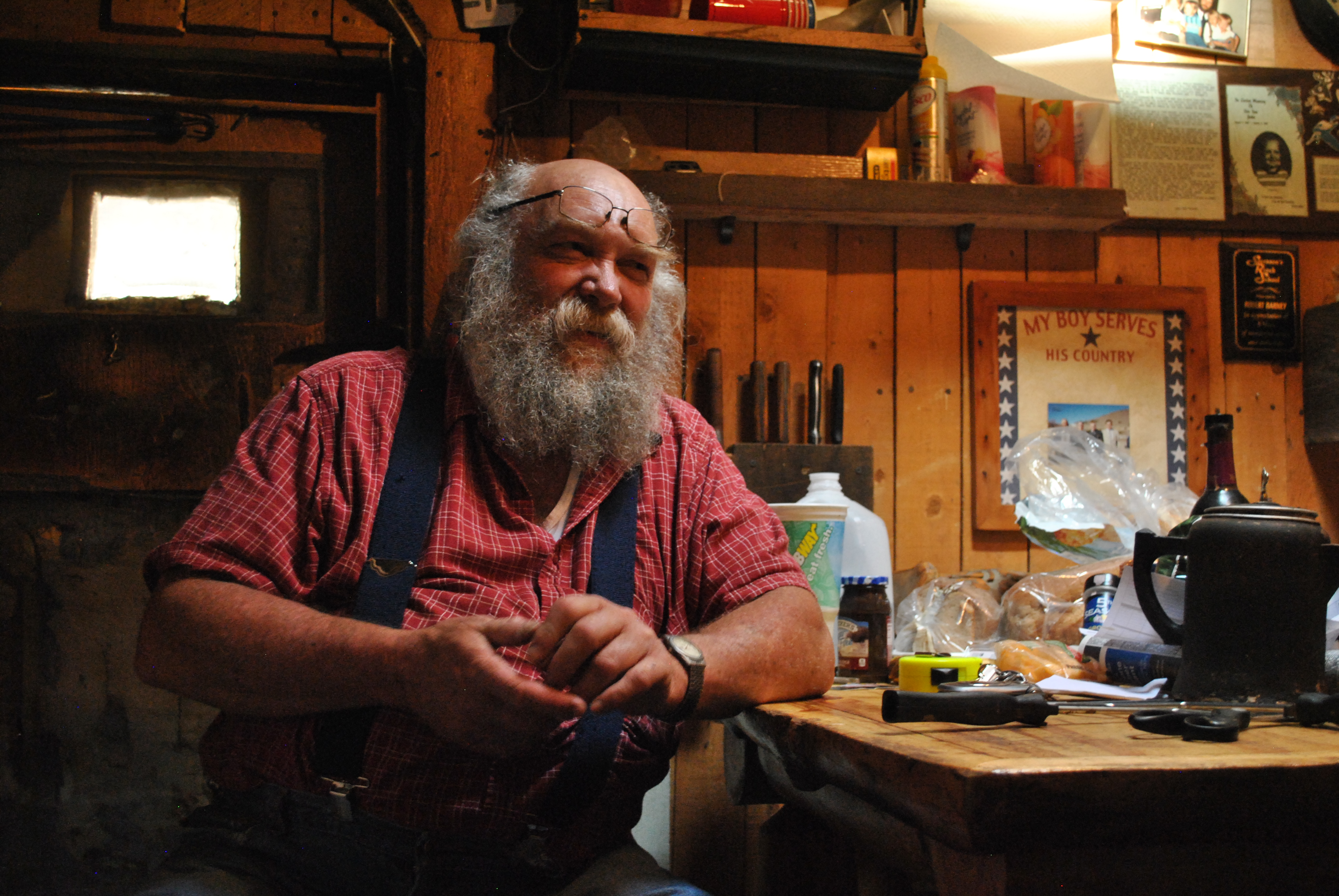
James’ father is Koosharem’s famous mountain man: Robert Barney. Barney raised James and his brothers without electricity and running water for about ten years. They lived in the mountains around Asay Creek. “I broke my boys by living in the mountains. We would catch fish. We lived right by a stream. By the time my boy was four-years-old, he would catch a mess of fish for his dinner.” Robert and his young boys learned how to live well, so when they had the opportunity to return to Koosharem he didn’t see any need to change things up.

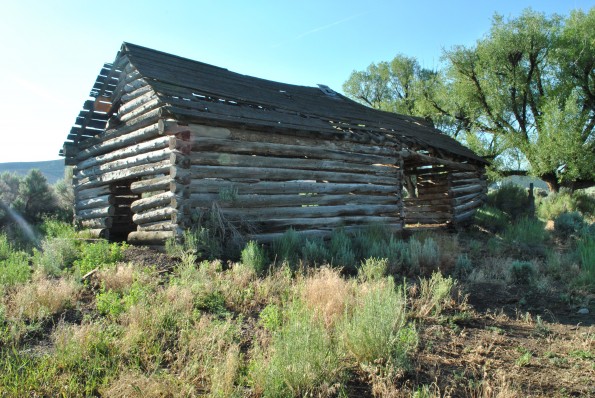
Robert converted a pioneer grist mill into their cabin. The beams and trusses are old fir trees. Their water needs were satisfied using a barrel under the overflow of the town tank. “I had a fireplace with a 55-gallon drum on it. And when we would get home we would build a fire. Before supper, we would take baths. Then we would sit here in bed by the kerosene lamp and take turns reading a story,” says Barney.

Barney looks like he would be comfortable hanging out with Jim Bridger or Jedediah Smith. He uses his axe to chop a big log into kindling like an accomplished chef chops potatoes for a stew.

I first met Robert Barney four years ago. I found him a fascinating character so I wrote about him. Not knowing if he would ever read my story or if I would ever see him again, I assumed he was a recluse. But rolling into Koosharem to see if we might find him again, I found he is actually quite famous and social. And everyone knew about the story we wrote on him years ago.

Meeting Barney and touring his cabin resembles traveling through a time machine into a trapper’s cabin. “Do you wanna taste some bear ham?” In just seconds he has his cast iron skillet heated up. He pulls out a thick slice, and fries up each side a golden red-brown color. It’s slightly gamey and salty, but tender and satisfying. Barney sends us home with his beef jerky and elk sausage. I had not expected Barney to be a mountain game culinary genius. He also generously shares his food with folks in town both by giving his meat away to the needy and hosting huge cookouts using his massive fire pit and 22 Dutch ovens in which he usually cooks mutton.

Barney and his boys sustain themselves by hunting during the summer. But what do they do during the winter? Their favorite winter pastime is building an elaborate shed on the ice, spending all day ice fishing and pulling up huge fish. “You can’t believe the size of the fish you catch because you are right in the middle of the lake.” Barney has built a storage shed on his property specifically for their ice fishing implements and giant sled. Fishing and hunting, and the benefits of living in an area with such abundant game allow Barney to share the meat he processes with his neighbors. This is just his way of giving back to the community, which he says has given him so much.

“When I first came up here they accepted me right into their arms, even though they didn’t know me or remember me. And they were all good with the kids. The mercantile is kind of a hang-out. My mother’s cousin owned it at the time, and everybody gets all their information from there. But stopping in there, and everybody is really helpful. Every time one of your kids starts to do something that might be a little bit wrong you will get a phone call from somebody. ‘Your kids are up here, doing this or that.’ So the whole community helps raise all of the kids.”

While Robert has electricity now, it required an interesting argument which he describes.

“We lived here for four or five years without power. Then the church came, and the bishopric came and asked me, says, ‘Would you use power if you had it?’ I says, ‘we don’t need power, we get along fine without it’. And he says, ‘Would you use it if you had it?’ And I says ‘that’s one thing I don’t have to worry about because I don’t have it. So I don’t have to worry about using it.”

“But he says, ‘That’s not the point!’ He says, ‘if you had it, would you use it?’ And I says, ‘I reckon I would be pretty stupid not to.’” So, Barney has added power, running water and even an indoor toilet. We ask Barney’s son Wayde if he didn’t mind growing up without electricity. “It’s great! Power just ruins your life.”

Robert Barney has been employed at the Sorenson School for 17 years, and has slowly modernized his cabin. He now has a satellite TV, indoor toilet and electricity. But he still spends his free time chopping wood.

“Now when I get my permits for wood, the new lady says to me, ‘You must be a glutton for punishment.’ I said, ‘that ain’t punishment, that’s recreation. My fun time!’”
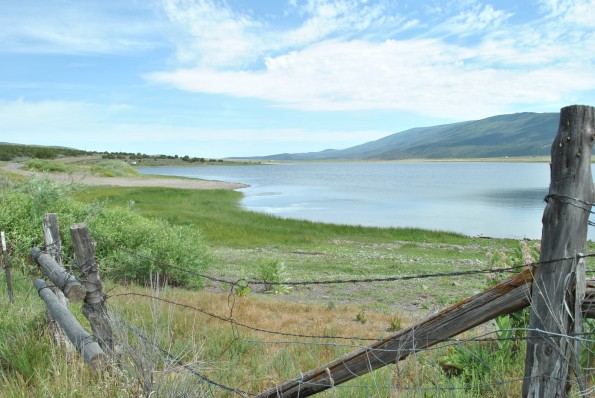
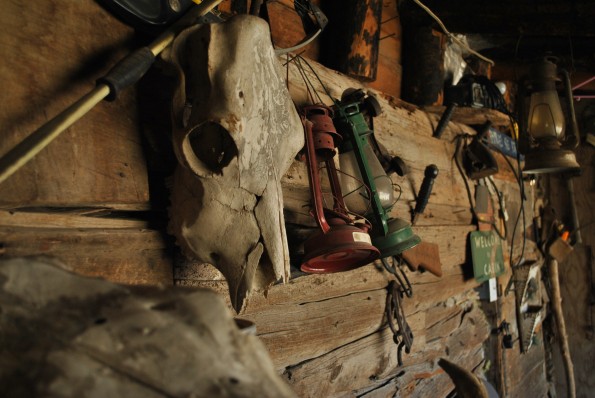
Koosharem Reservoir inside cabin utah utah mountainmen utah wild wild west DSC_0915


Join our newsletter.
Stay informed.


  • Utah Fits All Scholarship Applications Open Through April 30 for K–12 Students

    Utah families have more learning paths than ever and, increasingly, more ways to make those paths affordable. This spring, the Utah Fits All Scholarship opened  for new family applications on April 1, and the application window stays open for one month. The program is a public K–12 scholarship that provides $4,000 to $8,000 per student,…


  • Left in a Box as a Baby: Trauma, Alcoholism, and Addiction

    A man abandoned as a baby builds a structured life in law enforcement, but unresolved trauma and alcoholism slowly begin to unravel it. His story raises a harder question about how change actually happens.


  • The $7 Million Recruit: How NIL Changed College Athletics Forever

    In 2012, Jabari Parker, a top high school prospect and member of the Church of Jesus Christ of Latter-day Saints, was facing his biggest decision to that point in his life: where to play college basketball. 

    Fans of BYU athletics hoped and perhaps prayed that Parker would pick the school owned by the church he was raised in. BYU was listed as one of his final choices. But he ultimately chose to spend his college years at Duke before attempting a career in the NBA. BYU fans were disappointed, but no one was truly surprised. Duke over BYU was the best choice for a young prospect in 2012. 

    A.J. Dybantsa.

    What changed between 2012 and 2024 when A.J. Dybantsa, the number one high school prospect, chose BYU over every other school? The answer is roughly $7 million dollars. That is what Dybantsa is reportedly making to play basketball at BYU. 

    The deal was supported by Utah Jazz owner Ryan Smith, who met multiple times with the Dybantsa family in multiple attempts to bring the young player to Provo. 

    According to Smith, he had no financial role in bringing Dybantsa to BYU, but the influence of Utah’s most famous billionaire acting as a “booster” or unofficial recruiter certainly swayed the decision.

    Prior to 2021, boosters acting as recruiters was taboo to the NCAA governing body. It was called improper recruiting. But in 2021, California began the modern era of NIL, or the ability of a college athlete to benefit from their name, image, or likeness, when they passed the “Fair Pay to Play Act.” 

    This new law gave college athletes in California the ability to benefit from their NIL, something that was banned in the rest of the country to that point. The NCAA saw that this law would create an unfair advantage for California schools that could now give young athletes the chance to make money off their talent and image while still in college. 

    The NCAA knew they needed to do something quickly, so they rushed through a policy that opened up NIL to all college athletes in the country, and it has been expanding and evolving over the last four years. 

    Grant Duff, who has coached at the University of Utah, Weber State University, and is now the defensive coordinator for Idaho State University, says, “The best part of NIL is that athletes have an opportunity to make good money. The downside comes with the free-for-all that money causes.”

    Dybantsa confers with BYU Head coach, Kevin Young.

    One of the biggest current examples of what a school can do when the boosters are willing to pay for success is Texas Tech University. From 2020-2024, Texas Tech had 34 wins, which works out to 6.8 wins per year with a low of 4 wins and high of 8. Then Texas Tech’s boosters got involved, led by Cody Campbell, an oil industry businessman and Chairman of the Texas Tech board. The football program was given 28 million dollars for NIL with a simple message attached to the large pile of money: Win. And win now. And win they did. 

    By signing NIL deals with athletes in the transfer portal, Texas Tech went from a middle-of-the-pack school in their conference to one of the top 12 teams in the country. They didn’t just win games in 2025, they made many of their opponents look like they didn’t belong on the same field, including the University of Utah and BYU twice. That is what money can buy.

    Continue reading and support independent Utah journalism with a purchase of Utah Stories (Digital + Print) or 3 month free trial (Digital).


  • Cottonwood Heights Corruption Allegations: A Case That Never Reached a Courtroom

    A year ago, we here at Utah Stories recorded a podcast episode that we never published. We were revisiting corruption allegations from ten years ago. We decided not to publish the video, so it sat there on YouTube for nearly 12 months.

    Then somehow the video was published. How? We are not sure, but once it got out there, the comments came pouring in.

    Dozens of viewers, then hundreds, supported the video with their comments on our examination of allegations of police misconduct in Cottonwood Heights. The video recounts how the Police Department was reported by business owners as focusing enforcement on customers of the former Canyon Inn bar. These allegations did not result in a publicly documented, full investigation by Utah’s Justice Department nor the FBI (at least to our knowledge). So why rehash the past?

    We believe the story of The Canyon Inn (and other area business owners) vs. CHPD and Cottonwood Heights Mayor Kelvin Cullimore raises questions about what can happen when allegations surface and do not move forward through a formal legal process with state or federal oversight.

    In 2012, Cottonwood Heights business owners at the mouth of the canyons began publicly objecting to police activity whereby up to seven cruisers were pulling over 711 and Canyon Inn bar customers on their busiest evenings.

    According to those accounts, drivers leaving the bar were frequently pulled over by police and were given DUI tickets, sometimes even after passing a sobriety examination. The volume and concentration of those stops led residents and business owners to complain about the “heavy-handed treatment” of CHPD toward motorists, especially in and around the Canyon Inn and neighboring 711, and eventually the Porcupine Pub.

    Customers responded in predictable ways. Some chose not to return and avoid the area. Others went to different establishments. Over time, the owner of the Canyon Inn, Jim Stojack, stated that his revenue declined by 70% and that he believed police activity near his business was the main contributing factor.

    Utah Stories reported on these concerns by conducting interviews; gathering video documentation provided by those involved; and making public records requests. Through our GRAMA requests, we reviewed DUI citations issued by the Cottonwood Heights Police Department and examined how those cases were resolved in Holladay Justice Court. During that period, we observed a higher number based on our review of DUI cases dismissed in court due to lack of evidence compared to other jurisdictions. One DUI attorney, Tyler Ayers, went on record saying that CHPD was issuing a high volume of DUI citations that were later dismissed.

    That observation raised questions about how cases were being documented and prosecuted. It did not, on its own, establish intent or misconduct, but it became part of a broader set of concerns raised by multiple sources.

    Continue reading and support independent Utah journalism with a purchase of Utah Stories (Digital + Print) or 3 month free trial (Digital).