Off Beat Characters

Quitting Her Day Job: One Utah Artist’s Journey

Former Utah corporate designer moves into a career as a full-time artist. How did she do it? Find out here.

|


Heath Ackley
Heather Ackley

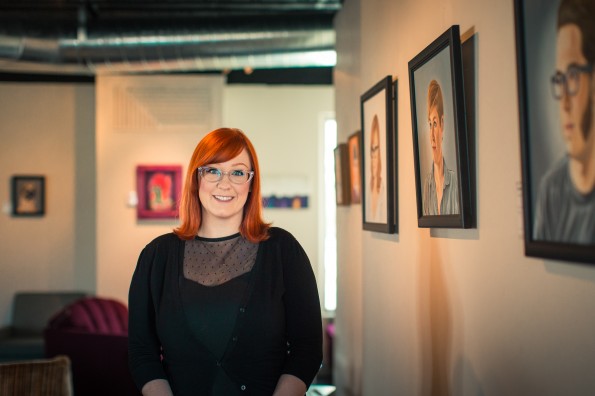
Eighteen months ago Heather Ackley was working for Franklin Covey doing design work. In May of this year she had her first solo art exhibit at Mod a-go-go.

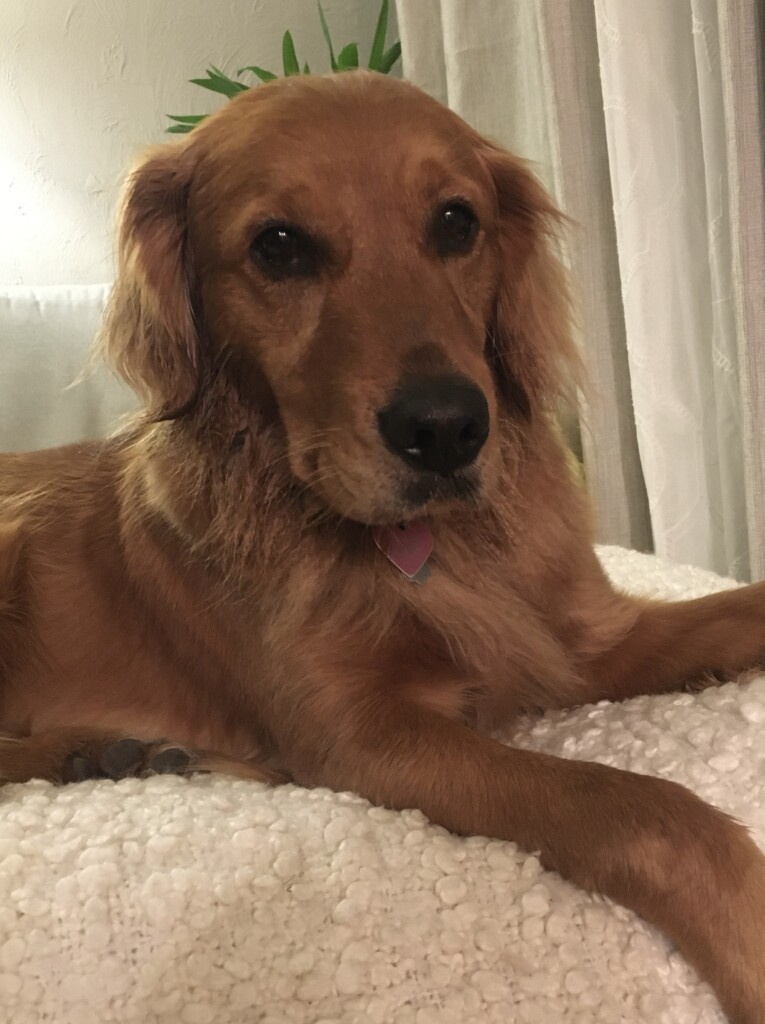
From one point to the next how are dreams fulfilled? For Heather, it happened when a friend commissioned a portrait of her dogs. Heather’s first inclination was to do a drawing of the dogs, but the friend suggested she try oils, which she had never before attempted.

She took a leap of faith with the urging of her friend. “You need to do this.” The dog portrait was a success and through word of mouth Heather started getting one to two commissions a month. She cut back to part-time at her job with Franklin Covey. When the commissions grew to one or two a week, she quit Covey and became a full-time painter.

“I grew up doing art, mostly drawing,” says Ackley. “My parents gave me as many notebooks as I could fill.” In college she wanted a major that would combine her artistic talents with a steady income, so she enrolled in graphic design classes. In addition to Franklin Covey, Heather designed, wrote and illustrated greeting cards for a time.

Ackley studies and admires traditional portrait artists, but tries not to model her style after anything else she sees. One of her favorites is PBS’s Bob Ross. She remembers watching his show with her dad when she was younger, and admired the artist’s enthusiasm and spirit. “He’s my dude,” she says.

Her work focuses on wildlife and portraits of people. She likes to focus on faces and says, “Eyes bring life to a painting and when they’re not right there is no spark. It is so challenging to try and convey emotion through the features of the face.”

In January of this year, Mod a-go-go owners Marcus Gibby and Eric Morley approached Ackley about doing a show. It would be her first solo show and they felt she could both bring a crowd and grow as an artist.

Heather_Ackley-8170Mod a-go-go opened in 2013 and Heather has been there from the beginning, displaying her art along with other local artists. The store offers, “middle class mid-century furniture” according to Gibby.

Gibby’s and Morley’s business model started when they realized how many talented artists there were in Salt Lake who needed a good venue to display their work. New artists trying to break in were “doomed” to coffee shops and restaurants, not always ideal venues to sell art. While higher-end galleries primarily feature established artists, Gibby’s and Morley’s genius was to offer a setting for budding artists to show their work and get noticed.

Heather’s show was a first for her and the store. Getting ready for the show, Heather says, “I was feverishly finishing a few pieces, so I didn’t have too much time to be stressed or nervous, which was a blessing. I was definitely nervous to be the center of attention and speak to so many people in one evening.”

Her showed opened May 16th with a reception. Heather feels the night was a success. The crowd was large and appreciative. “Everyone was so kind and enthusiastic for me, which was quite touching.” The show will be displayed upstairs at Mod a-go-go until the next Gallery Stroll on the third Friday in June.

Besides commissions, Heather is continuing to experiment with technique and subject matter. Right now she feels “the sky’s the limit. As I grow and learn and stay inspired, I get better and it will be amazing.”

Heather’s website is www.heatherackleyart.com. Mod a-go-go is located at 242 East South Temple.

, ,


Join our newsletter.
Stay informed.


  • Whiskey, Bullets & a Buried Town: Archaeologists Reveal Alta’s Wild Past

    Before Alta was known for powder days and lift lines, it was a silver mining town clinging to the side of a narrow canyon. In the late 1800s, men lived at 8,000 feet, went underground each day, and endured winters that regularly buried buildings in snow. This past summer, that mining town resurfaced — literally — during construction at the Alta Ski Area.

    To understand what Alta really looked like, you don’t begin with legend. You begin with its trash — and this time, that happened almost by accident.

    Alta Ski Area was installing underground water reservoirs to support snowmaking. Because the project sits on Uinta-Wasatch-Cache National Forest land, an archaeologist was required to monitor the excavation. No one expected the trench to produce much.

    But, It did.

    Artifacts began surfacing almost immediately. Enough that the Forest Service contacted the Utah State Historic Preservation Office for help. Lexi Little, who coordinates the Utah Cultural Site Stewardship Program, helped mobilize nearly 30 volunteers to assist with what quickly became a focused two-week excavation.

    Winter deadlines were approaching. The pipes for the reservoirs had to go in the ground. There wasn’t time for a slow, extended dig.

    “It was two weeks of digging in the dirt and helping figure out exactly what we were looking at,” Little said.

    Most of the people screening soil weren’t professional archaeologists. They were trained stewards from around Utah — part of a statewide volunteer network that now approaches 500 people. They poured dirt through shaker screens, scanning for fragments that could piece together a town long buried.

    “Archaeology is human trash,” Little explained. “Archaeologists are very into trash.”

    Alta had left plenty behind.

    https://youtu.be/hzIHzx3OGoo?si=dKcl2CEz-t6FZzYw

    Victorian-style ceramics appeared first — the kind typically used in hotels. Medicine bottles followed. Ink bottles. Hand-blown glass. A porcelain doll’s foot surfaced from the soil, a small detail that shifted the mental image of the town. Families were here. Children were here. This wasn’t only a camp of miners.

    The bottles helped establish time. Manufacturing details — whether glass was hand-blown or mold-made, whether a maker’s mark appeared on the base — allowed archaeologists to date many of the artifacts to the 1870s through the 1890s, when Alta was booming as a silver mining town.

    “That gives you that range of dates for when Alta was really booming,” Little said.

    One reusable soda bottle clearly stamped “Salt Lake City” connected the canyon to the valley economy below.

    Then something unusual rolled out of a dirt pile.

    A corked bottle. Intact. Liquid still inside.

    Continue reading and support independent Utah journalism with a purchase of Utah Stories (Digital + Print) or 3 month free trial (Digital).


  • How Horses Help Kids Heal: Inside Utah’s Equine Therapy World

    Kelty Johnson trains horses for a living, but her deeper work happens in the quiet space between animal and human. On the Utah Stories podcast, she explains how equine therapy helps children regulate emotions, build confidence, and reconnect through presence rather than pressure.


  • Ben Steele Builds a National Art Career from Helper, Utah

    Ben is a true craftsman, creating both satirical and American images reminiscent of Andy Warhol, but barns and crayons offer nostalgia and the spirit of a guy who looks like he is having a great time making art that now sells in some of the nation’s top galleries. 


  • Artist David Dornan Finds His Calling in Helper, Utah

    “I just had to go find my calling,” David Dornan says, recalling the moment he knew he needed to leave the University of Utah as a full tenured professor and devote himself entirely to painting.