Well, well… if it isn’t spring.
What’s more natural than water? Natural water—untreated, straight from the source. Before plastic-bottled smart, vitamin and flavored water, “natural” water was all people had to drink. Now, natural water is an alternative to treated tap or packaged water. The terrain of Utah’s Wasatch Front provides the geologic conditions for residents to access potable spring and well water.
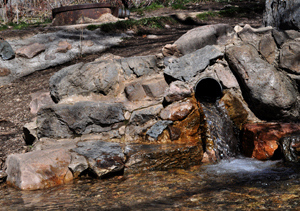
“You need topography, and you need water,” says Utah state geologist Mark Milligan. The Wasatch Range receives relatively plentiful snow and rainfall in this nation’s second most arid state. Water that penetrates the earth in the mountains filters down at differing rates to lower elevations. The water may then rise again through fissures in the bedrock, or may naturally emerge where surface topography meets the natural groundwater. That’s a simplistic explanation of wells and springs. The point is, there is water available along the Wasatch Front—untreated, potable water—that people use for daily purposes.
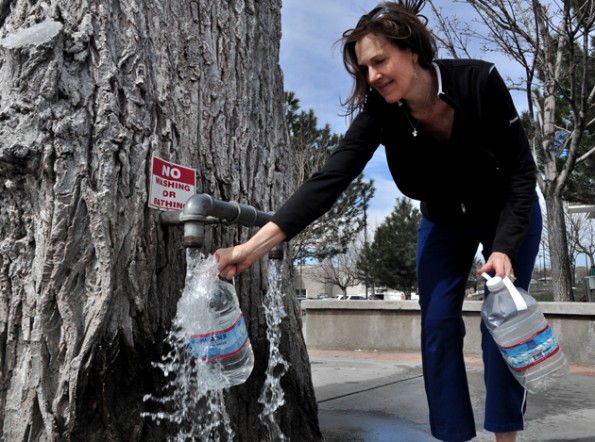
Situated next to a North Ogden McDonald’s, “The Stump” has provided water to locals for nearly 85 years. The artesian well got its name from an innovative marketing scheme. In 1930, a hamburger joint owner had a massive cottonwood stump dragged to the well’s location. A woodworker then carved the stump to accommodate pipes and fittings. The sign attached to the stump read, “Good water, isn’t it? Try our hamburgers!”
The stump is now a fiberglass replica, but the water is still good and people regularly travel there to fill up their containers. Orville Chugg says he won’t drink anything else. “It’s been here longer than I have,” says the 80-year-resident. Lana Roskelley claims the well water is “fresh and yummy. I’m still trying to figure out people who say they only drink tap water.” Of the 20 people surveyed on a random Wednesday afternoon, all said that the water “just tastes better.”
At the eastern end of Ogden’s 27th Street is what locals call Kristin Spring. Mountain water that is channeled downhill to a city pump house has also been graciously piped into a shallow pool located on the Bonneville Shoreline Trail. This wooded offering feels more aligned with natural waters expectations. The surroundings are serene, and it’s easy here to make the connection between source and people. We are, after all, approximately 60 percent water.
Further south, is an undisclosed Farmington location water source. On the corner of a neighborhood lot is a hose that delivers water from the property’s well. The owner’s grandmother bought the property in the early 60s. She was a “prepper,” he says, preparing for “when everything fell apart.” Locals know of and consume this water, but they don’t want the general public to flock to the location.
A few blocks off State St. is Centerville’s Church Well. A handsome pump house erected over the well draws water when one of either two sets of buttons is pushed. One set adds fluoride to the water, the other does not. Added fluoride and chlorine are two reasons why many people choose to drink natural groundwater. People appreciate having a choice between water to which chemicals have been added, or not.
Providing a balance to modern lifestyle, Salt Lake City’s Artesian Well on 800 S and 500 E serves as a gathering place. “When we’re isolated in our daily lives, people lose opportunities for casual connection,” says an unnamed man filling his 5-gallon containers. “People here are friendly and talk to each other.”
Though there is no singular resource that people can access for information about natural, drinkable groundwater, there is an abundance of local knowledge and people are willing to share. All you have to do is look thirsty.