Utah Artists

Trent Call and the Salt Lake City Urban Art Scene

Murals, graffiti art, and spray painted pieces showing up in galleries represent the new urban art scene world-wide. But is Salt Lake City ready for this? Meet Trent Call, who worked in mixed-media and speaks about the rise of the urban art in SLC.

|


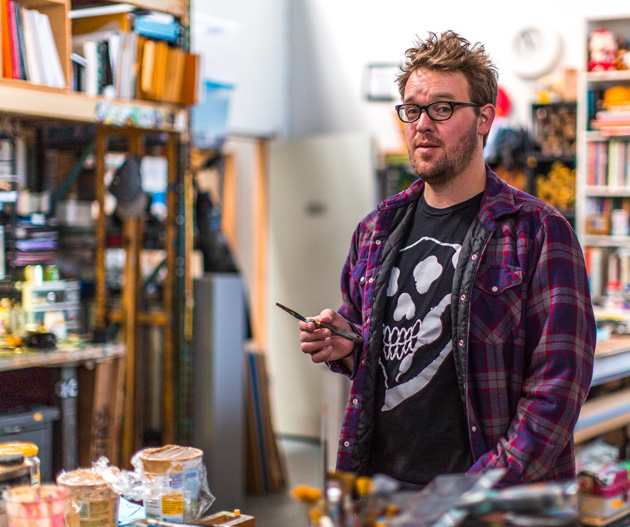
Trent_Call-6914

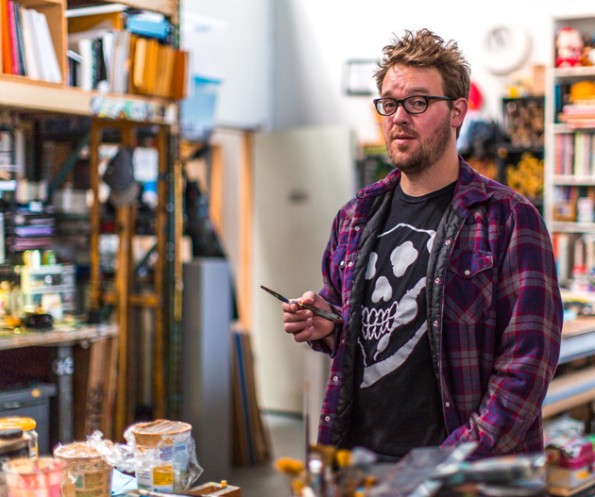
Murals are a unique art form, accessible and viewable by everyone, not just museum-goers, according to local artist Trent Call. “It exists in the world,” he said. “It becomes part of your landscape; a part of the city as a whole.”

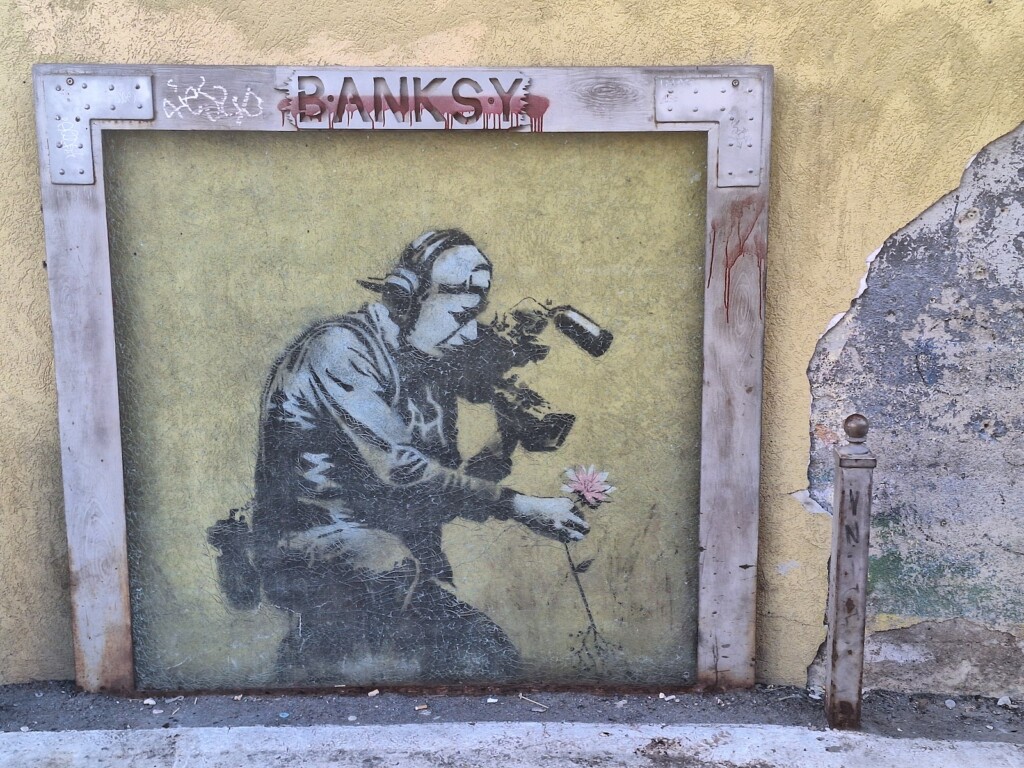
Call, born and raised in Salt Lake City, has been a long-time fixture in the Salt Lake art scene. He works with various mediums for his projects, including oil, acrylic, spray paint, pen, and the computer. In cities such as London, Los Angeles and New York graffiti art and urban art have taken off. The elusive Banksy has become somewhat of a household name in this world, and more murals are showing up all over Salt Lake. Call works with spray cans, but doesn’t consider himself a “graffiti artist”, he says that despite many restaurant decorators using mural artists, the art form is not yet to the point of becoming  main-stream enough in Salt Lake where residents are paying a lot of money to hang it on their walls.

“The urban arts gallery is the only one around showing urban type stuff, Call says, “The only gallery I show in is 15th st. And that’s all oil painted figures. Years ago with early Kayo and Unknown gallery seemed to be really happening. Kayo even had its own art zine called ‘Artspeak’. Then Blonde Grizzly was happening. They recently shut down. Even Ken Sanders was doing “urban” ish shows then. It’s kinda weird now honestly…ha! I have stacks of paintings (popy, urban) I can’t sell in this town.” Call says it’s his oil paintings that sell the best.

“I’ll use most anything that is called for on the project,” Call explained. “I love learning new techniques and mediums to mix and match. Mix up the old with the new. It keeps things from getting stagnant.”

Call started like most do, drawing as a kid and kept with it, honing his skills. He was inspired by Thrasher Magazine and skate graphics growing up. As he progressed, his inspiration came anywhere from famous painters to magazines.

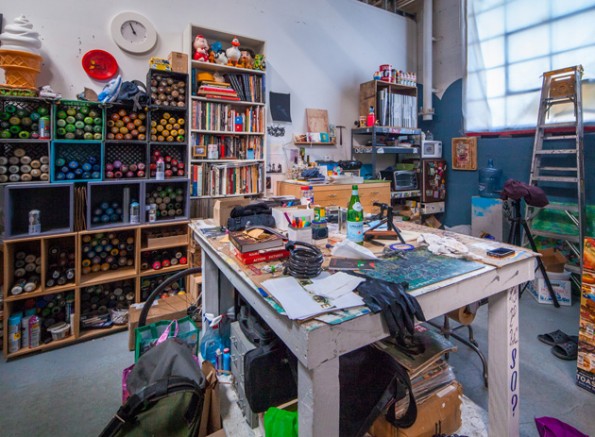
His high school art teacher was supportive and pushed him to pursue college. He earned a BFA from the University of Utah in 2004 and is now one of nine artists at Captain Captain Studios in Salt Lake.

Trent_Call-6924

Lately, Call is kept busy learning new methods, juggling many different projects for businesses, and a handful of his own projects. He’s currently learning how to use a sign painter’s brush and studying After Effects, a computer graphics program used in visual effects and composition.

He’s working on large murals for an office space in Salt Lake and reworking a logo for a local brewery. Also, he’s been sign-painting for a new local sandwich shop and is gearing up for a show in May.

Call feels murals improve the downtown visual experience. Over the summer he and some friends approached the owner of a burned-out building to paint a mural.

“We painted some big pretty colors and shapes on it and bam! It’s way better than a buffed wall and way better than an empty lot,” he said.

In his free time, Call photographs graffiti he finds around the city and on the freights that come through town.

“Some of the stuff that rolls through town on the freight is arguably some of the most amazing artwork out there, but graffiti in general is a weird, ephemeral thing,” he explained. “It can be dirty and ugly; it’s destructive and loud and, at the same time, it can be beautiful and moving. Just like any other form of expression in that way.”

His inspiration comes from those around him and trying things out. He takes cues from friends’ and other artists’ work he sees and is always experimenting with new tools.

“I try not to rely too heavily on inspiration, for that only comes along once in awhile,” he explained. “It’s more about just getting to work and making it happen.”

Trent_Call-7763

,

Join our newsletter.
Stay informed.


  • Whiskey, Bullets & a Buried Town: Archaeologists Reveal Alta’s Wild Past

    Before Alta was known for powder days and lift lines, it was a silver mining town clinging to the side of a narrow canyon. In the late 1800s, men lived at 8,000 feet, went underground each day, and endured winters that regularly buried buildings in snow. This past summer, that mining town resurfaced — literally — during construction at the Alta Ski Area.

    To understand what Alta really looked like, you don’t begin with legend. You begin with its trash — and this time, that happened almost by accident.

    Alta Ski Area was installing underground water reservoirs to support snowmaking. Because the project sits on Uinta-Wasatch-Cache National Forest land, an archaeologist was required to monitor the excavation. No one expected the trench to produce much.

    But, It did.

    Artifacts began surfacing almost immediately. Enough that the Forest Service contacted the Utah State Historic Preservation Office for help. Lexi Little, who coordinates the Utah Cultural Site Stewardship Program, helped mobilize nearly 30 volunteers to assist with what quickly became a focused two-week excavation.

    Winter deadlines were approaching. The pipes for the reservoirs had to go in the ground. There wasn’t time for a slow, extended dig.

    “It was two weeks of digging in the dirt and helping figure out exactly what we were looking at,” Little said.

    Most of the people screening soil weren’t professional archaeologists. They were trained stewards from around Utah — part of a statewide volunteer network that now approaches 500 people. They poured dirt through shaker screens, scanning for fragments that could piece together a town long buried.

    “Archaeology is human trash,” Little explained. “Archaeologists are very into trash.”

    Alta had left plenty behind.

    https://youtu.be/hzIHzx3OGoo?si=dKcl2CEz-t6FZzYw

    Victorian-style ceramics appeared first — the kind typically used in hotels. Medicine bottles followed. Ink bottles. Hand-blown glass. A porcelain doll’s foot surfaced from the soil, a small detail that shifted the mental image of the town. Families were here. Children were here. This wasn’t only a camp of miners.

    The bottles helped establish time. Manufacturing details — whether glass was hand-blown or mold-made, whether a maker’s mark appeared on the base — allowed archaeologists to date many of the artifacts to the 1870s through the 1890s, when Alta was booming as a silver mining town.

    “That gives you that range of dates for when Alta was really booming,” Little said.

    One reusable soda bottle clearly stamped “Salt Lake City” connected the canyon to the valley economy below.

    Then something unusual rolled out of a dirt pile.

    A corked bottle. Intact. Liquid still inside.

    Continue reading and support independent Utah journalism with a purchase of Utah Stories (Digital + Print) or 3 month free trial (Digital).


  • How Horses Help Kids Heal: Inside Utah’s Equine Therapy World

    Kelty Johnson trains horses for a living, but her deeper work happens in the quiet space between animal and human. On the Utah Stories podcast, she explains how equine therapy helps children regulate emotions, build confidence, and reconnect through presence rather than pressure.


  • Ben Steele Builds a National Art Career from Helper, Utah

    Ben is a true craftsman, creating both satirical and American images reminiscent of Andy Warhol, but barns and crayons offer nostalgia and the spirit of a guy who looks like he is having a great time making art that now sells in some of the nation’s top galleries. 


  • Artist David Dornan Finds His Calling in Helper, Utah

    “I just had to go find my calling,” David Dornan says, recalling the moment he knew he needed to leave the University of Utah as a full tenured professor and devote himself entirely to painting.