Concrete now replaces what once was farmland.
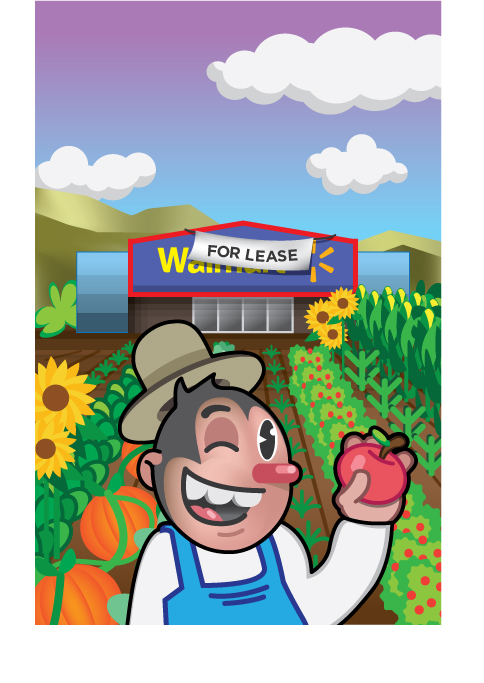
In the name of progress, the apple orchards of Lehi are now buried under asphalt. The only weeds that grow here are big box stores. They pop up quickly. They grow, they spread. Like weeds, they grow despite most people wishing they weren’t there. People wish that Jack’s fresh apple stand was still here, but Jack’s apples were too expensive, Walmart offers cheap apples. Jack’s orchard lands were bought by a developer, with zoning assistance from the city to be bulldozed and build the Walmart. As I reported a couple of years ago.
People need to eat, and when price is a big factor they need to eat for cheap. Walmart tells local farmers they would love to carry their produce if they can grow it cheaply. Farmers try, but they can’t grow it as cheaply as Walmart will purchase it and still make a living wage. Therefore Walmart is unable to buy what local farmers can grow for the prices they need, so they find their produce in Mexico, Argentina, and Guam and other countries where labor costs are much cheaper.
The rich keep getting richer and the poor keep getting poorer.
The FDA does not inspect farms in foreign countries for improper usage of pesticides, and it allows Mexican farms to import their crops free of tariff under NAFTA. So the Utah family farm is quickly becoming a thing of the past. Fewer farmers, more factory farms— where hands never touch the soil and crops are planted, thinned, and handled only by machines. But these things happen in the name of helping people afford their grocery bill. Progress says the best carrot is a cheap carrot. Progress says regardless of quality, living conditions, wages and poisons surrounding a cheap carrot, people need products and the market says the cheaper the better.
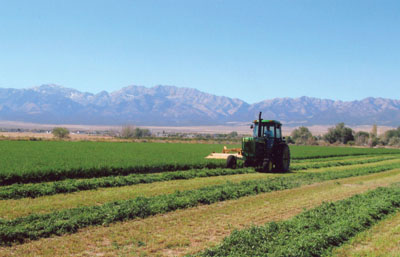
Are these facts of the new economy that we must accept? Should we settle with this vision for our future? Should we be happy to buy a cheap bag of carrots from Winco from a worker who is earning $7 per hour so they can support the farmer in Guam paying him $2 per day for his carrots? All while the investors get paid big dividends because the managers found a way to offer cheaper carrots than Walmart? The rich indeed are getting richer and the poor poorer under this model. But perhaps there is better way. There are some positive signs showing that maybe there still is hope for the family farm. Maybe Governor Herbert wasn’t correct when he acquired nearly half of the one-hundred-year old Cook’s family farm through eminent domain to widen I-15, and create an off-ramp for more big box stores. Maybe the vision of our future consisting of weeds comprising of big box retail as far as the eye can see, might be avoided.
Starting a Revolution!
How? By consumers demanding a better story behind their carrots. By consumers deciding that their local farmers matter. By deciding they would prefer to see amber waves of grain rather than rows of parked cars on shiny asphalt littered with chains holding consumers in bondage for their low prices. Consumers can decide that local farmers deserve a fair price for their labor, for their sweat, for their toil growing our food. And consumers can demand local quality.
The Downtown Farmers Market is ground zero for this revolt. An uprising of consumers coming directly to farmers to buy their produce, their meats, their cheeses, their peaches. And now restaurants are joining in the revolt. Renaissance is a nicer word, so we will call it Utah’s Food Renaissance. Restaurant owners are telling national companies that sell and distribute everything from pork chops to tomatoes, maybe I’ll just work with Allen, my local farmer instead. Allen certainly appreciates the business. §