Local Spotlight

Randall Lake Returns

October,10th to the 12th, Randall Lake’s art will be on display 150 E 200 South Suite 314.

|


Randall Lake
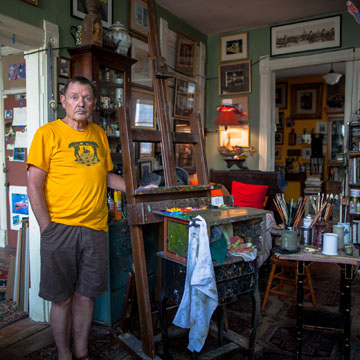
Randall inside his largely hidden Guthrie Studios on Second South

Inspiration is one of those elusive, hard-to-define concepts. Ask ten different people what inspires them and you will get ten different answers. Randall Lake sees inspiration as something fleeting that he finds at the symphony, or waking up from a dream, or going through a store. He says, “I see something there, and things just happen if I think about it long enough.”
Randall is a painter and has been for the past 40 years. He got his start when he was 21 and dated a girl in high school that he says, “got me into painting.” He later went on to college and then to study in Paris – and the girl? She went on and got married.

After painting and teaching English at the Sorbonne for four years Randall moved to Utah to study with Alvin Gittins at the University of Utah. By the time he had finished his master’s degree he had three kids and, since the prices were too high to settle in his hometown of Newport Beach, he made Utah his home. In Utah he could afford to buy a house and studio in Salt Lake and a cottage in Spring City for less than it would cost him to live in New York or Paris. When he needs to recharge his batteries, he travels. “I visit friends, go to museums and galleries and smoke my guts out.”
Known for his landscapes, still lifes and portraits, in recent years Randall has looked for new subjects, new techniques and a way not to repeat his past pieces. In 2004 he broke up with his partner and “It destroyed me,” he says, “so much I didn’t paint for literally ten years.” He felt, for a long time, that he didn’t have a reason to go on, but he slowly came back to life. At first, his paintings were angry and then he says they gradually became more digestible to the public and, “now it’s okay.”

Randall feels drawn to the 19th century and that is reflected in his work. He says, “Things were better made, people talked to each other, people read books.” His love of the era influences his choice of subjects. He says he doesn’t paint modern buildings, but instead is drawn to 18th century buildings in Paris, and the Utah State Capitol and the Salt Lake City and County building. He says he once did a cityscape of Coalville and traded it to a judge for a speeding ticket. §

In October, from the 10th to the 12th, Randall is having a show at his studio on 150 E 200 South Suite 314. His earlier work and more recent pieces will be on display.
www.Randalllakeart.com


, ,


Join our newsletter.
Stay informed.


  • The $7 Million Recruit: How NIL Changed College Athletics Forever

    In 2012, Jabari Parker, a top high school prospect and member of the Church of Jesus Christ of Latter-day Saints, was facing his biggest decision to that point in his life: where to play college basketball. 

    Fans of BYU athletics hoped and perhaps prayed that Parker would pick the school owned by the church he was raised in. BYU was listed as one of his final choices. But he ultimately chose to spend his college years at Duke before attempting a career in the NBA. BYU fans were disappointed, but no one was truly surprised. Duke over BYU was the best choice for a young prospect in 2012. 

    A.J. Dybantsa.

    What changed between 2012 and 2024 when A.J. Dybantsa, the number one high school prospect, chose BYU over every other school? The answer is roughly $7 million dollars. That is what Dybantsa is reportedly making to play basketball at BYU. 

    The deal was supported by Utah Jazz owner Ryan Smith, who met multiple times with the Dybantsa family in multiple attempts to bring the young player to Provo. 

    According to Smith, he had no financial role in bringing Dybantsa to BYU, but the influence of Utah’s most famous billionaire acting as a “booster” or unofficial recruiter certainly swayed the decision.

    Prior to 2021, boosters acting as recruiters was taboo to the NCAA governing body. It was called improper recruiting. But in 2021, California began the modern era of NIL, or the ability of a college athlete to benefit from their name, image, or likeness, when they passed the “Fair Pay to Play Act.” 

    This new law gave college athletes in California the ability to benefit from their NIL, something that was banned in the rest of the country to that point. The NCAA saw that this law would create an unfair advantage for California schools that could now give young athletes the chance to make money off their talent and image while still in college. 

    The NCAA knew they needed to do something quickly, so they rushed through a policy that opened up NIL to all college athletes in the country, and it has been expanding and evolving over the last four years. 

    Grant Duff, who has coached at the University of Utah, Weber State University, and is now the defensive coordinator for Idaho State University, says, “The best part of NIL is that athletes have an opportunity to make good money. The downside comes with the free-for-all that money causes.”

    Dybantsa confers with BYU Head coach, Kevin Young.

    One of the biggest current examples of what a school can do when the boosters are willing to pay for success is Texas Tech University. From 2020-2024, Texas Tech had 34 wins, which works out to 6.8 wins per year with a low of 4 wins and high of 8. Then Texas Tech’s boosters got involved, led by Cody Campbell, an oil industry businessman and Chairman of the Texas Tech board. The football program was given 28 million dollars for NIL with a simple message attached to the large pile of money: Win. And win now. And win they did. 

    By signing NIL deals with athletes in the transfer portal, Texas Tech went from a middle-of-the-pack school in their conference to one of the top 12 teams in the country. They didn’t just win games in 2025, they made many of their opponents look like they didn’t belong on the same field, including the University of Utah and BYU twice. That is what money can buy.

    Continue reading and support independent Utah journalism with a purchase of Utah Stories (Digital + Print) or 3 month free trial (Digital).


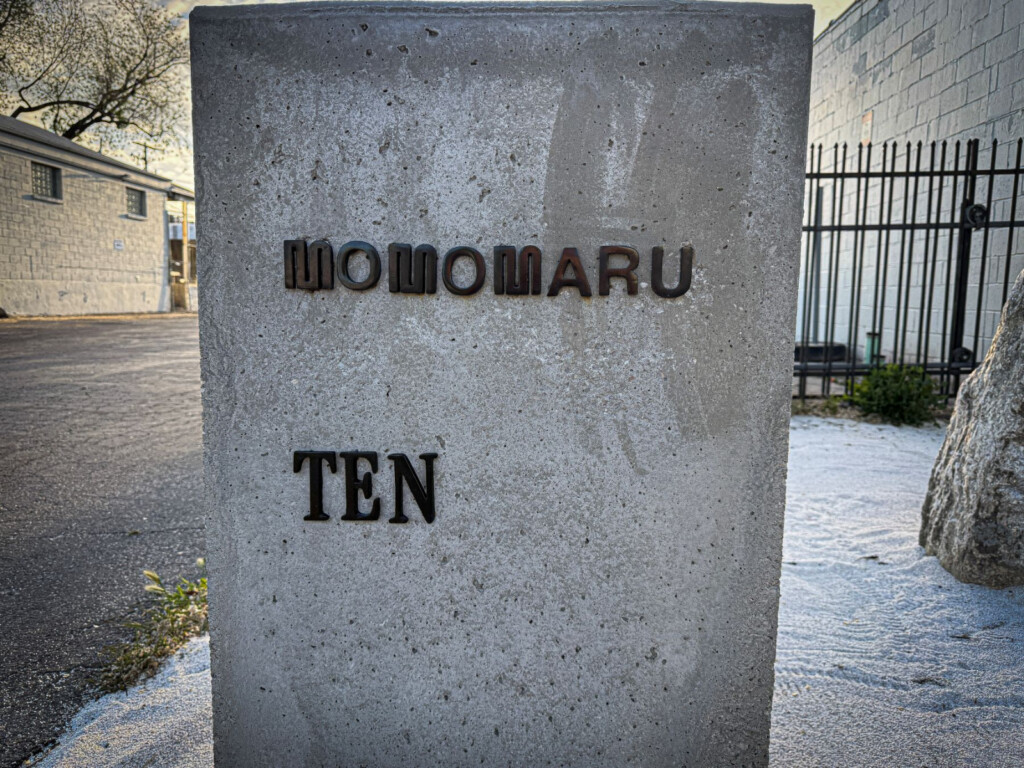
  • Momomaru Sushi Review: Salt Lake City’s New Destination for Japanese Hand Rolls

    A new Salt Lake City sushi spot is drawing crowds with Japanese-style hand rolls served fresh, fast, and warm, offering a more intimate and interactive take on traditional sushi.


  • The Stratos Project Was Already Approved. So Why the Public Meeting?

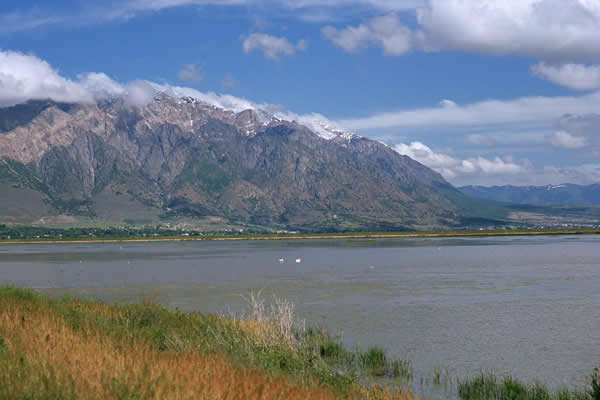
    Thousands showed up to protest. The decision may have already been made.

    When thousands of Box Elder County residents packed the fairgrounds to protest the proposed 40,000-acre Stratos data center, they thought they were confronting the people in charge.

    They weren’t.

    The county commissioners stood at the front of the room, absorbing the anger, the frustration, the disbelief. They looked like decision-makers. But by their own account, they weren’t.

    Because the decision may have already been made—long before the public ever showed up.

    The Illusion of Authority

    What happened at that meeting wasn’t civic engagement. It was something closer to theater.

    No meaningful public comment. No real debate. No clear path for residents to influence the outcome. Just a room full of people reacting to a project that, structurally, may already be locked in.

    Why?

    Because the real authority doesn’t sit with Box Elder County.

    It sits with the Utah Military Installation Development Authority.

    Once MIDA designates a project area, the rules change. Local zoning can become irrelevant. Private land stays private. Water rights remain private. And the role of local government shifts from decision-maker to facilitator.

    In plain terms: the county doesn’t decide if the project happens. It helps manage how it happens.

    So when residents showed up demanding answers, they were asking the wrong people.

    A Process That Skips the Public

    That should concern anyone paying attention.

    Because it flips the normal order of things. Instead of:

    Proposal → Public input → Decision

    We get:

    Decision → Public meeting → Reaction

    And by the time the public enters the room, the real levers of power have already been pulled.

    So what exactly was that meeting?

    If commissioners don’t have authority to stop the project, then the meeting wasn’t about deciding anything. It was about absorbing pressure. Managing optics. Creating the appearance of a process that had already moved on.

    That’s not transparency. That’s choreography.

    Follow the Missing Pieces


  • How Does a Person Become Homeless and Addicted? One Utah Father Explains

    Back in the 1980s, most Utah parents worried about things like bad grades, skipping church, teenage drinking, or hanging around the wrong crowd. Very few parents walked through downtown Salt Lake City wondering whether their child might someday end up schizophrenic from methamphetamine, homeless, screaming at invisible people near a bus stop, or dead from an overdose on a sidewalk outside an elementary school.

    Today, those fears no longer feel unrealistic.

    Anyone who spends enough time downtown has seen it: people wandering through traffic talking to themselves, addicts folded over on sidewalks, tents near parks, or human beings so mentally unraveled they barely appear connected to reality anymore. Most people feel some mixture of discomfort, fear, anger, pity, or confusion when they see it. Then they go home and ask themselves the question:

    How does somebody become that way?

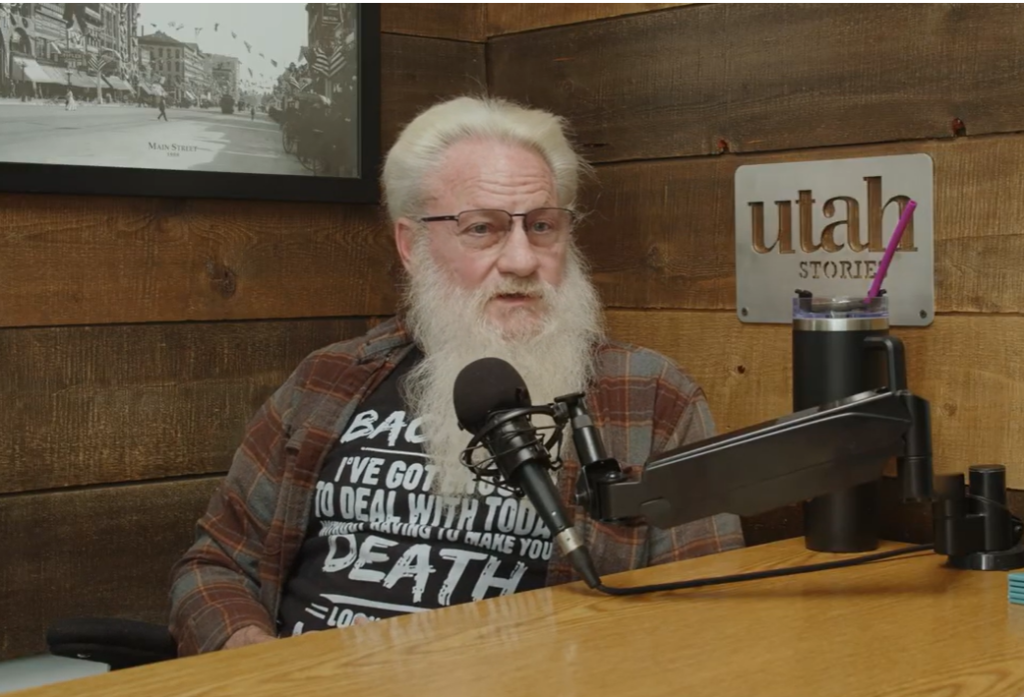
    For Ken Curtis, that question is painfully personal because he spent more than thirty years watching it happen to his own son.

    Continue reading and support independent Utah journalism with a purchase of Utah Stories (Digital + Print) or 3 month free trial (Digital).