Latinos have long been a minority voice in Utah politics, but a few newcomers are blazing the trail for Latinos in Utah politics.

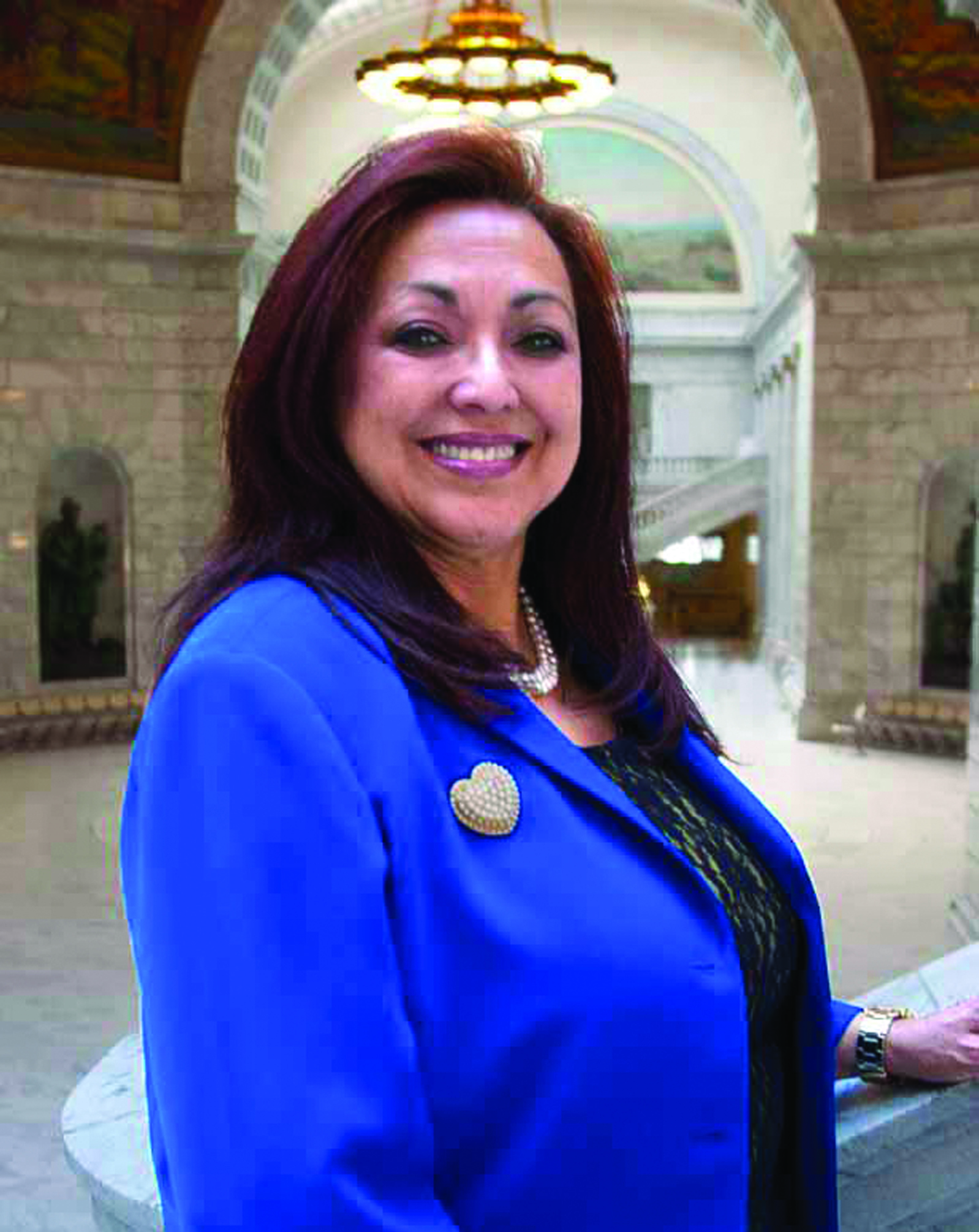
Josie Valdez is running for the Utah State Senate District 8 Seat. She is just one of nine Democrat Latinos running for office in November. They are all part of a larger political action committee and a force to be reckoned with. “We are done allowing politicians to make all the decisions for us. We want to sit at the table where decisions are being made.”
Valdezs’ accolades include: Utah Business magazine, Woman to Watch, Top 20 Business leaders by the State of Utah, and Valdez is also a recipient of the Utah Pathfinder Award.
Life as a Hispanic political candidate is not easy in Utah. Despite a substantial population increase of self-identifying Hispanics in the 2010 US Census, there is little indication of this shift on Capitol Hill. A new crop of Hispanic political hopefuls have emerged. Among them is the indomitable Josie Valdez. Wearing a Jackie O style pink suit, she enthusiastically pursues the Utah Senate
8 seat created by redistricting. Josie Valdez has a vital, infectious energy. At the Salt Lake Democratic county convention hers was the only race to be so a close she will have to run a primary race before squaring off with the Republican candidate in November. Josie is running against a well-educated white, male opponent: Ty McCartney. Her concern is underrepresentation of women due to recent losses of seats in the legislature.
A quick look at the numbers substantiates candidate Valdez’s point. Virtually any person who is not an LDS white male is likely underrepresented in the Utah Legislature. According to the National Conference on State Legislatures website 95% of the legislature is Caucasian. A total of 83% of legislators are ages 50-65+ and 82% are male.
According to the 2010 US Census website, 13% of Utah’s population is Hispanic. Only 5% of the legislature is Hispanic. Women comprise only 18% of the state legislature yet 50% of Utah’s entire population is female. Why are the demographics of the legislature important anyway? Policy is best made by everyone affected. A true representative democracy must feature actual representation not merely good intentions.
You are a minority in the Minority Party in Utah. With all the power and support the Republican Party has in Utah do you believe you are fighting an uphill battle?
The Hispanic caucus was once the largest caucus in the Democratic Party. I don’t see that kind of support in the Republican Party. It is an uphill battle, but we are respected for the contributions we make to our society and in our party. We are very active in our party. We are united together. In the democratic party, we are not seen as a minority group but a part of the Democrats.
What is your background?
I am retired. Having served as Assistant District Director for the US Small Business Association—I was over all the specialty programs—I was the first person of color in the history of Utah to ever run for Lieutenant Governor. I ran with Bob Springmeyer in 2008. I have been very active in the Democratic Party for years. I have a whole list of accolades. I believe in the performance of excellence and when you perform in excellence you will be rewarded for that excellence.
What Are Some of Your Goals if You Become a Utah State Senator?
As a Latina I have made it my objective that we aren’t just a part of the Latino community but we are a part of the total community. And we are not a second class, I even hate the term “minority.” I don’t consider myself a minority. I think we should all look at ourselves as Utahns. Once we look at ourselves as Utahns and all a part of a community I think it will make a positive image for ourselves and our future generations.
There are some great things we are doing through the Hispanic Chamber of Commerce. We awarded $1 million worth of scholarships— we are not just tacos, tamales and low-riders, we are truly making a contribution to the future generations. The Chamber of Commerce also awarded $1 million to business start-ups. We are truly heading in a positive direction to be a big part of Utah now and for future generations. “We are done allowing politicians to make all the decisions for us. We want to sit at the table where decisions are being made.” Visit the following link for more information on Josie and her bid to enter the Utah Senate.