The Crumb Brothers Artisan Breads, not a Grimms Fairy Tale
by Adam Vicinus
I’m a dipper. No, not the snuff you put in between your lower lip and gum. I’m talking about milk and cookies, biscuits and gravy, coffee and biscotti and one of my favorites, soup and bread. Strolling around the Downtown Farmers market, I followed my nose and a path of bread crumbs to a booth so appropriately named The Crumb Brothers Artisan Breads, a local Utah bread company who’s reputation for quality is on the rise.
The Crumb Brothers started nine years ago in Logan, Utah, after owner Bill Oblock decided to give up being a star chef at The Grapevine in Logan and focus on one of his passions, bread. Along with his loving wife Diane and brother Dave, they have not only produced one of the best tasting breads around, but are doing it responsibly in a green building that, according to Bill, should to be the poster child for all commercial buildings in Utah.
“My secret wish is to get everyone to see the building” Bill reveals to me, “and, of course, buy our bread”. The building was constructed from recycled railroad trestles from the bottom of the Great Salt Lake. The heating and cooling are produced from geo-thermal heat exchangers in edition to passive solar heat in the winter. Zero-scape wild flowers in the field next door and around the building round out some of the many eco-friendly attributes.
And what about the bread that comes out of this super green building “Bread is made from flour, yeast, water and salt. We will use up to five different leavening agents to produce our unique flavors and some varieties can take up to two days from the bakers table to the cooling rack”, Oblock explains. He also supports the Buy Local philosophy in the ingredients as well. “We use 100% organic flour from Central Milling, honey from Slide Ridge and Cox and The Farmstead cheese comes from their own Swiss cows” So what is the “art” in artisan? Bill laughed and said “It’s more like sculpting than painting, and less of an art than a craft.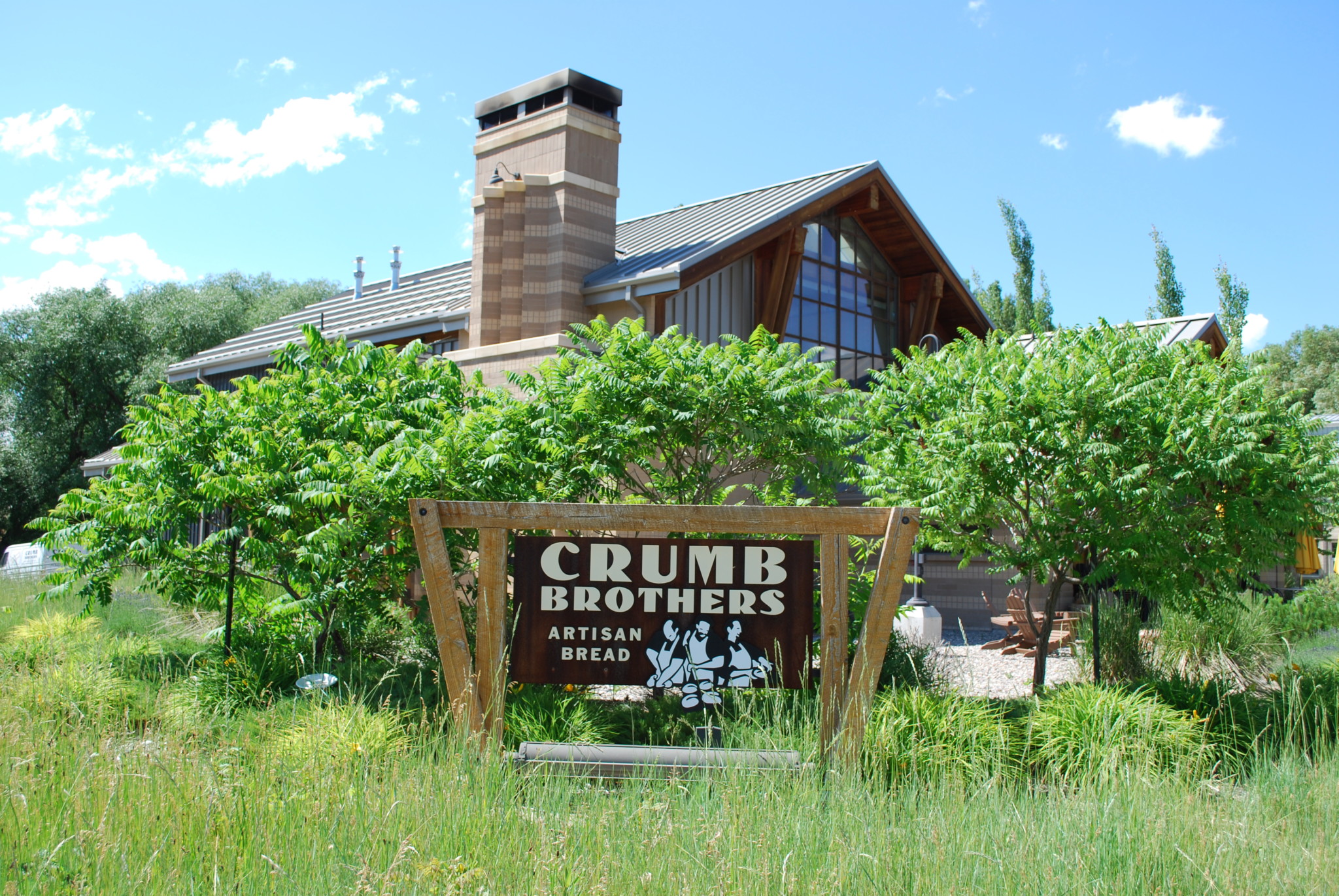
It’s the combination of different skills that makes him an artisan…..the understanding of the science in how the ingredients react and taste to the texture of the crust and the crumbs.” Ahh, the crumbs. So I thought the crumbs came from the crust. “Nope, the inside of the bread are the crumbs” he revealed.
So I guess Hansel and Gretel didn’t drop crusts of bread but the crumbs. And this isn’t a Brothers Grimm fairy tale, The Crumb Brothers Artisan Bread is the real deal. Follow the trail to the downtown Farmers Market and don’t forget to dip! §