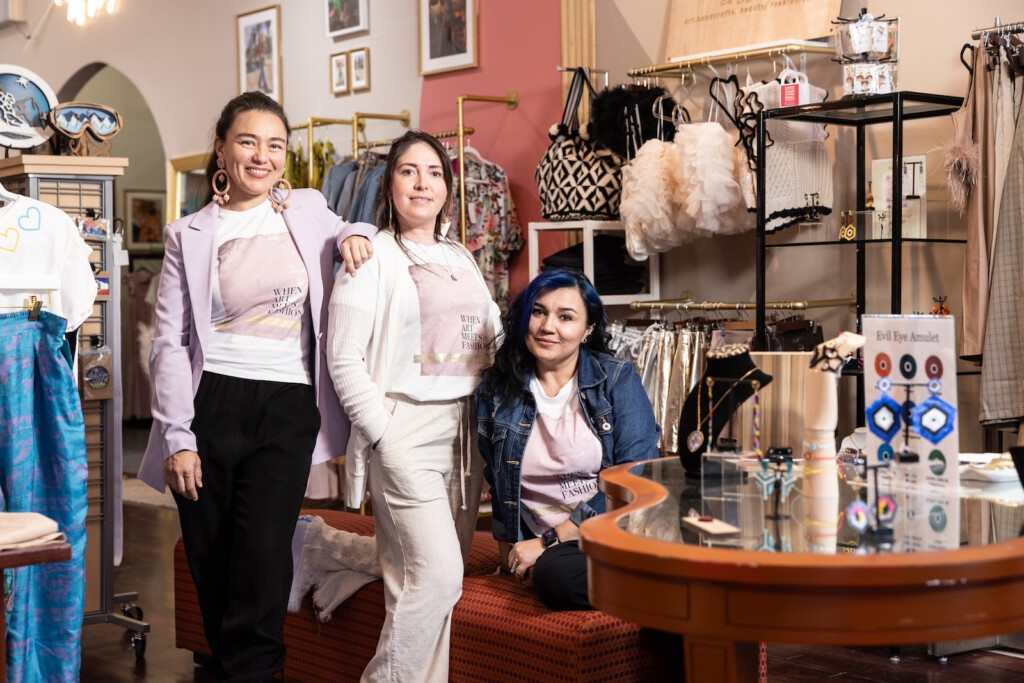
Being an immigrant comes with a set of inherent challenges which only intensify for women.
Two years ago, The Gateway Mall opened its doors to the Women-Owned Small Business Collective (W.O.S.B. Collective), a one-of-a-kind store composed of diverse, international, entrepreneurial women. The store proves that perseverance, hard work and creativity play a crucial part in achieving personal goals.
The emergence of immigrant entrepreneur women is contributing to the economy and shifting the male-dominated business pattern. The Small Business Administration states, “Immigrants own businesses at higher rates compared to individuals born in the United States.”
We talked to some of them and learned much about their experience as business owners, women, and their individual mindsets.
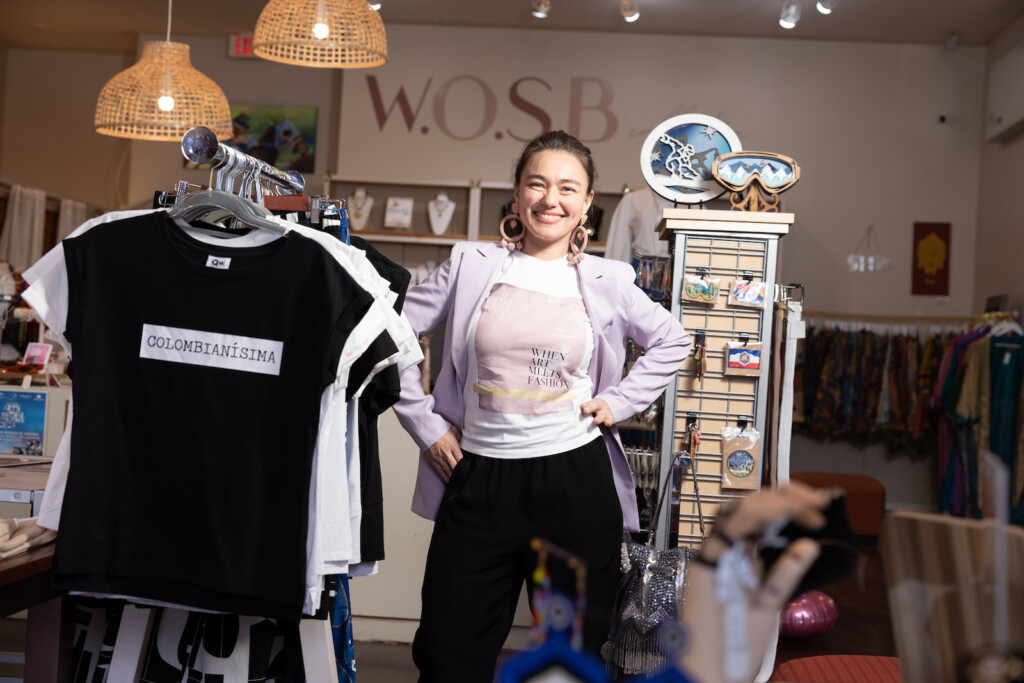
Andrea Zambrano, the creative mind behind The Colombian Marketplace, arrived in Utah from her birth country of Colombia. She rapidly positioned herself in the market as a fashion influencer. She is known in the Latino community for her sweet, big smile, love for her culture, and unlimited creativity. Zambrano states that having a business is not easy. “It takes dedication, hard work, time, passion, and professionalism,” she explained. She added that it gets more challenging when the business is not in your homeland. Zambrano says that Utah offers educational programs that help business owners, and two years ago she founded W.O.S.B. Collective at the Gateway.
“Having a business in Salt Lake City’s downtown wasn’t even in my dreams, but thanks to hard work and many women with the same purpose and vision coming together, we could build a collective space where we are the main characters of our stories,” she said.
W.O.S.B. Collective is a destination boutique and gallery where people can find unique items from Latin American countries. The shop has an eclectic vibe and is a Salt Lake City hot spot. The women running the businesses come mainly from South America.
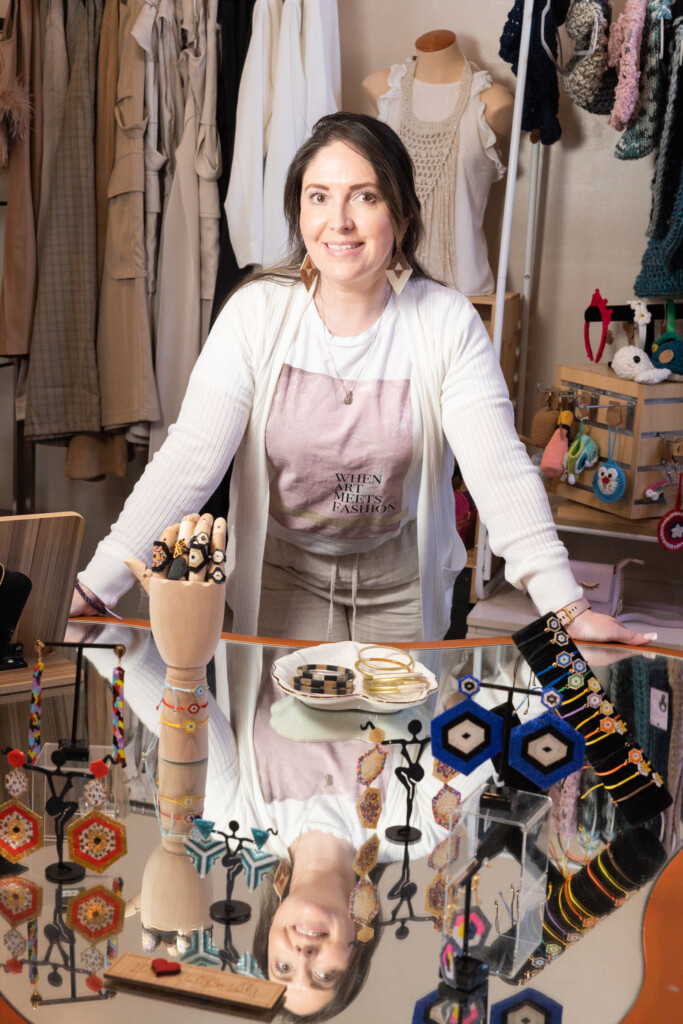
Dallan Chaparro is the owner of Mikala Store, selling one-of-a-kind accessories made of Miyuki, a Japanese seed bead. Despite being in business for only a year, Mikala is a well-known and profitable store. It offers unique styles only, meaning that there are no repeated designs. Customers feel special knowing they are rocking unique designs and that there aren’t more people wearing their designs.
Chaparro arrived in Utah just two years ago. Her items are exported from Colombia, where Chaparro’s friend designs them. Chaparro feels there is strong support from the women-owned business community in Utah. She advises immigrant women to seek opportunities, not be afraid of cultural differences, and to take risks.
The Venezuelan Angelica Arcalla is the owner of Be Women Fashion. Arcalla is the authorized reseller of a Colombian purse brand called Parchita in Utah. The purses are handmade vegan and very soft. Arcalla, a lawyer, had to leave her country due to hardships five years ago and arrived in Utah. She had to start building her life from scratch.
“It is not easy starting from zero,” she said. She feels there is much support for Latina entrepreneurs from the Latino community. She thinks that, as Latinos, we’re coming together. She tells those women wanting to start a business not to limit themselves.
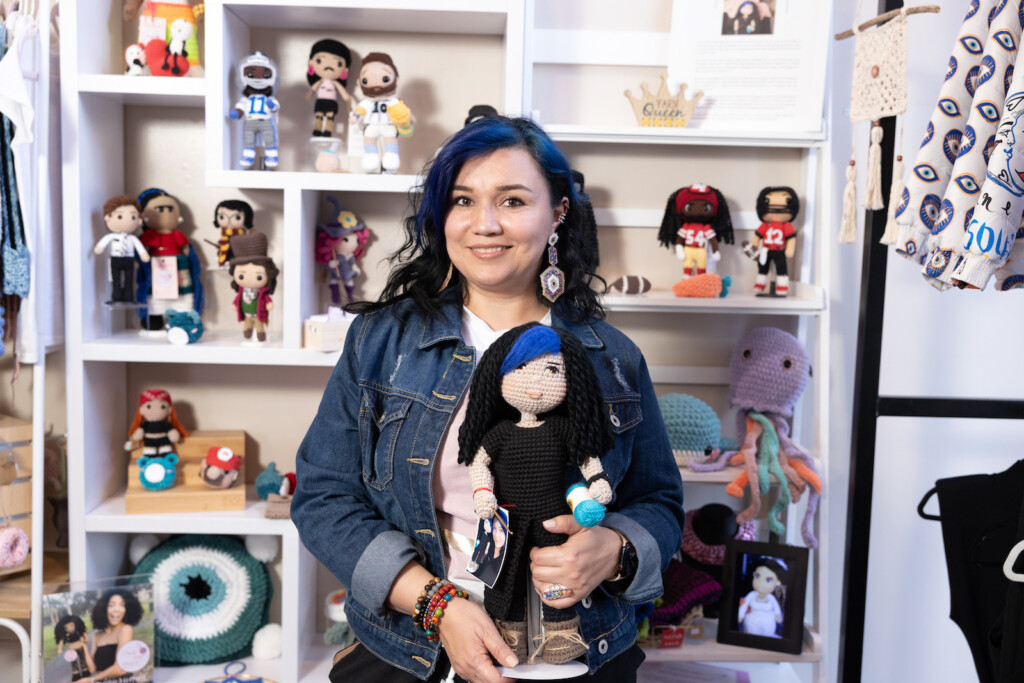
Paula Rojas is the Colombian creative behind De Mis Manos Paula Rojas. She designs different items in crochet. Her number one item though, is her personalized dolls. It used to be her hobby and now it is her business. She has crocheted famous personalities such as the Venezuelan musician Oscar D’Leon, the Puerto Rican singer Willie Gonzales, and actor Christopher Lloyd, among others. She said she had to do jobs she never thought would survive when she immigrated. She felt she had lost herself and that her life stopped and froze. Now that she earns money by doing something she is passionate about, “I found sense in life,” she says. I woke up once again.”
With her sparkling eyes and a huge smile, she expresses that her most extraordinary experience so far was giving the doll with Christopher Lloyd’s likeness to the actor himself. Her creations also helped a grieving mom who lost her child. Rojas made her a crochet doll that looked just like the little boy. If you want a personalized doll, look for her on her Instagram @demismanospaularojas.
The Mexican entrepreneur Denisse Cieza is the owner of Cempoala. Cieza. She explains that Cempoala started as a resistance movement to protect the traditional textile of Veracruz. She wanted to fuse tradition and history. Ceiza is passionate about the heritage textile. “The worst form of stealing and cultural appropriation is in the name of fashion,” she said.
Cieza is from the south of Mexico, an area that has a great variety of fabrics and an extensive diversity of artisans, stitches, and stories. She describes her products as “handcrafted luxury, created with heritage, tradition and style. She brings the pieces from Mexico, and her brands have a sense of longing. For instance, she said the Filigrana earrings remind her of her grandmother, Oaxaca, and her birth country. She explains that embroidery is a generational inheritance.
Cieza has lived in the US for 22 years. She was going through a hard time when she decided to start her passion as a structural business to generate an income. Denisse concluded her interview by expressing that to her, “It is imperative for women to know that we can achieve whatever we set our minds to and become independent. Women don’t have to stay in abusive relationships or wait to be provided for,” she said.
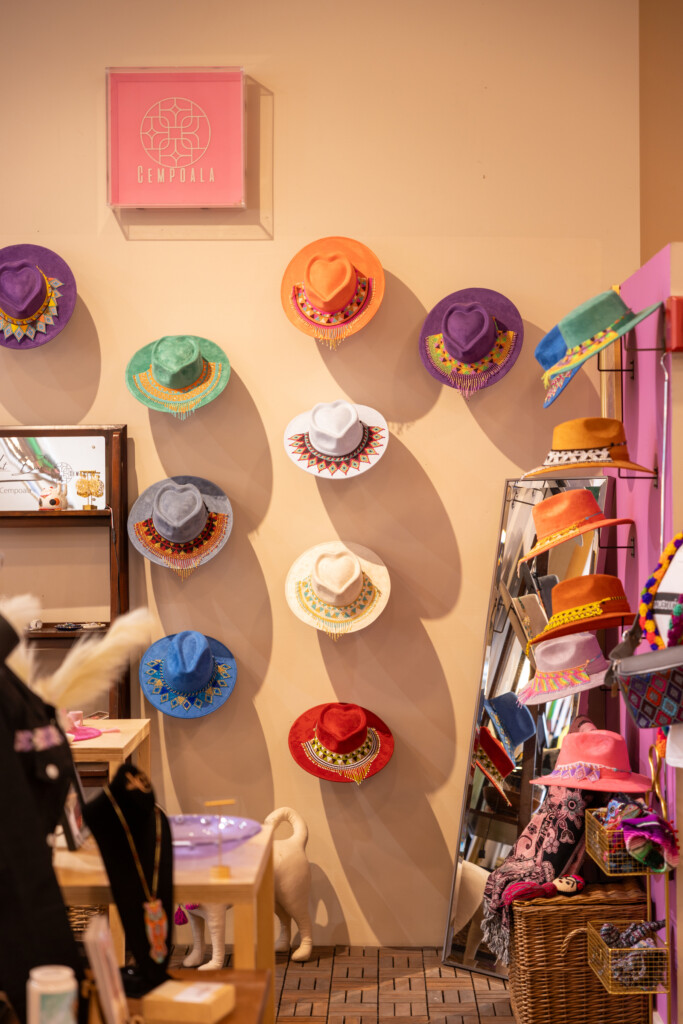
In Cempoala women can find jewelry, purses, hats, and a lot more. Cieza is full of life and energy, and customers can enjoy her vibrant vibe when shopping at W.O.S.B. Collective.
Venezuelan influencer and entrepreneur Kristel Alaya came to Utah seven years ago. She owns TENU, a fashion store that carries items, such as casual cocktail attire, for any kind of event. Alaya is also a fashion consultant, so her customers get the help they need when buying her items. Her love for fashion started when she was a child. Her girlfriends asked her for fashion advice and how to put together outfits for different occasions and when going on vacations. She is also a makeup artist and teaches cosmetology. To her, TENU is dedication and passion.
“I prefer to work 80 hours on my own dream than working 40 hours on someone else’s” she explained. Ayala tells women that if they are afraid of doing something, they should do it anyway, holding onto that fear. “But don’t let that fear stop you,” she advises.
Ayala doesn’t believe in limits. She sees beyond what others see and goes after it. Her brand is three years old, and her goal is to open a big store. She believes in the power of words. “I see myself in the mirror every morning and say, you’re magic, you’re power, you’re intelligence and you’re light,” she said. She advises women to surround themselves with those who love and believe in them. She added that to achieve your goals, you have to do the job.
The other two Latina-owned businesses are LACUNA Accessories, which offers a great variety of accessories, including country-shaped necklaces. LACUNA means “a space or range without padding; a hole.” The accessories represent ourselves (as women), our countries, and whatever our hearts are. The other one is Vane’s Accessories and More. The accessories are diverse and unique, from rings to handmade necklaces.
Besides the Latina entrepreneurs, two American women are part of the Collective. One is Sheena Wolfe, who creates exquisite glass artwork, including masks. Her favorite medium is kiln-formed glass. The other artist creates designs in wood.
This group of women wants to show other women, especially immigrant women, that it is possible to make your dreams come true with hard work, perseverance, and having a solid idea. They discussed the importance of supporting one another as women and as members of our community.
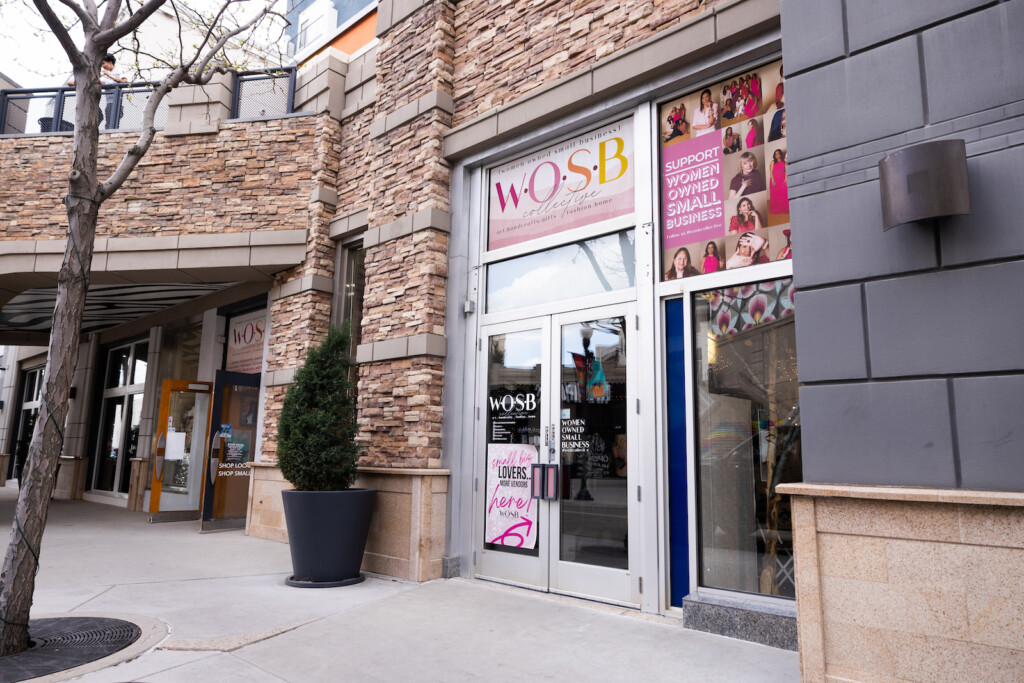
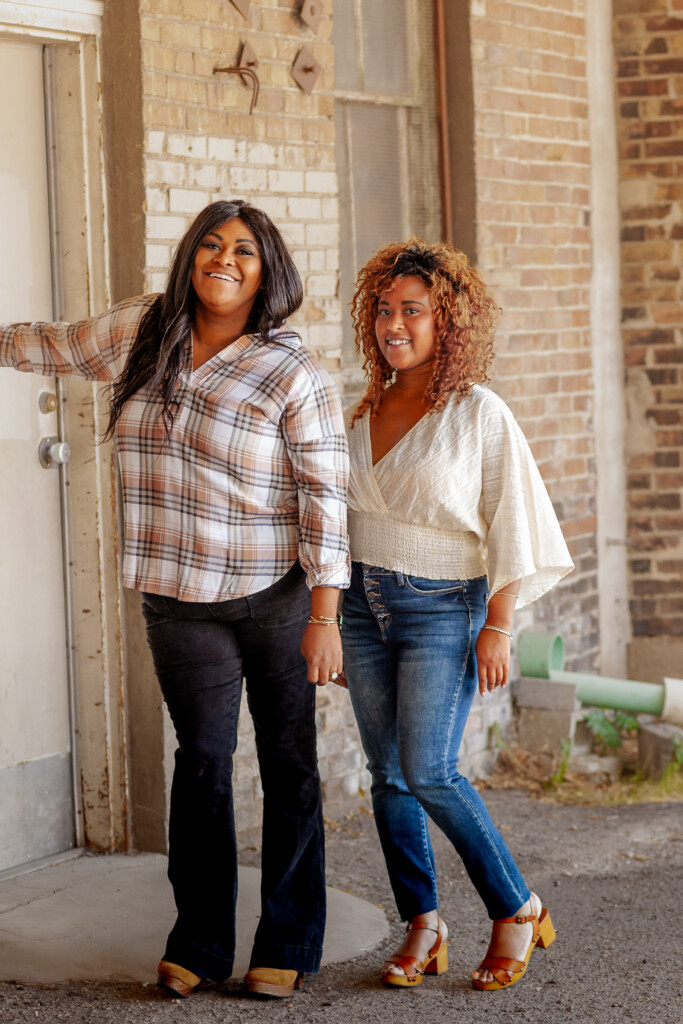
Feature Image: Left to right: Andrea Zambrano, Dallan Chaparro, and Paula Rojas of the W.O.S.B. collective. All photos by John Taylor.