Utah Stories

Farmer’s Market Success — Part Two of Shoe String Success Stories

The downtown Farmer’s Market has a treasure trove of great business stories, the concept of Utah Stories began by chronically the stories of artisans and vendors who were carving out their niche at the market.
|


The downtown Farmer’s Market has a treasure trove of great business stories, the concept of Utah Stories began by chronically the stories of artisans and vendors who were carving out their niche at the market.

Jorge Fierro started his Mexican food business by selling refried beans at the Farmers Market in downtown Salt Lake City

this is part II of our series on shoe string success stories. Click here to read part I.
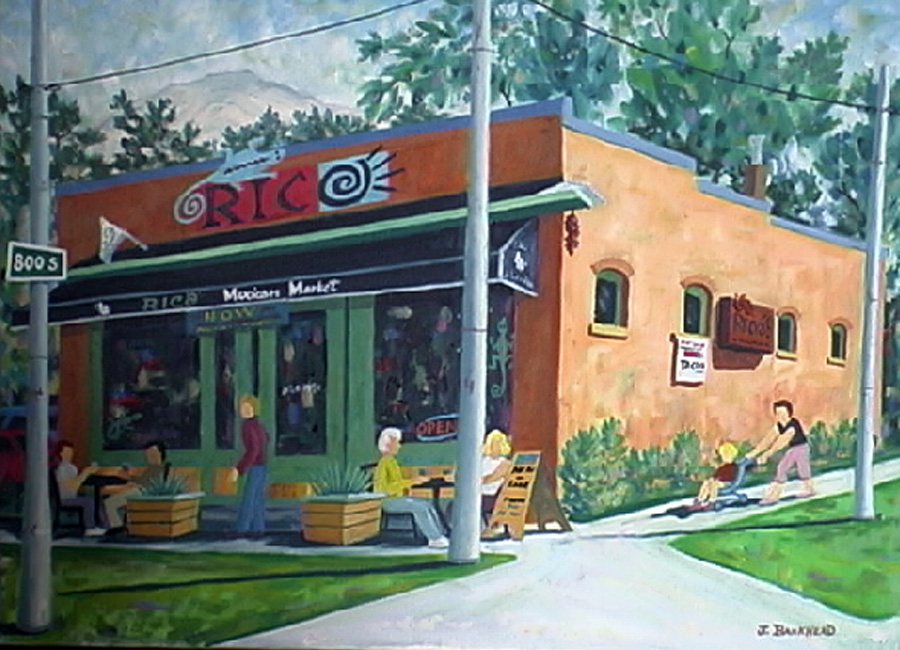
Rico Market
Rico Market was started with a 5K micro enterprise loan. Rico’s beans were his first success.

The best part about farmers markets is  that for around $300 per month food vendors and craftsman can test out their concepts in front of a eager marketplace with very little initial capital. Beginning small vendors can test their concepts before taking the plunge into taking a large loan on an unproven idea.

There are so many great examples that we found from the farmers market I’ll list out a few of my favorites

Jorge Fierro was disgusted with the refried beans found at the supermarkets,  he decided he could do much better.

Fierro’s homemade refried beans were a hit. He then diversified his products and eventually  received a micro-loan of 5K to open his own small market on 779 South 500 East.

Rico Brand’s beans burritos, pico de gaillo and 40 other products are now sold in grocery stores, coffee shops and convenience stores all over Utah.

Fierro has recently entered the restaurant business in his new upscale Mexican restaurant Frida Bistro.

Bubble and Bee and Shoe String Success

Stephanie Greenwood and Steve Thomas started Bubble and Bee Organic making lip balm and soap. Their test market was the downtown farmers market. They found very receptive customers which gave them the confidence to sell their products online. Eventually they approached Whole Foods and Harmon’s grocery stores who now to sell their products.
Bubble and Bee now has hundreds of organic products for sale on their web site and through savvy PR, they have landed interviews on the Today Show and nearly every local TV station.

stephanie greenwood bubble and bee organic
Stephanie Greenwood drew upon her chemistry background to produce Bubble and Bee products

They have built up their brand to become recognizable for it’s cute packaging. Bubble and Bee is now expanding both their production and retail facilities in Bountiful and now they send shipments out all over the world on a daily basis.involved.

The business lesson that can be drawn from all of these examples is clear: starting a business on a shoestring isn’t a crutch it’s good practice.

Making mistakes while your business is small allows the initial problems to provide an inexpensive education instead of catastrophe.

Risk for failure, is compounded when there are loans to be paid. The economic downturn has made obtaining loans much more difficult. But good ideas and hard work still prove to be the biggest factor determining success.

Check out our final installment on shoe string success tomorrow. Read our original story on Jorge Fierro here.

Read our stories on Bubble and Bee Organic found here



Join our newsletter.
Stay informed.


  • Highway 6 and the Midland Trail: Utah’s Transcontinental Highway History

    From Price Canyon to Delta’s desert stretch, Utah played a central role in building the Midland Trail, one of America’s earliest transcontinental highways and the foundation of today’s Highway 6.


  • Whiskey, Bullets & a Buried Town: Archaeologists Reveal Alta’s Wild Past

    Before Alta was known for powder days and lift lines, it was a silver mining town clinging to the side of a narrow canyon. In the late 1800s, men lived at 8,000 feet, went underground each day, and endured winters that regularly buried buildings in snow. This past summer, that mining town resurfaced — literally — during construction at the Alta Ski Area.

    To understand what Alta really looked like, you don’t begin with legend. You begin with its trash — and this time, that happened almost by accident.

    Alta Ski Area was installing underground water reservoirs to support snowmaking. Because the project sits on Uinta-Wasatch-Cache National Forest land, an archaeologist was required to monitor the excavation. No one expected the trench to produce much.

    But, It did.

    Artifacts began surfacing almost immediately. Enough that the Forest Service contacted the Utah State Historic Preservation Office for help. Lexi Little, who coordinates the Utah Cultural Site Stewardship Program, helped mobilize nearly 30 volunteers to assist with what quickly became a focused two-week excavation.

    Winter deadlines were approaching. The pipes for the reservoirs had to go in the ground. There wasn’t time for a slow, extended dig.

    “It was two weeks of digging in the dirt and helping figure out exactly what we were looking at,” Little said.

    Most of the people screening soil weren’t professional archaeologists. They were trained stewards from around Utah — part of a statewide volunteer network that now approaches 500 people. They poured dirt through shaker screens, scanning for fragments that could piece together a town long buried.

    “Archaeology is human trash,” Little explained. “Archaeologists are very into trash.”

    Alta had left plenty behind.

    https://youtu.be/hzIHzx3OGoo?si=dKcl2CEz-t6FZzYw

    Victorian-style ceramics appeared first — the kind typically used in hotels. Medicine bottles followed. Ink bottles. Hand-blown glass. A porcelain doll’s foot surfaced from the soil, a small detail that shifted the mental image of the town. Families were here. Children were here. This wasn’t only a camp of miners.

    The bottles helped establish time. Manufacturing details — whether glass was hand-blown or mold-made, whether a maker’s mark appeared on the base — allowed archaeologists to date many of the artifacts to the 1870s through the 1890s, when Alta was booming as a silver mining town.

    “That gives you that range of dates for when Alta was really booming,” Little said.

    One reusable soda bottle clearly stamped “Salt Lake City” connected the canyon to the valley economy below.

    Then something unusual rolled out of a dirt pile.

    A corked bottle. Intact. Liquid still inside.

    Continue reading and support independent Utah journalism with a purchase of Utah Stories (Digital + Print) or 3 month free trial (Digital).


  • How Horses Help Kids Heal: Inside Utah’s Equine Therapy World

    Kelty Johnson trains horses for a living, but her deeper work happens in the quiet space between animal and human. On the Utah Stories podcast, she explains how equine therapy helps children regulate emotions, build confidence, and reconnect through presence rather than pressure.


  • Angela Brown: The Woman Behind SLUG Magazine and Craft Lake City

    Angela Brown is the publisher and owner of SLUG Magazine, one of the city’s longest-running independent publications and a central voice in Utah’s alternative arts and music scene. She is also the founder of Craft Lake City, a nonprofit that has grown into one of the state’s largest platforms for local makers and creative entrepreneurs.