Carbon County has always been an area that never gave much credence to the laws of the land or the norms of the day. Its newest residents honor this heritage.
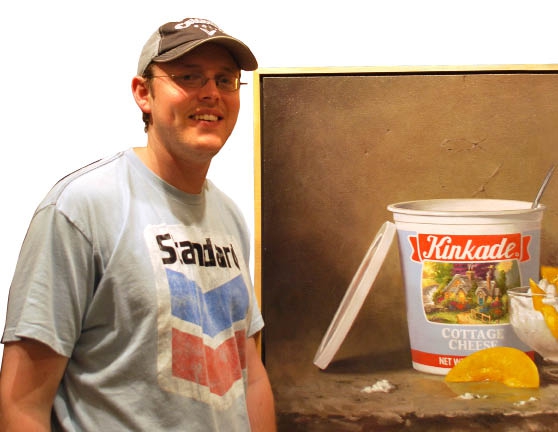
David Dornan gave up his 17 year teaching career at the University of Utah to live and work in Helper, Utah. His latest pieces feature gears, crankshafts and flywheels. Dornan’s work is sold almost exclusively at the Coda Galleries in New York, California and Park City.
Most urban dwellers are all too familiar with the bittersweet impact artists have had in rehabilitating downtown areas all over the United States. The story usually goes like this: buildings become boarded up and abandoned. Buildings start falling down. City leaders become desperate over the blight. In need of cheap rent and a big space to work, starving artists offer to improve buildings or buy for cheap. The artists create cool spaces. Culture and renewed life flow into formerly blighted areas, and within a few years, yuppies are buying the newly renovated “loft apartments” which then causes property values to surge. Then artists move on or sell out and let the yuppies have their old places. So it has gone in Salt Lake City, Sugar House, Park City, and cities all over the Western United States.
But Helper, Utah is breaking this convention. It’s not starving artists who are moving in, but some of the most accomplished artists in Utah. And Helper is unlikely to attract yuppies or serious corporate investment any time soon. When artists David Dornan, Dave Johnson, Paul Davis, Marilou Kundueller and David Katz relocated to Helper, they already had careers. David Dornan was a professor at the University of Utah when he and his fellow artists bought their first building together in Helper.
They renovated by bartering: “I would allow [art] students to live here for free in exchange for their help remodeling. . . Five hours of work per week would earn them their room.” Dornin explained. Beyond the five hour requirement, he would pay artists to do additional work. Dornan found that the manual labor was a great complement to the arduous learning process of painting.
Dornan bought his property in 1999 and slowly and steadily the major renovations of his former brothel have been transformed into a unique space. Dornin’s building offers a giant studio workshop area with a center stage for figure drawing, a very large personal studio, demonstration area and an upstairs with accommodations to sleep 15 students, all in their own private small bedrooms, yes brothel remnants..
The small private rooms are actually a remnant from the cities old brothels. Since this first renovation, Dornan has acquired three more buildings in Helper, including the town’s largest restaurant.
Back then Dornan says he was regularly making trips to the LaSalle Mountains near Moab, Utah and one day he realized how great it would be to find some space to hold workshops. Helper was perfect.
Ben Steele attended one of Dornan’s workshops while studying at the University of Utah fine arts program. When Dornan told Steele that the best way to become a professional artist would be to move to Helper, Steele took his advice. “I know I wouldn’t be where I am today as an artist without the help from Dave, he really wants students to become great artists and he has been an amazing mentor.” Steele bought two buildings in Helper as well as a home, in 2003 where he lives with his wife and baby. Steele’s art is now sold at the prestigious Coda, Gallery in California along side Dornan’s. Steele also thanks Dornan for his help in getting his work into such a exclusive gallery
Dornan explained that the City of Helper had just acquired the property on foreclosure when he showed interest. The property appraised for $33,000, the city offered it to Dornan and his three colleagues for half of the appraised value.
Right from the beginning, Dornan said he envisioned Helper becoming a destination for artists, and he believed Helper had the potential to become much more than a sleepy drive-by city on the way to Price or Moab. “I would like to see artists from every discipline hold workshops here, and that is beginning to happen, said Dornan.
Recently ceramics artist Kathleen Royster who was teaching in Denver moved to Helper to focus on her work, renting a work/live studio space from Jannine Hogan. She says artists Charlie Snow and Lindsay Frei have all recently bought houses in Helper. All are accomplished artists. Royster says she feels very connected working with so many talented artists, “everyone here is focused on the craft. This is what sets so many Utah artists apart.” Royster is aware that galleries in San Francisco, Santa Fe and New York sell a disproportionate amount of artwork from Utah artists compared to other western states. Royster believes it’s from the pioneer tradition of hand-crafting.
Dornan attributes the high number of skilled artists from Utah to the great legacies of Utah painters such as Alvin Gittins and LeConte Stewart.
More information on David Dornan’s workshops can be found here:
I am a story teller and journalist. I have a passion for farmers, local craftspeople, and folks who aspire to create, build and grow their business in the local marketplace. Why local? By supporting locally-owned businesses we create more opportunity for entrepreneurs, and we claim our sovereignty to shape our communities how we want to see them.
I aspire to build Utah Stories Magazine into a household Utah name, and assist Utah businesses and makers with marketing. On the journalism side of things my passion is investigative journalism that offers true insight into issues. I believe strongly in the forth estate: strong, meaningful, insightful journalism is essential to a free market Democracy.
When was the last time you plucked a chicken? How about threshing wheat or milking a cow? For most people today, the answer is never. What used to be a daily survival skill has slipped into the history books, while farmers, ranchers, and a multitude of other hands continue to prepare, package, and produce the food we buy at the grocery store.
The boisterous energy that characterizes most of the 999 Ride’s participants is a result of the long-established bonds and trust they’ve all helped to build within the local cycling community.
Utah’s dining scene sees both growth and change as Laziz Kitchen opens a new location at Sugar House Station, Provisions closes after 12 years, and Deer Valley Resort announces a new executive chef.
A new coffee shop opens at Trolley Square, Fleming’s debuts new Social Hour bites, and Deer Valley’s Royal Street Café enters the Mountain Mixer cocktail competition.