
Learn about Utah from its inhabitants (both deceased and living)
The Utah Hall of Fame doesn’t simply acknowledge the rich & famous Utahns, instead, we portray those who we feel define the rich culture and history of Utah. This format enables visitors to learn about Utah by reading about the people who made it how it is.
Please feel free to send comments or offer suggestions for people who you wish to nominate. We also encourage you to send additional links on existing Hall of fame members, additional material, little-known facts, or any interesting tidbits. We will give you or your website credit as a contributor for doing so. E-mail richard@utahstories.com
Current nominees:
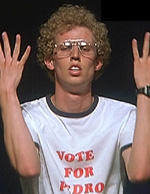
Napoleon Dynamite “John Heder”
Jared Hess filmed a new ending to Napoleon after it was bought by MTV. The new ending cost nearly as much as the entire original film. Many of the characters in Napoleon are actual citizens of the town of Preston Idaho. Such as the chicken farmer and the children on the school bus, who scream after watching the chicken farmer butcher a cow with a shotgun.
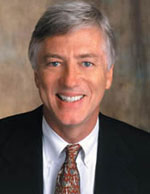
Rocky Anderson
Rocky’s real name is Ross. Rocky traveled to Turino, Italy not using one drop of gas, by wind-powered sail boat and bicycle.
Rocky used to be good friends with Mitt Romney and they both helped get each other elected. However, today they no longer speak to each other. Liberal Salt Lake Mayor heck-bent on personally saving us all from global warming appears constantly on public access T.V telling us how much he is doing as Mayor to stop climate change and saving us all from eminent global destruction. Rocky is on a personal crusade to save us by driving his natural gas-powered vehicle to work. Rocky recently gained national attention by calling our president an “idiot, liar”; Causing some conservative conventions to be canceled in Salt Lake City. However, seeming focused on a much broader scale than his office merits Anderson can be credited for our orange pedestrian flags placed on either side of all busy crosswalks in downtown Salt Lake City.
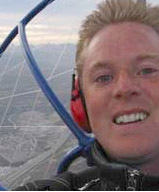
Dell Schanze
Schanze loves the 2nd amendment and he loves guns. Schanze once had an employee caught stealing 10 k worth of computer equipment. Schanze responded to the incident saying “when you are making 100 k a day it’s a little hard to notice when someone steals 10k worth of equipment. Schanze is a return L.D.S missionary and a devout Mormon who understood at a very young age that the words “Totally Awesome” have a certain power over Utahns in making purchase decisions. Former owner of Totally Awesome Computers and Totally Awesome Guns and Range, “Super Dell” opened many locations of his computer shops before his fast driving and gun-slinging antics got him in trouble. He was chased down by angry neighbors for speeding in their cul-de-sac. The neighbors caught up with Dell and he pulled his 45 on them, or maybe it was a 37. Dell was recently cited for flying his motored paraglide too close to the freeway. Schanze blames the demise of his business on the unfair media coverage he received. Come on Utah Stories Dell and we will give you the last word.
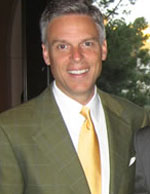
John Huntsman Jr.
Huntsman is the son of billionaire petrol chemical company founder John Huntsman. Huntsman is currently looking for a way to socialize medicine in Utah. He has two adopted Chinese children. Huntsman is very thin Utah’s Governor, the black sheep of the Huntsman dynasty. Junior dropped out of High School to play in a rock band at a young age, and then eventually became a U.S. Ambassador to Singapore. The events in between are a little fuzzy. Huntsman recently bought socks from a Chinese street vendor where the legitimacy of the currency he passed was questioned. Huntsman quipped back in his fluent Mandarin”Don’t I look like someone you can trust?” We Utahns trust our governor his approval rating is sky-high.
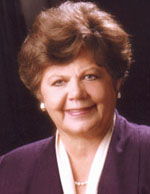
Olene Walker
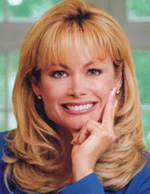
Debbie Fields
Millionaire cookie mogul, Mrs. Fields is personally responsible for the obesity epidemic in Utah. She and her cookies have made her millions while at the same time making the majority of Mormon Utah housewives overweight. Mrs. Fields herself has a trim beautiful figure; this is because she has discovered a secret antidote that gives her the ability to resist her own cookies. Currently, Mrs. Fields will not reveal this chant for it could cause a decline in her profit margins. (Debbie Fields has no direct Utah connections that we could find, yet she is listed on Utah’s famous women so maybe we are missing something. )
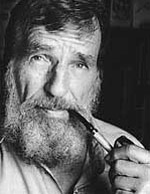
Edward Abbey
Abbey gave specific instructions to be buried in a sleeping bag transported by a pick-up truck into the desert. Many believe Abbey supported “ecotage” by sabotaging modern structures to revive lost ecosystems.
Desert Solitaire is number seven on National Geographic’s best adventure books of all time,
(Deceased) environmentalist, author (waco some say), Abbey was paid one summer back in the ’50s to keep an eye on things in the Canyonlands National Park. There he grew his beard, befriended the wild, and wrote “Desert Solitaire”, a book that maintains the theme that by exploiting nature we are removing a critical connection that binds us to nature and our true sense of humanity. Abbey believed Glenn Canyon Dam and Lake Powell were a disastrous mistakes. His opinions helped ignite the environmental movement. Every Utahan who would like to better understand Southern Utah’s dessert arches canyons and rivers needs to read Desert Solitaire

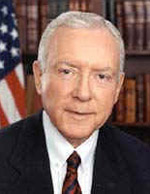
Orrin Hatch
Hatch’s Great-Grandfather was the founder of Vernal Utah. Hatch has called global warming “science fiction”. Hatch supports stem cell research, plays piano, violin, and organ. Hatch says Democrats winning helps the terrorists.
Conservative, 30-year member of the U.S. Senate. Orrin is a songwriter and patriot whom most Republicans adore. Very few Utahns know that Hatch is a great songwriter; Hatch has written hundreds of songs of faith and patriotism. Hatch is one of the most senior members of the Senate serving on many important committees. He says we must keep re-electing him because if we don’t Utahns will lose the power he wields being such a senior member ( he means the early-bird lunch specials and the close parking spot to the White House). Orrin’s war political chest is massive due to his seniority in the Senate, and he has become a multi-millionaire by protecting Utah’s vast multi-billion-dollar MLM nutritional supplement businesses.
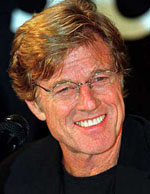
Robert Redford
Redford was born in Santa Monica, the son of a milkman. His earliest appearance was on the Twilight Zone in 1962. After appearing in numerous hit movies such as “The Sting” and “The Natural”, Redford pivoted to directing. He directed A River Runs Through it in 1992 starring Brad Pitt. He is the owner of Zoom Restaurant in Park City and the founder of the Sundance Film Festival. The slopes for skiing and, this Hollywood draw has caused all Park City locals and most businesses and architecture to be gentrified. Park City is now a posh faux replica full of multi-million-dollar McMansions, which were once shacks. It’s now a distant replica of the former mining town from which it originated.
Park City is now known as the ” Independent Republic of Park City” in order to distance itself from typical Utah values and culture. Redford and Park City host the two-week Sundance Film Festival as a place for the rich and famous to debut their new films sponsored by America’s largest corporations. Redford makes Utah his home where he has established a liberal bastion for any filmmakers who wish to make movies that are anti-capitalist, anti-war, and anti-Republican (sponsored by Subaru). Redford played the Sundance kid alongside his buddy Paul Newman in 1969. Sundance has become the most acclaimed film festival and venue for independent films. Every year Hollywood flocks there to screen premieres; many of which have gone on to become the most successful independent films ever made including Napoleon Dynamite, Garden State, Whale Rider, and Pulp Fiction to name a few.
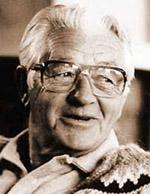
Wallace Stegner
Stagner is the famous author of “Mormon Country, Big Rock Candy Mountain, and Pulitzer Prize-winning “Angle of Repose”. Stegner was a professor at the University of Utah for years but later transferred to the more prestigious Stanford University, where he later taught Edward Abby. Stegner’s deep understanding of the West was recognized to the extent that he was made an advisor to the department of the Interior during the Nixon, Ague administration. In 1992, protesting government involvement in the arts, he turned down the National Medal from the National Endowment for the Arts, saying the government “has no business trying to direct or censor the arts.”
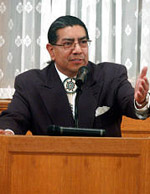
Forrest Cuch
Cuch graduated from the Wasatch Academy and says it was the great education that he received there that inspired him to help more Ute children to have better access to good education. He believes that the public school curriculum teaches a false history of his Ute Indian tribe.
The Uintah-Ourray Reservation is the 2nd largest in the country with 4.5 million acres.
Ute Indian leader, head of the Utah Division of Indian Affairs, Cuch believes the University of Utah Utes do not portray Utes in a demeaning manner, especially if the University of Utah gives all Ute Indians scholarships to attend their University for free (source). It’s the least Utah can do for the harm they have done in granting them their “nation within a nation” status. Of course, this is a cheeky commentary. Cuch is a very eloquent well-read professional who is a great Indian leader. Cuch appears in the Utah Stories exclusive documentary on Ute Tribe Education.
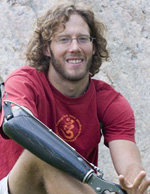
Aaron Ralston
Ralston cut his arm off while not being able to stomach dissecting a sheep’s eyeball in 9th grade. He says cutting his own arm off was painful but also “the most beautiful thing I’ve ever felt.”
Ralston videotaped the entire three days as well as the amputation. He has only shared a portion of that footage with Dateline NBC
Rock climbing in Southern Utah alone without ropes, Ralston fell, and got his arm pinned between a boulder and a cliff. Six days passed before he sawed his own arm off with a serrated army knife blade. Ralston then became a national figure, appearing on Oprah, Dateline NBC, and Letterman. Ralston now makes six figures for speaking engagements. He wrote the book about the experience, “Between a Rock and a Hard Place”. Advice to all crazy rock climbers: be ridiculously ignorant (climbing alone), saw a limb off and realize the beauty of life, write a book and you too could become rich and famous.
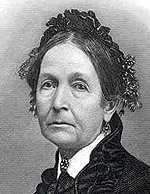
Eliza R. Snow
Her family originally disapproved of her courtship with Joseph Smith. She managed to convince them that he will make something of himself someday. Snow’s Brother Lorenzo became the fifth prophet of the L.D.S church. One of Snow’s favorite sayings was, ” Count Your Many Blessings.”
“Zion’s Poetess”, the first wife of Joseph Smith became later a plural wife of Brigham Young. Mormon Pioneer hymn writer, poet, historian, archivist, and relief-society organizer, Snow wrote hundreds of hymns during her lifetime. She has the standing record for most hymns written by a single composer within the Mormon hymnal. Ten are still within the modern book and are still often sung by Latter-Day Saints in Sacrament meetings. Snow was the most brilliant woman Saint the Pioneers had, and she became a living institution of Mormon culture and good taste.
**Editor’s Note: The original post from 2008 was updated in 2022 to fix the numerous spelling, punctuation, and grammatical errors. Richard Markosian will go down in Utah history as the poorest speller and most awful grammatical editor to ever preside in the chief position of a Utah magazine. We also added content concerning Robert Redford and Orrin Hatch.