Raising bees in Price, Utah.
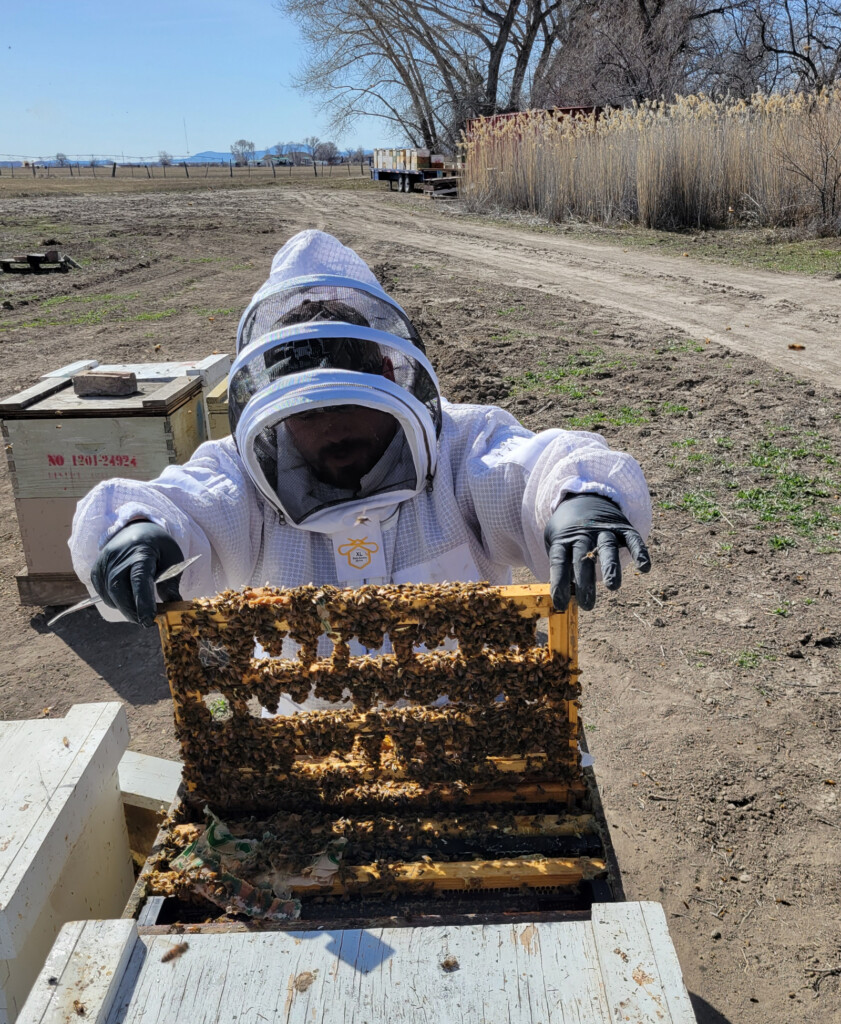
What started as an interesting hobby in a quiet corner of a family farm has transformed into a beekeeping business for Skip Henrie and Len Anderton. The mini operation of 16 hives has blossomed into a staggering 200 hives. Desert Castle Bees still calls the family farm in Price, Utah, home, but the bees’ reputation has spread like honey across other cities and states.
Desert Castle Bees stand out from other operations because they rear their own queens, which is one of the best ways to run a sustainable apiary.
According to the U.S. Department of Agriculture, queen survivorship issues are happening across the country for anyone buying queens, whether for commercial or hobbyist use. When people buy queens for transplant to new hives, they do not know the quality of the new queen or if the hive will accept her. If the colony rejects her, the hive can remain queenless or die, resulting in significant losses. Personally rearing queens gives Desert Castle Bees a higher survival and success rate than purchased queens, according to Anderton.
Anderton said that rearing queens requires time, dedication and dexterity. As an oversimplification of the process, he first splits a prolific hive into two, creating one colony that needs a queen. He then transfers a young larva from the original hive, allowing worker bees to feed it royal jelly and raise it into a queen.
These two beekeepers have generations of farming behind them and years of beekeeping experience, each bringing a different skill set to the partnership. Anderton is the bee whisperer with knowledge about bee health and queen rearing, while Henrie procures goods, deals and grants.
“I’ve always liked farming and was fascinated by it when I binge watched YouTube and fell down a rabbit hole about beekeeping,” Anderton said. Shortly after, a bee swarm showed up at his work and he gathered them up, which is what got him started seven years ago.
“I like beekeeping because every day is different and there is so much you can do with it, it’s really diverse,” he said.
“It’s a fun hobby, and it’s hard work, but I can’t imagine doing anything else,” Henrie said. “At the end of a long, hard day, seeing how it has grown from 16 hives to where we are now, and having people compliment us on our honey and appreciate the bees we sell, is very rewarding.”
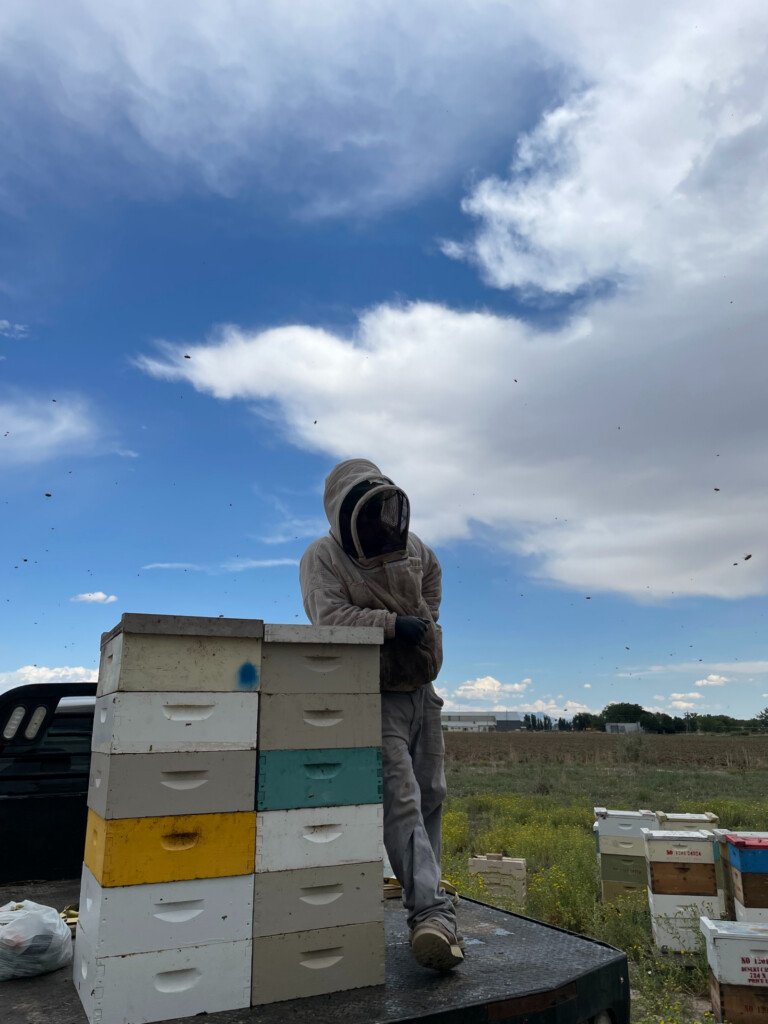
Not only does Desert Castle Bees benefit from having more successful hives with personally reared queens, but so do other beekeepers in the community. The company sells nucleus colonies, or nucs, during its annual Bee Days and by preorder, helping other beekeepers establish healthy hives with locally raised queens.
This year, the duo helped a large beekeeper with his queen situation by producing 600 queen cells for his operation. In the next month or so, that number is expected to be 1000.
Jan Cox, a hobbyist beekeeper with 15 hives, said she has been extremely satisfied with the products and services she has received from Desert Castle Bees.
“Their product is quality, and I’m happy to refer people to them,” Cox said. “They have been really kind to me by sharing information and teaching me things. They are always willing to help.”
The same philosophy extends to local agriculture. Both men value relationships that benefit the bees, fellow beekeepers and farmers.
In 2025, Desert Castle Bees sent 120 colonies to Green River to pollinate watermelon fields. This was followed by another 140 colonies in 2026. During the winter months, Anderton and Henrie also ship their bees to California to pollinate almond orchards, sharing transportation costs with other apiaries.
“Almond pollination is actually a really good resource for the bees, and we usually get them back stronger and healthier,” Anderton said. “We also definitely value our relationships, and we look for ways to be mutually beneficial to others.”
Desert Castle Bees also participates in programs that help seniors and low-income families purchase local honey through participating farmers markets.
“We are proud of our senior program for honey,” Anderton said. “We try to deliver a local, honest and good product at a discounted rate which is better than what you can buy at the store.”
“We both have day jobs and are doing the weekend warrior thing,” Anderton said. “We are drifting more and more to the commercial side, but we are trying to keep the integrity and quality there too.”
“It’s a hobby that has become a part-time job,” Henrie said. “I come down on the weekends here to see my family, get away from the bustle of the city, and reconnect with nature. Even though it is a lot of hard work, it is something to look forward to.”
Right now, Desert Castle Bees’ honey is sold at the farmers market in Price and the local Sutherlands hardware store. Henrie’s goal is to grow from 300 hives to 500 hives in the next two to three years as the business moves further into the commercial industry.
Feature Image courtesy of Skip Henrie.