
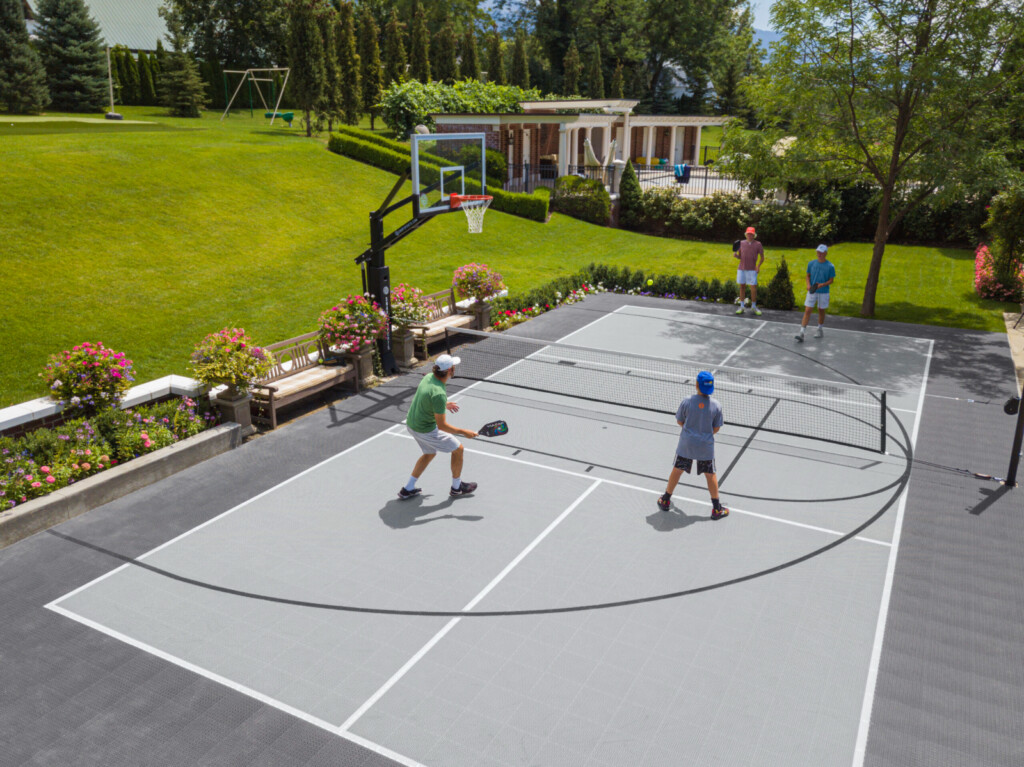
Utah’s valleys are growing fast, and so is demand for recreational space. Neighborhoods now balance youth athletics, pickleball leagues and family pickup games within the same limited acreage. Simultaneously, HOA budgets rarely stretch far enough to cover separate courts for each sport. The mismatch between demand and available land is pushing communities toward multi-sport courts designed to serve every generation on a single footprint.
The Growing Space and Budget Squeeze Facing Utah Neighborhoods
Modern subdivisions across Utah face a costly squeeze between rising land prices and shrinking buildable acreage. Developers increasingly set aside less ground for shared amenities, leaving HOA boards with small footprints and big expectations from residents who want options for every age group.
Utah law requires associations to fund many shared amenities through member assessments and reserve accounts, where no outside municipal subsidy is available. That means every square foot of court space carries a direct cost to homeowners. Maintaining several single-sport surfaces separately further strains those reserves, often delaying other capital projects like landscaping or clubhouse repairs and creating friction among neighbors over which priorities come first.
Multi-Sport Courts Offer a Flexible, Cost-Effective Solution
A single multi-sport court can replace what would otherwise require several separate pads, each needing its own base, surfacing and drainage system. Layered, high-contrast line striping lets one surface host basketball, volleyball, pickleball and more, reducing per-sport construction costs compared to building stand-alone courts for each activity.
That flexibility matters as paddle sports continue their rapid climb nationwide. Nearly 19.8 million Americans played pickleball in 2024 alone, a 45.8% year-over-year increase, making it the country’s fastest-growing sport for a fourth straight year. Designing one surface around basketball, volleyball and pickleball together means a neighborhood can keep pace with shifting interests without dedicating fresh land to whichever activity happens to be trending.
Pinnacle Sports Group Delivers Multi-Court Solutions for Communities
As associations and developers weigh long-term amenity investments, Pinnacle Sports Group delivers top-rated sports court construction services in Utah, with a focus on properties and communities that expect quality from design through completion. Pinnacle manages every phase of a project, including site preparation, surfacing and precision line-striping customized for shared multi-court and homecourt installations.
Live Google access shows that Pinnacle’s regional track record includes over 80 unanimous 5-star reviews, reflecting consistent quality across its completed projects. Each build uses premium, commercial-grade materials and custom dreamcourt or multi-court designs tailored to the space, rather than a one-size-fits-all package. New community customers who sign on currently receive a complimentary one-year court service plan, valued at $1,500, that covers maintenance during the court’s first operating year.
The Lasting Benefits Multi-Sport Courts Bring to Neighborhoods
Shared courts give every generation safe, accessible places to stay active without leaving the neighborhood, supporting daily movement for kids, parents and retirees alike. Beyond fitness, these spaces work as informal gathering points where neighbors connect, supervise kids together and build the kind of familiarity that makes a neighborhood feel safer.
The Utah Olympic Legacy Foundation found that over half of parents link youth sports to stronger academic performance, while roughly 80% credit sports with building discipline, dedication and teamwork. Communities offering well-designed shared amenities, such as multi-sport courts, also tend to attract more buyers, helping stabilize long-term property demand as nearby developments compete for the same residents.
Frequently Asked Questions About Community Multi-Sport Courts
Communities weighing a shared multi-sport court often raise similar practical questions before moving forward. The answers below address common concerns about space, funding and sport pairings on a single surface.
What overall footprint is required to construct a functional multi-sport layout?
A functional multi-sport layout typically requires no more land than a standard single tennis court or a regulation basketball court. Line striping for two to three different games can be layered onto that same surface, so a community rarely has to expand its existing common-area footprint to add one.
Are HOAs allowed to tap reserve funds to finance new court installations?
Yes, this is one of the more common funding paths Utah boards use. Because reserve accounts fund long-term common-area upgrades and replacements under state association bylaws, a new court project typically fits within the same approval process as other scheduled capital improvements.
Which sports pair best together on a shared recreational surface?
Pickleball, basketball, volleyball and short tennis tend to work especially well together on a single surface. Adjustable net systems paired with color-coded line markings make switching between combinations simple, allowing residents of different ages and skill levels to share the same space throughout the week.
Building Stronger Communities One Court at a Time
Thoughtful engineering turns limited common-area acreage into a hub that serves every age group and interest. A single multi-sport surface can also help protect reserve funds by replacing several maintenance line items with one, freeing up budget for other neighborhood priorities down the road.
Beyond the practical savings, a well-built court becomes a source of neighborhood pride and an easy way to keep residents active together. Board members, developers and committees planning upcoming capital improvement cycles have good reason to evaluate whether a multi-sport court suits their next project.
Feature Image Courtesy of Pinnacle Sports Group.