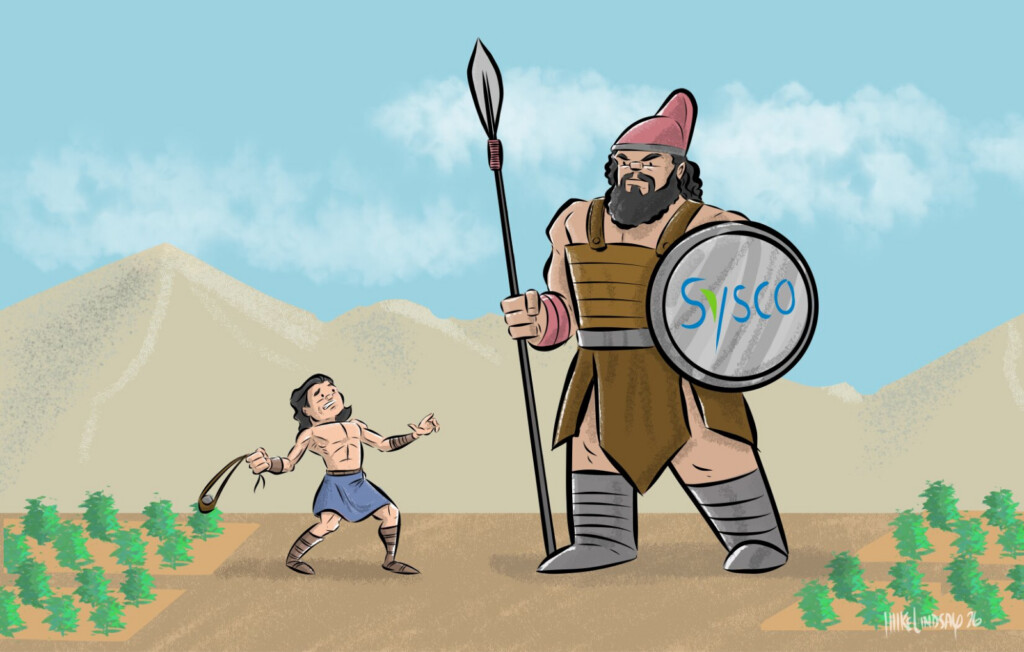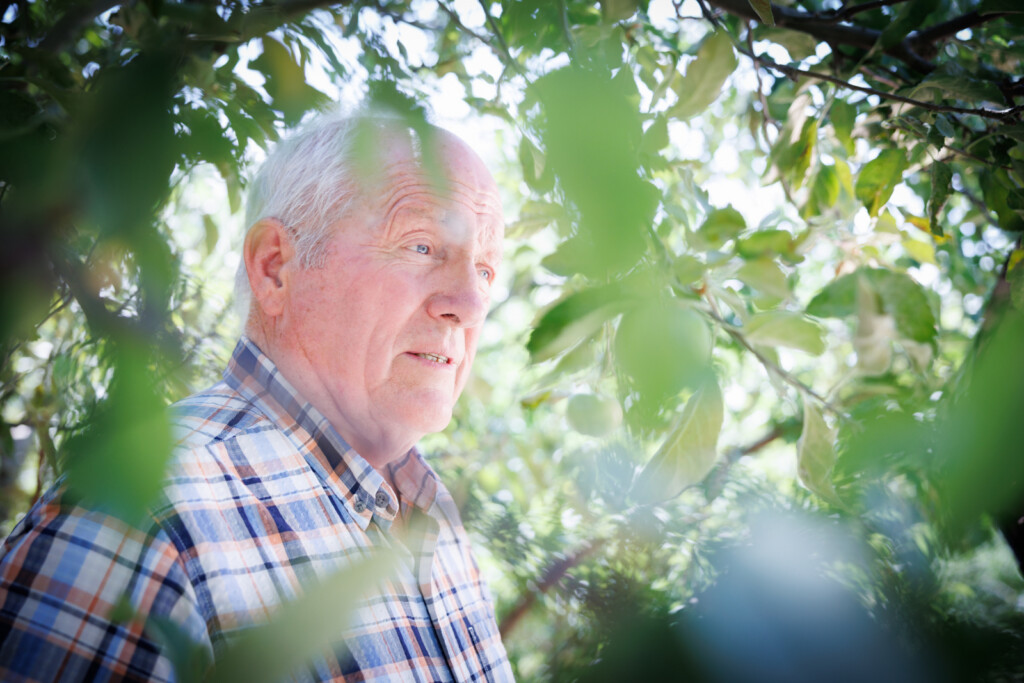
Growing up as the youngest of five children on a working farm, Scott Smith developed a deep-rooted (no pun intended) work ethic and a respect for the environment. Today, he farms that very same land that has been in his family since 1855, said to be the oldest family farm in Utah County.
“My grandfather, Jesse Lawrence Smith, had a grade school education, and during the depression, he shipped fruit to Chicago and Texas,” Scott Smith, current owner of Smith Orchard, said. “He would get paid by the semi load, $3.30 a bushel. That is how he was able to buy more land during that time. That is how long we have been here.”
Instead of relying on traditional chemical sprays, the 51-acre farm utilizes Integrated Pest Management (IPM). This eco-friendly approach uses natural pheromones to disrupt the mating patterns of pests such as codling moths and relies on beneficial insects, like ladybugs and lacewings, to naturally protect crops.
The orchard also has an impressive population of native bees, roughly about 15 hives, which provide superior pollination for the fruit trees. They grow peaches, plums, cherries, pluots (a cross between a plum and an apricot), apples, pears and more.
“The pluot is a wonderful fruit; these are not gimmicks. People get tuned into the flavor, which is fantastic,” Smith explained. “It is like a flavor bomb. We have had them since 2007.”
However, nearby homes and urban development pose significant challenges to the bees’ ecosystem. As neighborhoods expand and yards are manicured, bees face habitat loss and reduced access to diverse food sources. They are naturally drawn to flowers and can travel up to eight miles in search of nectar and pollen, but urban landscapes often replace wildflowers with non-native plants.
“There have been many abuses over the years by cities,” Smith said. “They condemned Gillman’s Farm in 1983 for WordPerfect, and I don’t even know what it is today. To be able to claim eminent domain and run a road wherever you want can ruin a farm.”
For now, Smith says he is bulletproof from urban sprawl. He is working with a developer to actually expand the farm. He plans to take on another 10 acres.
Beyond the efforts to support the orchard’s ecosystem, his wife Ginny, and daughter Alice, are growing flavorful tomatoes in their greenhouse by propagating their own seeds. These tomatoes are supplying restaurants across the valley and in Park City with fresh produce.

Learning the Importance of Rights-of-Way
From the beginning, Smith understood that protecting his land meant knowing the ins and outs of property rights. Early on, he took it upon himself to learn how rights-of-way worked — a crucial step in safeguarding the farm’s future. By understanding these legal frameworks, Smith ensured he could maintain control over his land, warding off potential threats from urban development or infrastructure expansion.
“In my early 20s, I was a service coordinator for Utah Power and Light, and I learned a lot about rights of way,” Smith said. “After my mom passed, my dad told me what he wanted done with the farm and how it was going to be split. Thirty-six years later, it has come to pass. He told me he wanted me to have the property that I have now because it would be outside a development when it comes. That is the upper orchard. And because I had the right-of-way in place, I was the only kid in the family to see that part through.”
Since then, Smith has been able to buy some of the ground back. He inherited 30-plus acres and has purchased 12 more that his brother and sister had sold. In fact, Nate Brockbank, a developer, has purchased 144 acres from Smith’s relatives, which is said to be called “Orchard.”
Future Goals for Smith Orchards
“The thing I would like to do is build a reception center,” Smith said. “My wife, daughter, and I have talked about doing that for 10 years. If I could do that and have a farm store, I would just love that.”
The Greenbelt Farm Tax Certification, which allows urban farmers with under five acres to qualify, marked a significant step for small-scale agriculture. This adjustment makes it easier for individuals to preserve and utilize their land for farming while keeping the tax incentives.
“In the last ten years, I think people’s hearts are changing; it was pro-development, and farmers didn’t matter, but Greenbelt helps people hold on to their ground,” Smith explained. “That is key for farmers. People are now looking at what is going to be left.”
Smith says Provo City is doing a better job in partnering with farmers. In fact, they share a water supply during the winter months when Smith doesn’t need it.
*Feature Image of Scott Smith and additional photos by John Taylor.