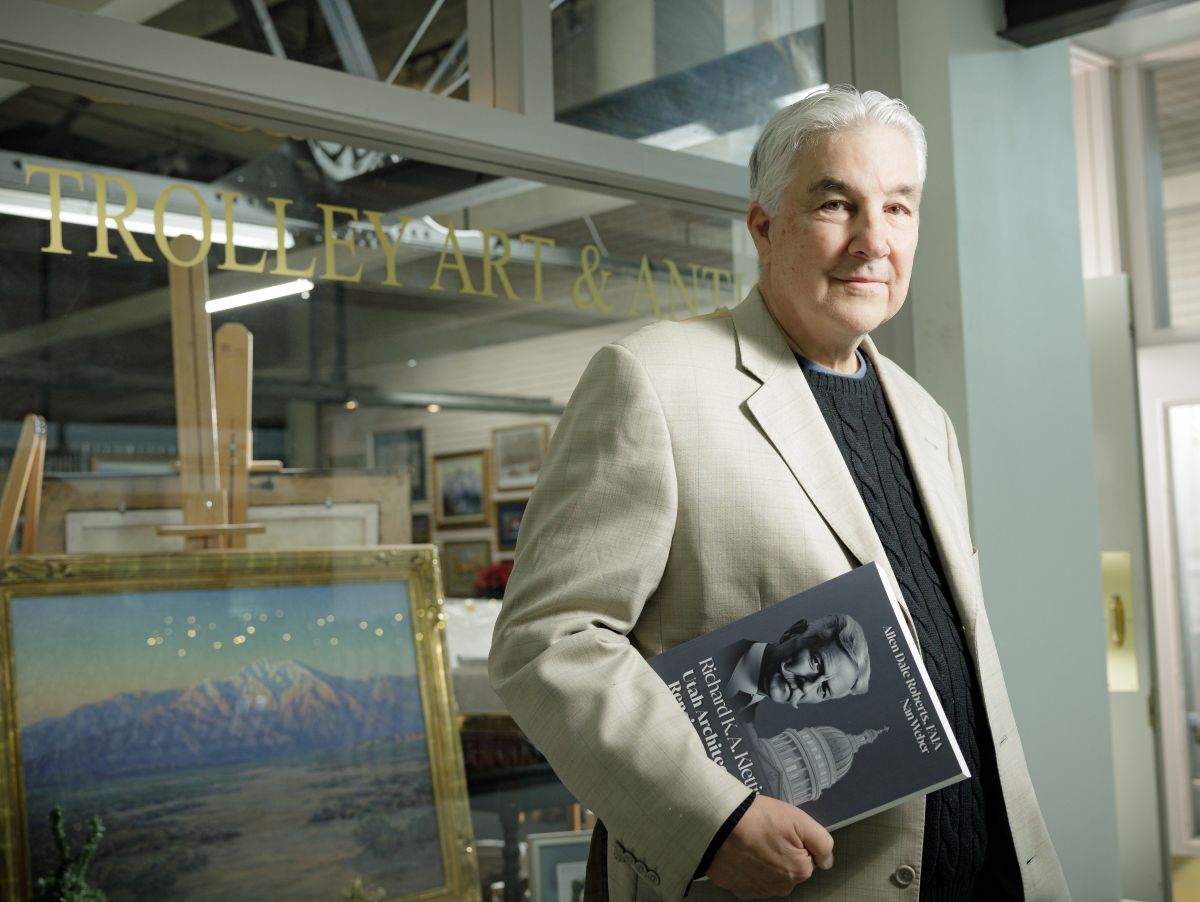
Too real for YouTube? In a digital landscape where conspiracy theorists flourish and toddlers review toys for millions, YouTube has finally found a threat too great to tolerate: Ken Sanders, a 74-year-old Salt Lake City bookseller.
Utah Stories recently tried to promote a podcast interview with Sanders — a conversation about the collapse of independent business, the commodification of culture, and Sanders’ storied role in preserving downtown Salt Lake’s literary history. YouTube’s response?
“Your ads are currently labeled for our Shocking Content policy.”
The crime? According to Google’s ad team, Sanders used “inappropriate language” at the 22:51 mark of the video. That timestamp captures Sanders relaying a real-life story about construction workers harassing a female bookstore employee and calling her — brace yourself — a “bitch.”
That’s it. A quote. Not a rant. Not name-calling. Not slander. A quote from an actual incident that illustrates the slow erosion of dignity and respect small business owners face in downtown Salt Lake City — especially those in the crosshairs of luxury development and corporate takeover.
Apparently, that was just too much for the robots at Google to handle.
Algorithmically Dangerous
To be clear, the video wasn’t removed. It’s still up. You just can’t promote it — not with YouTube ads, anyway. It’s been flagged. Neutered. Muffled. If you want to get this thoughtful conversation in front of more people, you’ll have to rely on the same grassroots hustle Sanders has used for decades to keep his rare bookstore alive.
And that’s the kicker. YouTube — a platform overflowing with prank videos, AI-generated garbage, and rage-bait influencers — draws the line at a man discussing the realities of running a small business in Salt Lake City. Not because he incited violence. Not because he pushed conspiracy theories. But because he quoted someone else using a rude word.
This from the same company that happily monetizes “shocking” content as long as it’s accompanied by enough ad-friendly thumbnails and doesn’t challenge corporate power.
Sanders, of course, does exactly that.
The Real Offense: Telling the Truth
Spend five minutes with Ken Sanders and you’ll hear something corporate platforms can’t process: unfiltered honesty. The man has spent 50 years fighting to keep history, literature, and independent thought alive in a state increasingly hostile to all three. He’s not slick. He’s not selling merch. He’s not trying to become an “influencer.”
He just tells the truth. And sometimes that truth includes a four-letter word.
Throughout the podcast, Sanders dives into how the city’s transformation — led by developers, chain retailers, and billionaire-owned sports franchises — is slowly suffocating what made Salt Lake City livable in the first place. He questions why tax dollars are handed out to stadium projects while family-owned businesses like his get no support. He laments the sterilization of formerly vibrant neighborhoods.
It’s passionate, intelligent, and damning — especially to those profiting from that transformation.
No wonder YouTube slapped on the warning label.
Community Over Corporations
The deeper irony here is that the so-called “shocking” content is exactly what community journalism should amplify. Utah Stories has long served as a voice for small businesses, local legends, and unsanitized truth-tellers. Sanders is not some rogue provocateur — he’s a public historian with a memory as deep as his book archive.
And what did he do to deserve this classification? He spoke plainly. He refused to censor the indignities that come with being a legacy business owner in a city eager to demolish its past in favor of upscale liquor stores and generic apartment towers.
YouTube didn’t punish vulgarity. It punished discomfort. And that’s a much bigger problem.
Sanitized to Death
The platform’s suggestion was simple: edit out the “bad word” and resubmit. But that’s not the point, is it?
Should we edit out all unpleasant realities in order to comply with corporate standards of “ad-friendliness”? Should we trim our stories, rewrite our history, and silence our reactions so they fit more neatly between toothpaste ads?
That’s the model YouTube increasingly promotes. Sanitized rebellion. Controlled outrage. Market-approved truth.
Too Real for the Algorithm
Sanders and Utah Stories have lived through enough censorship to recognize it when we see it. Sanders has fought to preserve banned books, hosted authors who couldn’t get a platform elsewhere, and kept a rare bookshop alive through economic collapse, rising rents, and a city slowly becoming unrecognizable.
Being flagged by YouTube is almost an honor at this point — proof that in a world where everything is flattened into content, real voices still rattle the cage.
So don’t expect Sanders to bleep himself. Don’t expect Utah Stories to trim the truth. And don’t expect the rest of us to stop watching. U
—————————————————————————————