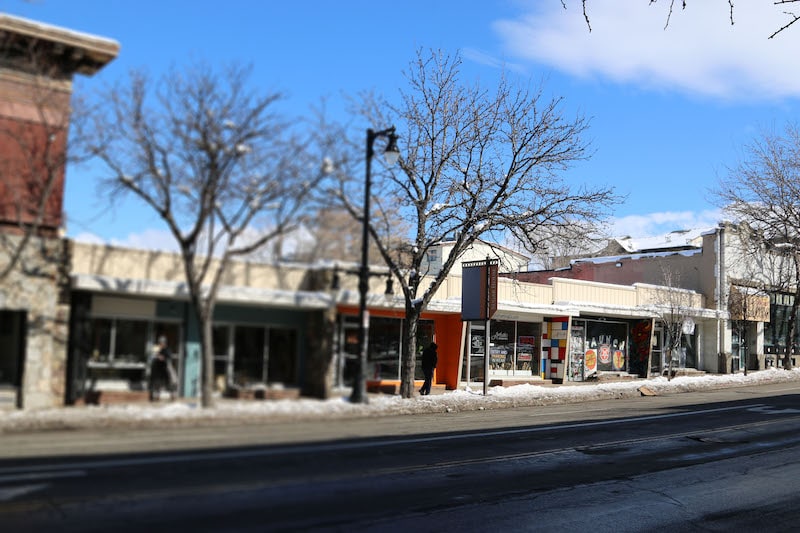


A billion dollar piece of legislation has been filed to create a “entertainment and sports” district in Salt Lake City, according to Fox News. It is being proposed in hopes to lead to a National Hockey League arena. The bill would allow Salt Lake City to raise sales taxes to help fund it through a bond. “One thing I love about a consumptive tax is you get to choose how much you pay, right?” Sen. McCay, the Senator sponsoring the bill told FOX 13 News in an interview Thursday. “The initial revenue estimates show this is a billion dollars. Salt Lake City still has to meet and impose the tax. This is an opportunity. The state is working with the city to create and really try and make a positive influence downtown.” Salt Lake City Mayor Erin Mendenhall was also supportive.”What this bill enables will be truly transformative for Salt Lake City, Salt Lake County and the state of Utah,” the mayor said during the hearing. “Changing not only our arts and entertainment offerings but reconnecting our city from east to west side in the downtown core, elevating our convention industry and welcoming the world.”
Over 800 Utahns will be benefiting from student loan forgiveness which will see about 5.8 million of borrower debt in the state wiped clean according to ABC4. The Biden-Harris Administration rolled out another $1.2 billion in forgiveness under Biden’s Saving on a Valuable Education (SAVE) plan. Overall, the plan forgave the debt of nearly 153,000 student loan borrowers nationwide.
According to 2023 data collected by LendingTree, a personal finance company, Utah is among the states least impacted by student debt. The average Utah borrower has nearly $38,000 in student loans, which LendingTree said is 13% below the national average. Overall, Utah has $10.9 billion taken out in student loans across 325,000 borrowers.
A bill moving through the Utah Legislature would give Rocky Mountain Power a powerful incentive to keep its coal plants in the state running: Utah customers would assume the costs and risks, according to The Tribune. “We are concerned that this bill … will have the impact of raising rates, and the burden of proof shifts from utility to ratepayers,” said Justin Farr, lobbyist for the Utah Association of Energy Users. “And that is a big concern. It upends decades of the way regulation in ratemaking is done.”
Rocky Mountain Power spokesperson Jonathan Whitesides declined to say whether Rocky Mountain supports the bill to The Tribune. Asked if the company was involved in negotiating the bill, he gave this response: “One of the Utah Legislature’s top priorities this session is setting energy policy and priorities for the state. Consistent with our long-standing practice to provide information to lawmakers who are considering energy policy legislation that could impact the utility and our customers, we provided comments and answered questions on a number of proposed energy policy bills this session, including SB224.”
A Utah Senate committee Wednesday advanced the state’s first attempt to regulate college athletes’ use of their name, image and likeness, according to KSL. It would require athletes to submit any contract over $600 in value to the university. The school then must provide the athlete written acknowledgment regarding whether the contract conflicts with university policies or provisions of the proposed law.
Bill sponsor Rep. Jordan Teuscher, R-South Jordan, told the committee Utah universities would be an “outlier” and at a “competitive disadvantage” with other schools if athletes’ NIL agreements were public records.
Rep. Kera Birkeland, R-Morgan, accused the media of wanting to exploit college athletes.
“The people that don’t want this legislation to go forward are people who want to sell this information for clicks. They want to take private information between individuals that contract with businesses and they want to use that to drive people to their website, to their news articles,” she said. “We shouldn’t sell out our college athletes for clicks.
*Content for this article curated from other sources.