That’s because Mims’ lucky customers get his artisan micro-bakery bread delivered to their doorsteps, whether they’re home or away.
“I think people like getting packages,” says Mims, who bakes out of the garage he has converted into a commercial kitchen. “They look forward to it.”
Mims’ home bakery is located in Murray, but he delivers bread all over the Salt Lake Valley. On a regular delivery day, he will drop off standard loaves of classic sourdough, seeded polenta, or even “everything bagel” bread from South Jordan to North Salt Lake.
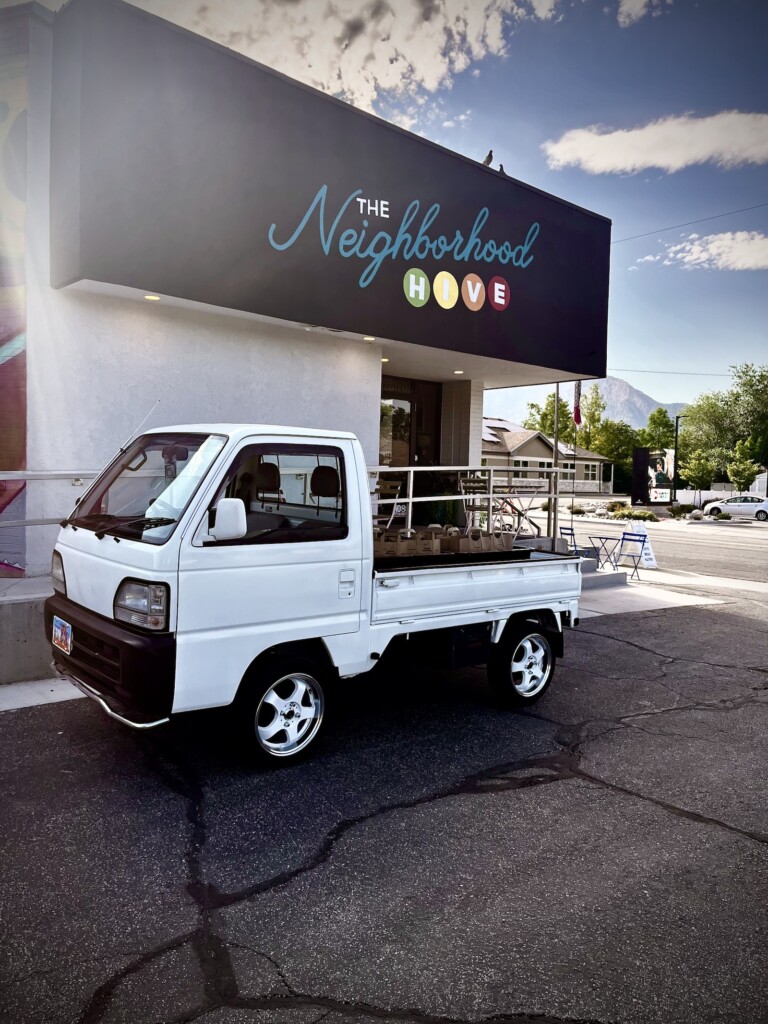
Just a few pockets of the city are outside his delivery zone, but fans can still pick up their weekly bread at the Neighborhood Hive off Parley’s Way. Mims makes deliveries to the Hive Tuesday through Saturday.
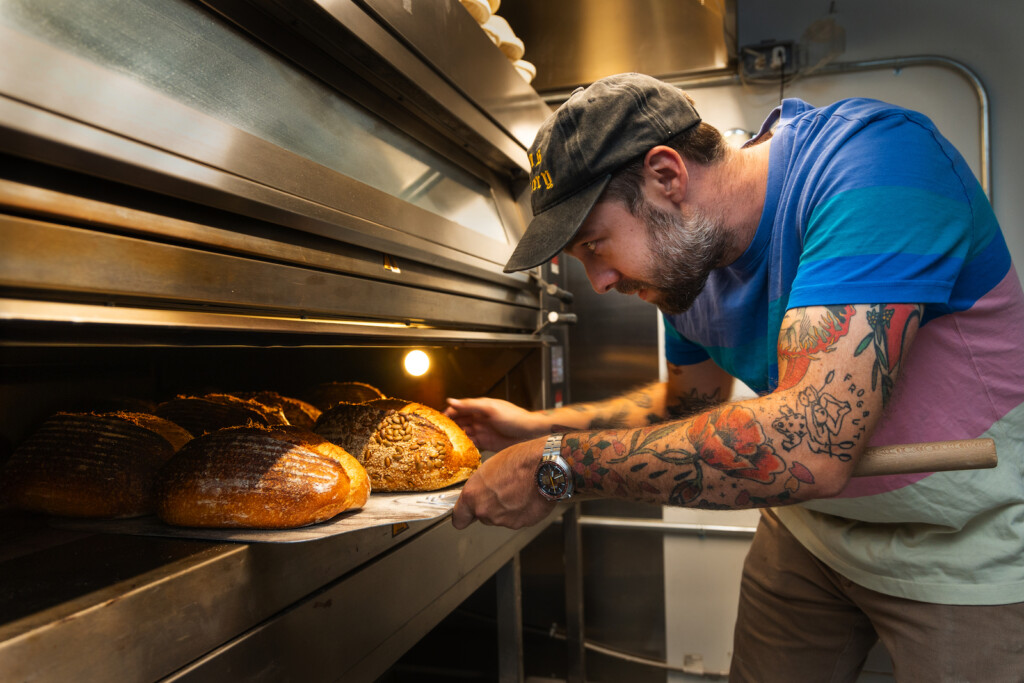
Mims bakes about 300 loaves a week in a MONO deck oven with steam injection. He uses local flour from Lehi Roller Mills and specialty ingredients from Caputo’s. Just as important are the containers he bakes in: imported German pans made of wood pulp are the secret to his delicious oblong loaves, as the pan absorbs moisture from the dough, making it bake up with a good crust and a moist, delectable crumb.
The sandwich loaves Mims sells to places like Old Cuss Coffee Co. and the Ellerbeck Mansion are made in rectangular British Pullman pans to create a uniform slice but maintain the bread’s hearty texture.
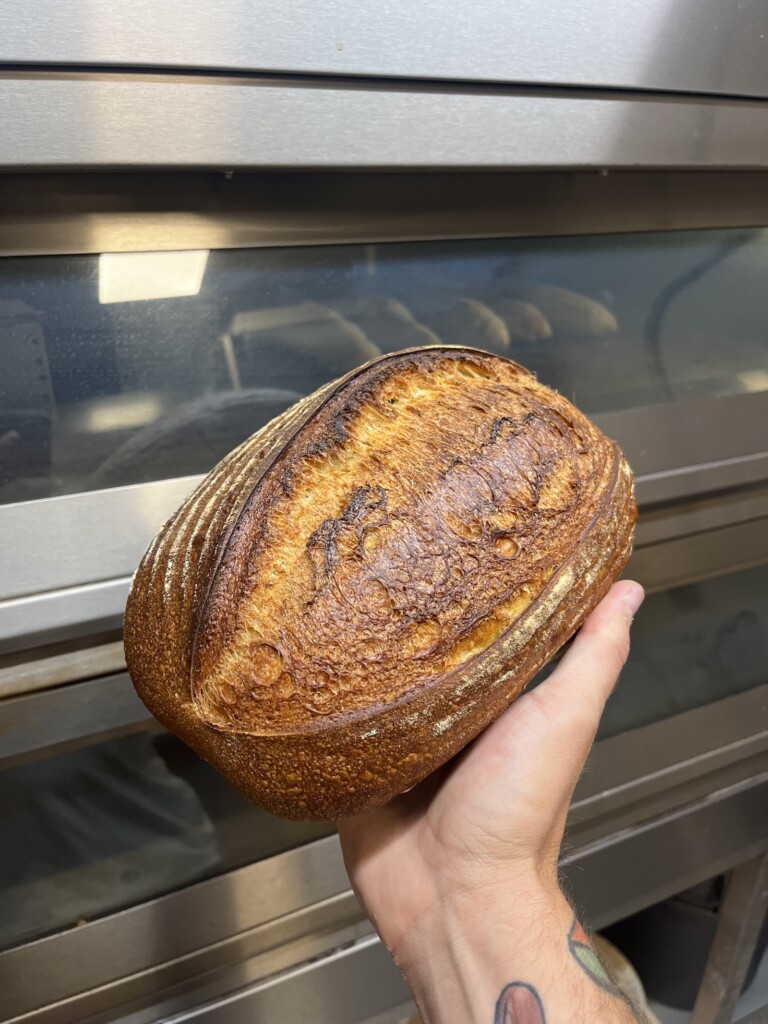
Mims offers six standard breads and one standard cookie, which are ordered through his website and are eligible for home delivery. And then there are the loaves Mims calls his “strange breads”: a Spam musubi loaf with seaweed and sushi rice. A loaf with gochujang (fermented Korean chili paste) and toasted sweet rice. These are advertised on Instagram and have to be picked up at the Hive.
For a lot of people, having bread delivered to their doorstep is a reminder of a more neighborly time when people knew the names of the milkman and the postman. In this way, Mims has been adding to the feeling of community that the good food revolution has been bringing to Salt Lake City.
“The whole Mims story was based on building community,” he says. The business began in 2020, when the restaurant where Mims was working as a sous chef had to temporarily close. He and wife Thy started a micro-bakery to support their small family of four and found that they could offer no-contact home delivery.
Although the times were terrible in many ways, Mims remembers that “there was a certain luster” to those Covid days. “Something special happened where a lot of big businesses stepped aside and we little businesses had the chance to do something.”
In 2021, Thy was an innocent casualty of a high-speed police chase. After her death, the community she had helped establish through Mims Bakery rallied around her husband and two sons, and have kept the family going through hard times.
“Without Thy setting this whole thing up, I probably would have lost the house,” Mims says. “I really feel she left it for us.”
Having the bakery in his home allows Mims to raise his sons on his own. He starts baking before they wake up, then takes a break to get them off to school. When they come home, the boys know where to find Dad. He’s always present to help with homework, to have dinner, and to tuck them into bed at night. This is part of the gift Thy left her family.
One of the gifts Mims tries to give in return is an annual donation drive for refugee children. Thy’s parents were Vietnamese boat people, so refugees were dear to her heart. “She taught me how to be an activist,” he says.
The next iteration of Mims Bakery will roll into town in the form of an imported Honda Acti micro-truck, just the right thing for a micro-bakery. Mims will build a rustic cargo box with closing panels into the truck bed to help him transport product from the bakery to sales venues.
Mims enjoys selling bread at farmers markets and popups hosted by brick and mortar businesses. He’s always happy to work with other bakers, whom he feels are colleagues more than competitors.
“There’s so much room here for everybody,” he says. “I bring bread, cookies, maybe brioche, and someone else brings sweets.”
As industrialized foods caused the quality of bread to diminish in the United States, people stopped making bread a staple of the nightly dinner table. The artisan food revolution in the United States is bringing that back, and Mims is part of it.
It’s said that bread is life. These crunchy loaves demonstrate why. Mims Bakery bread is warmth and community delivered to your door. Find out more here.
Top image of Tripp Mims by Braden Latimer.