
Podcast

Kizik Makes Waves in Utah with a “Hands Free” Shoe

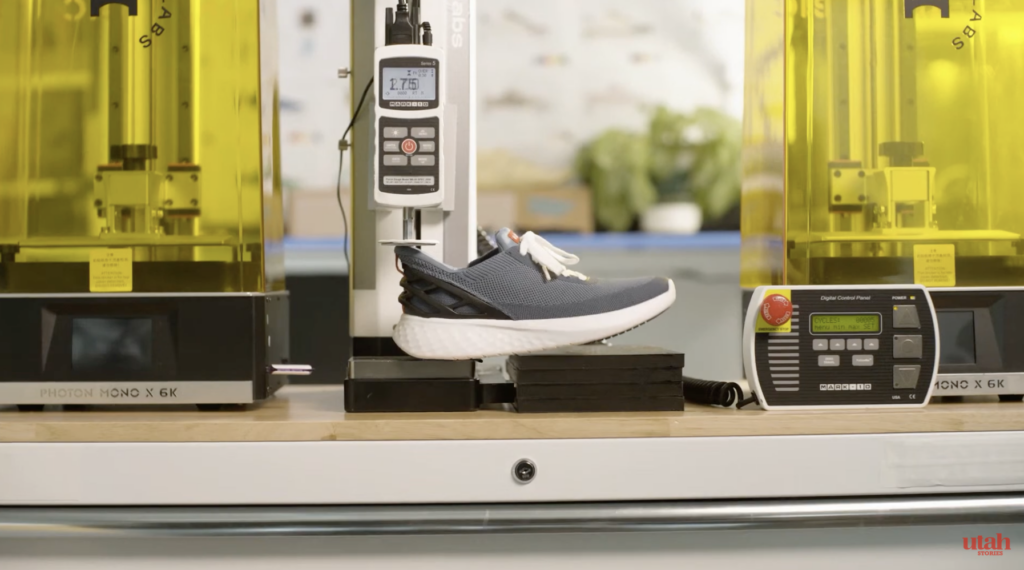
Kizik is one of Utah’s fastest-growing companies. Kizik is one of Utah’s fastest-growing companies. Choosing to enter the extremely competitive shoe market didn’t intimidate Mike Pratt, an experienced investor. Pratt’s challenge to his team of engineers was to invent a “hands-free” shoe — no tying required.

|


Kizik is one of Utah’s fastest-growing companies. Choosing to enter the extremely competitive shoe market didn’t intimidate Mike Pratt, an experienced investor. Pratt’s challenge to his team of engineers was to invent a “hands-free” shoe — no tying required. His team nailed the tech, and they carefully patented their unique design.

Monty Deere came on the Utah Stories podcast to explain the explosive growth the company has undergone in the past three years.

Deere explains that Kizik was founded by Pratt, who previously founded the Ogio Bag Company. Pratt recognized the hassle of tying shoes and saw an opportunity to create hands-free shoes. He assembled a team to develop innovative shoe technology and obtained numerous patents to protect his inventions.

Foundation of Kizik

Kizik’s journey from a startup to a successful shoe brand didn’t go without disruption. Initially, Kizik licensed its technology to Nike and other footwear companies. However, the COVID-19 pandemic disrupted their licensing plans, leading them to shift their focus to building their brand. They revamped their product line, created video content to demonstrate the functionality of their shoes, and pivoted to online sales. This strategy proved successful, and Kizik experienced significant sales and customer satisfaction growth.

“Sure. One way to think of this is that you’ve been wearing shoes your whole life. What was the last major innovation related to shoes? I don’t know; Velcro and Nike have come up with some cool things, like the Air Flyknit, but I mean a functional difference in how shoes work. It’s been a while, maybe centuries,” Deere said.

Success with a Startup

Deere discusses the importance of vision, product-market fit, and storytelling for inventors and startups. He emphasizes the need to understand the problem that a product solves, even if customers need to be made aware of the problem themselves. By effectively communicating the vision and demonstrating the product’s value, inventors can generate interest and gain traction in the market.

“What happens within a customer’s or consumer’s life is she puts those shoes by the door, and she’s got a handful of groceries and a handful of kids and steps into those shoes without touching them in less than a second? It becomes more addictive than you think,” Deere said. 

The episode concludes with Deere discussing Kizik’s plans, including expanding their retail presence and innovating in the lifestyle shoe market. He also mentions their collaboration with industry experts from Hoka, another successful shoe brand, to learn from their experiences and further enhance Kizik’s growth.

This episode provides insights into Kizik’s origin, hands-free shoe technology, the journey from licensing to building its brand, and future aspirations as a footwear company.

, , ,

Join our newsletter.
Stay informed.


  • Highway 6 and the Midland Trail: Utah’s Transcontinental Highway History

    From Price Canyon to Delta’s desert stretch, Utah played a central role in building the Midland Trail, one of America’s earliest transcontinental highways and the foundation of today’s Highway 6.


  • Utah Acquires US Magnesium Assets in $30M Deal to Protect the Great Salt Lake

    Utah leaders announced the state has successfully won the bid to acquire key assets of the defunct US Magnesium facility on the Great Salt Lake, including its associated water rights and property.


  • Whiskey, Bullets & a Buried Town: Archaeologists Reveal Alta’s Wild Past

    Before Alta was known for powder days and lift lines, it was a silver mining town clinging to the side of a narrow canyon. In the late 1800s, men lived at 8,000 feet, went underground each day, and endured winters that regularly buried buildings in snow. This past summer, that mining town resurfaced — literally — during construction at the Alta Ski Area.

    To understand what Alta really looked like, you don’t begin with legend. You begin with its trash — and this time, that happened almost by accident.

    Alta Ski Area was installing underground water reservoirs to support snowmaking. Because the project sits on Uinta-Wasatch-Cache National Forest land, an archaeologist was required to monitor the excavation. No one expected the trench to produce much.

    But, It did.

    Artifacts began surfacing almost immediately. Enough that the Forest Service contacted the Utah State Historic Preservation Office for help. Lexi Little, who coordinates the Utah Cultural Site Stewardship Program, helped mobilize nearly 30 volunteers to assist with what quickly became a focused two-week excavation.

    Winter deadlines were approaching. The pipes for the reservoirs had to go in the ground. There wasn’t time for a slow, extended dig.

    “It was two weeks of digging in the dirt and helping figure out exactly what we were looking at,” Little said.

    Most of the people screening soil weren’t professional archaeologists. They were trained stewards from around Utah — part of a statewide volunteer network that now approaches 500 people. They poured dirt through shaker screens, scanning for fragments that could piece together a town long buried.

    “Archaeology is human trash,” Little explained. “Archaeologists are very into trash.”

    Alta had left plenty behind.

    https://youtu.be/hzIHzx3OGoo?si=dKcl2CEz-t6FZzYw

    Victorian-style ceramics appeared first — the kind typically used in hotels. Medicine bottles followed. Ink bottles. Hand-blown glass. A porcelain doll’s foot surfaced from the soil, a small detail that shifted the mental image of the town. Families were here. Children were here. This wasn’t only a camp of miners.

    The bottles helped establish time. Manufacturing details — whether glass was hand-blown or mold-made, whether a maker’s mark appeared on the base — allowed archaeologists to date many of the artifacts to the 1870s through the 1890s, when Alta was booming as a silver mining town.

    “That gives you that range of dates for when Alta was really booming,” Little said.

    One reusable soda bottle clearly stamped “Salt Lake City” connected the canyon to the valley economy below.

    Then something unusual rolled out of a dirt pile.

    A corked bottle. Intact. Liquid still inside.

    To access this post, you must purchase Utah Stories (Digital + Print) or 3 month free trial (Digital).


  • The Only Full Bottle of Alcohol Ever Found in Utah Was Unearthed in Alta

    When a backhoe rolled a corked bottle out of the dirt at Alta this summer, no one immediately grasped what they were holding. It wasn’t empty. It wasn’t shattered. It was full. “The bottle that was discovered up at Alta is the only bottle of alcohol ever discovered in an archaeological excavation in the state…