A one-inch strand of flat webbing is stretched between two anchor points — tight, but not so tight that all the bounce and flex is removed — and a person tries to balance while walking across the dynamic line. This is slacklining. The anchor points are often trees, and the line is usually two or three feet off the ground.
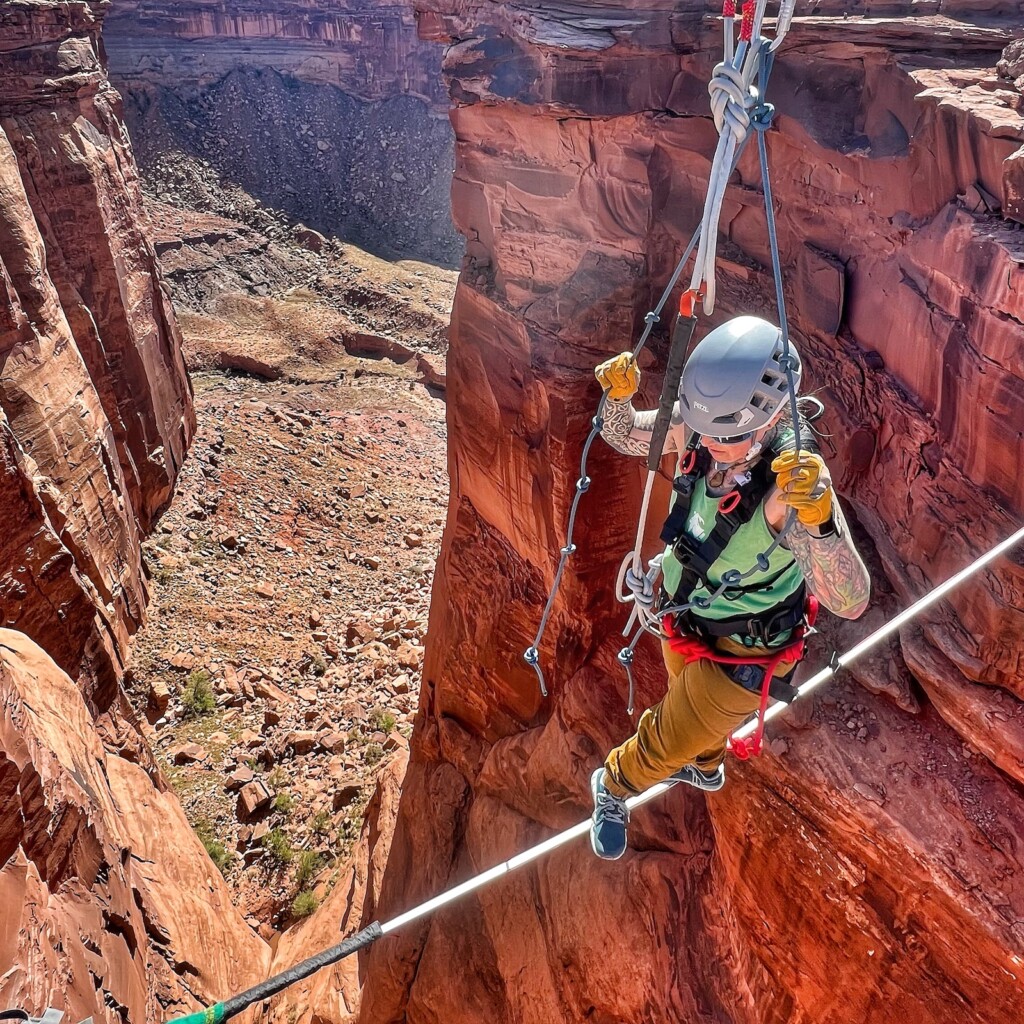
Move the whole arrangement so that the webbing crosses a canyon, or stretches from one rock spire to another, or spans between high points on human infrastructure, from dozens to thousands of feet high — that’s highlining.
Moab business owner Faith Dickey spent years building her profile as a professional highlining athlete. She has set multiple world records: she was the first person to walk a highline in high heels, the first woman to free solo a highline, and the first woman to cross a 100 meter highline, to name a few. This year, she opened the first guiding service in the US to offer a highline experience. Dickey’s unique safety and belay system, called the Sky Walk, makes that experience accessible to complete beginners.
“In the traditional highlining world, without having an extensive slacklining base, you’re not going to take any steps on a highline,” Dickey explained. The strength and skills needed just to get to a standing position on a highline take hours of training, not to mention the skills needed to get back on the line if you fall off and end up dangling from a safety leash.
“For someone who just wants to know what it’s like to be on a highline, I wanted to remove that barrier,” Dickey said. “I don’t think everyone has to find a slackline community and brutalize themselves on a highline to experience that.”
With her setup, Dickey can haul clients back to solid ground if they can’t or don’t want to complete the highline. A top rope safety line above the clients — who are outfitted with full-body harnesses — along with a balance-assisting cord available on each side, make walking the webbing easier and less intimidating.
Why seek that experience? Dickey believes it’s empowering.
“Challenging those primal instincts to stay away from ‘the void’ is really good for everyone,” she said. “It’s such a mental sport that it forces you to see what’s going on in your mind, which isn’t always comfortable.”
She still derives clarity and rejuvenation from practicing the sport herself. After a highline walk, she said, “I always feel like it was good for me, good for my mood.”
Her business, Elevate Outdoors, also offers guided rock climbing, canyoneering and hiking. Slacklining, though, was Dickey’s entry point into the world of outdoor sports. When she first tried it in her late teens, joining a casual group in a public park, she didn’t know it would grow into a passion.
“I never intended to highline,” she said. “It seemed impossible at first.” But the same motivation that had driven her to master the slackline pushed her to learn to do it hundreds of feet up in the air. It was hard.
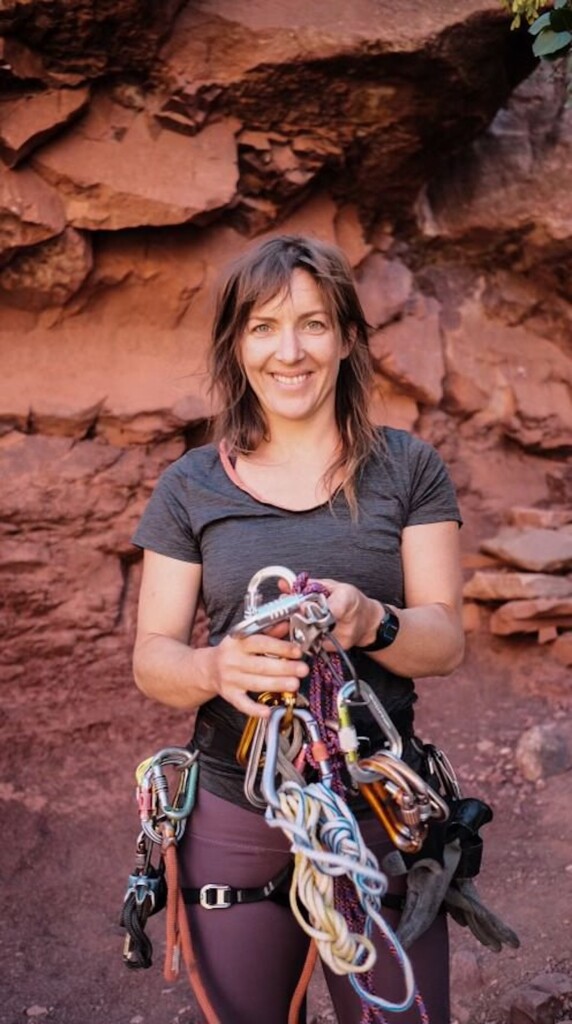
“I thought I’d walk it once, then quit, because clearly I’m not cut out for this,” she said with a laugh. Instead, she went on to become a leader in the sport. Her highlining journey led her on travels around Europe, landed her jobs doing stunts for films and commercials, and inspired her to found a women’s highline festival.
After years of the lifestyle, however, she started to burn out on constant traveling. Injuries and fatigue made it hard to progress in the sport. She and her boyfriend decided to try staying somewhere for a while. They chose Moab, a place they had both visited and liked.
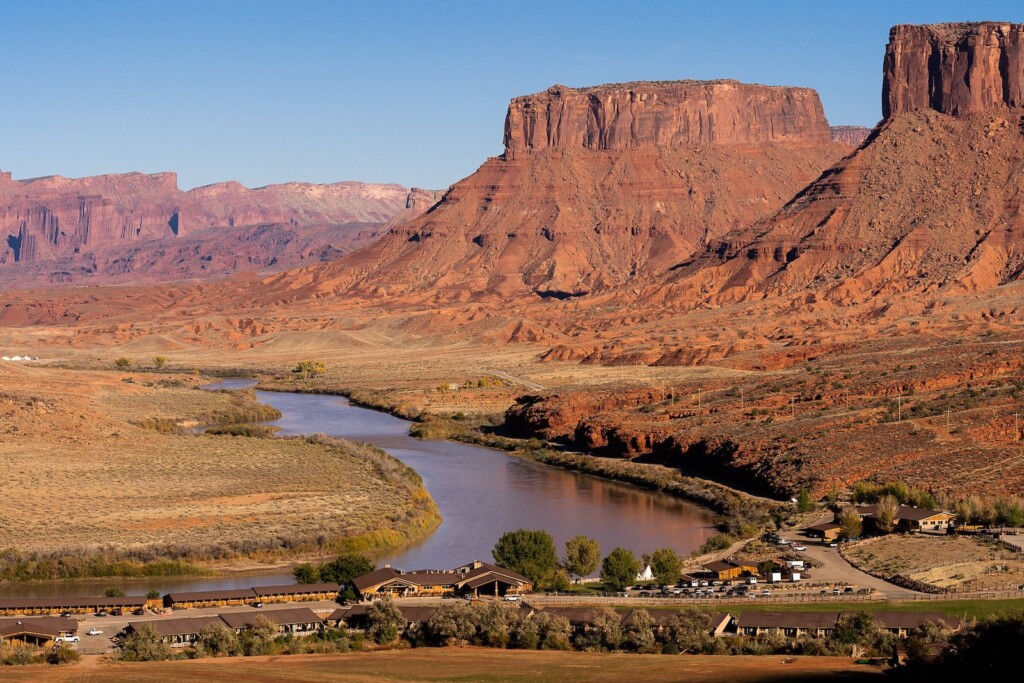
The idea of starting a highline guiding business occurred to Dickey while she was working at a food truck. A perfect combination of ingredients make Moab a highlining mecca: there are lots of deep canyons with steep sides and flat tops, relatively easy to get to. Dickey sums it up as beauty, height, and access. She wondered if there was a market for her business idea.
Around that time, a pair of women she had never met contacted her through Facebook and asked if she would be willing to give a highline coaching session. With that encouragement, she committed to becoming a business owner. She built up her guiding credentials, sought out insurance, bought the equipment she would need, registered her business and set up a website. It was daunting, but Dickey approached it with her characteristic determination.
“I don’t typically wait for things to happen to me,” she said.
Dickey put a lot of thought into the tone and focus of Elevate Outdoors. She’s proud to be one of the few woman-owned guiding businesses in town, and she hopes to encourage other women in outdoor sports, guiding and entrepreneurship, as well as offer women clients a safe space to feel vulnerable. She looks forward to giving back to the community, once she’s established, by offering guiding or coaching sessions for local youth. She’s passionate about making sports accessible to people with disabilities — on her website, she encourages people to contact her to talk about how their situation can be accommodated. Being a pioneer in the highline guiding niche, Dickey had to think deeply about how she wanted to approach it.
“I had to reinvent myself, but I also had to reevaluate the sport and what was valuable about it,” she said. It wasn’t just about breaking records, it was about showing people what they’re capable of.
“I had to change how I was doing it — I had to share it, and make it about the experience,” Dickey said. She wants that experience to be meaningful for her clients — an experience of self-reflection and growth.
“I want people to reach out to me because they’re interested in managing fear,” she said. “I want to create a company culture centered around empowering people and helping them feel alive. [I want them to leave] knowing more, more capable, feeling like they can take on more challenges.”
So far, Dickey said, it looks like that’s been happening.
“Everyone’s been stoked,” she said of those she’s guided on the Sky Walk so far.
Dickey described one client who stepped on to the line with nonchalance, but halfway through was literally yelling at herself to generate the motivation to complete the cross. At the other side, she cried tears of triumph.
“It seems like they’re letting something go,” Dickey said.
Learn more about Faith Dickey and Elevate Outdoors .